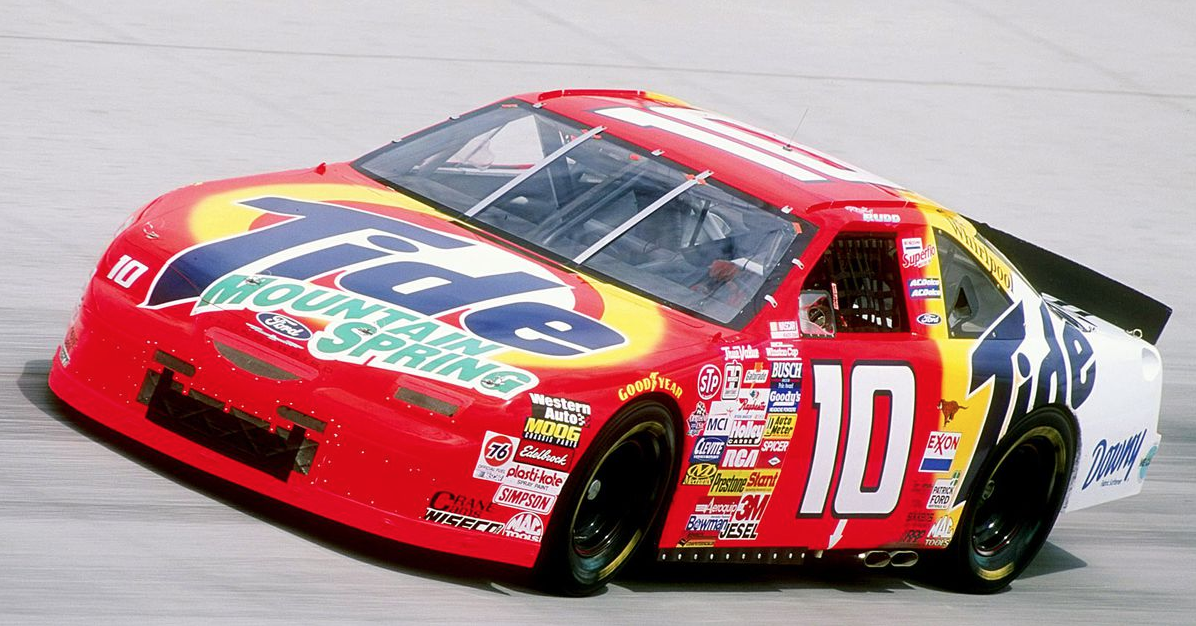
If we were to draw up a list of product categories that seem distant from the world of motor racing, soaps, detergents and household cleaning products would surely rank near the top. It’s one of the most stubborn stereotypes in sports marketing — and probably one of the most expensive, in terms of missed opportunities. Bringing together MotoGP or Formula 1 and household products is, in reality, a significantly undervalued sports marketing opportunity.
There are two main reasons why this connection is far more logical than it first appears.
Racing and cleanliness: why paddocks are obsessively clean
The first thing that strikes anyone visiting a motor racing factory for the first time is the cleanliness, combined with near-obsessive orderliness. Floors, surfaces, workbenches, tools: everything is immaculate. Some production processes are even carried out in clean rooms — completely dust-free environments typically reserved for pharmaceutical manufacturing or microelectronics — because even a single particle can compromise the performance of a component.
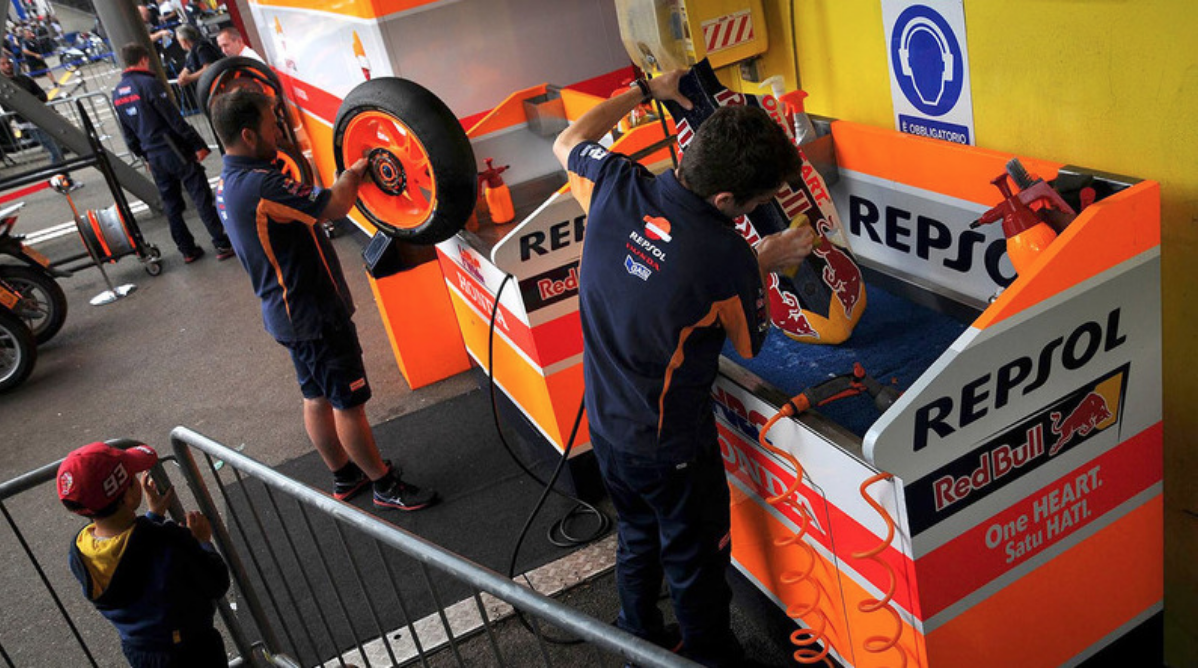
The same care can be found at the circuit. Pit boxes, garages and hospitality facilities are kept to a standard that surprises outsiders. Cleanliness is the common denominator of all motorsport team operations. Watch a mechanic cleaning a motorcycle fairing or a racing car’s sidepod with a spray and microfibre cloth: it is a perfect advertisement for any cleaning product.
The reasons for this standard are not aesthetic, but deeply functional. Performance and control: firstly, dust, debris and dirt contribute to the deterioration of mechanical components and prevent them from functioning optimally. In a world where a tenth of a second makes the difference between winning and losing, every component must be in excellent condition. Secondly, constant cleaning allows mechanics to immediately identify damage or anomalies on critical parts that could compromise race results or, in the worst case, endanger the driver. Cleanliness in motorsport is not a style exercise: it is a life-saving activity.
Who buys detergents? A paradigm shift
The second point concerns the consumer profile. The stereotype that buying soaps and detergents is predominantly a female activity is now contradicted by the data. According to the UK’s Office for National Statistics, over 7.7 million people live alone in England, with 58% of these single-person households headed by men who independently manage every aspect of domestic life. A similar picture emerges from Italian statistics: men of all ages buy groceries, manage the washing machine, and choose floor cleaners and multipurpose detergents.
This data is relevant because men represent the vast majority of the MotoGP and Formula 1 audience. A household products brand investing in motorsport sponsorship is speaking directly to an audience that is also a potential customer — and one that traditional sector advertising channels rarely reach effectively.
Uniforms, washing machines and the big laundry market
There is another often overlooked angle: the clothing care market. Every member of staff at a circuit — mechanics, engineers, press officers, managers — wears uniforms identifying the team and its partners. You will never find a MotoGP or Formula 1 mechanic in a stained uniform: suits are carefully washed and ironed after every session, and they go through entire seasons without visible marks despite the intensity of the work.
The connection with laundry products is immediate and visually powerful. Past advertising campaigns have already combined the whitening and gentle properties of fabric detergents with the image of impeccable sports uniforms. Motorsport teams, with their obsessive attention to image, provide a natural narrative context for these products. The same applies to consumer electronics — washing machines and dryers that return perfectly clean garments, ready to wear weekend after weekend.
Ultimately, the point is not just hygiene: it is about communicating a value. Immaculate uniforms are the mirror of a team’s image to the outside world. Washing machine, detergent and household products brands can leverage values such as speed, reliability and precision — the same values as motorsport — to build a powerful and distinctive brand narrative.
Why motorsport works for household product brands
Allowing stereotypes to guide investment decisions is probably the most costly mistake a marketing director can make. Thinking that household products must be associated only with domestic sports or a predominantly female audience means ignoring real consumer data and missing a unique opportunity for differentiation.
Motorsport is a global sports sponsorship platform capable of reaching diverse audiences on four continents, with a level of attention and engagement that is difficult to replicate. For a detergent, soap or household care brand, the showcase offered by a MotoGP or Formula 1 paddock — with its immaculate surfaces, perfect uniforms and absolute performance logic — is simply too effective to ignore.
FAQ: detergents and motorsport sponsorship
Frequently Asked Questions
Why should a detergent brand sponsor motorsports?
Motorsports offer detergent and household product brands a powerful narrative context: paddocks are obsessively clean environments, team uniforms are immaculate, and the values of the sector — precision, reliability, performance — align perfectly with those of a cleaning brand. Additionally, the male motorsport audience is a growing segment among household product consumers, often unreached by traditional sector advertising channels.
Is the motorsport audience relevant for household product brands?
Yes. Data shows that men are increasingly responsible for domestic purchasing decisions: in the UK, 58% of single-person households are led by men. This audience corresponds to the majority of the MotoGP and Formula 1 fanbase, making motorsport sponsorship an effective tool for reaching household product consumers that traditional sector media rarely intercepts.
How can the cleanliness theme in motorsport be used for brand communication?
The opportunities are many: visual association between the product and immaculate paddock surfaces, presence in hospitality content, team partnerships to showcase uniform care in videos and social media. The practical demonstration — a mechanic using a spray on a fairing — is a natural and highly credible advertising format.
Which household product brands have already exploited motorsport?
Historically, brands such as Ariel, Persil and others have used sporting endorsements and athletic contexts to communicate cleaning performance on tough stains. Motorsport, with its uniforms exposed to oils, fuels and debris, offers an even more extreme and therefore more powerful environment to demonstrate a product’s effectiveness.
Does motorsport also work for appliance brands such as washing machines and dryers?
Absolutely. The connection between immaculate uniforms and quality washing machines and dryers is immediate and visually effective. Motorsport teams carefully wash and iron every uniform after each session; sponsoring a team means associating your brand with this standard of care and quality of result — values that speak directly to the premium appliance consumer.