

There is no public price list for Formula E sponsorship, but a few verified figures give the scale. In the 2024-25 season the 13 championship-level deals were worth $72.2 million in total, about $5.5 million per partner (GlobalData), while ABB, the series’ first title sponsor, pays about $25 million a season according to reported figures. Below championship level, in RTR’s estimates, a team costs from about $1 million a season up to $15 million for the main sponsor, and the title sponsor of a single E-Prix can reach $2 million.
Updated October 2026.
With the London double-header on 15 and 16 August 2026, Formula E’s twelfth season came to a close: Pascal Wehrlein won his second drivers’ title with Porsche, Jaguar TCS Racing took the teams’ title, and Taylor Barnard (DS Penske) won his first race in Race 17. It was also the last act of the Gen3 Evo era and of Hankook’s four seasons as sole tyre supplier.
Anyone considering entering Formula E therefore finds themselves at a moment when the price list, if there were one, would have to be rewritten. From season 13 the Gen4 arrives, with up to 600 kW of power and all-wheel drive; the calendar is a record, 21 races across 13 venues, from the Jeddah double-header on 18 and 19 December 2026 to the Tokyo one in July 2027; Bridgestone takes over from Hankook and new names join the grid, such as Opel, announced on 20 March 2026 with the Opel GSE Formula E Team.
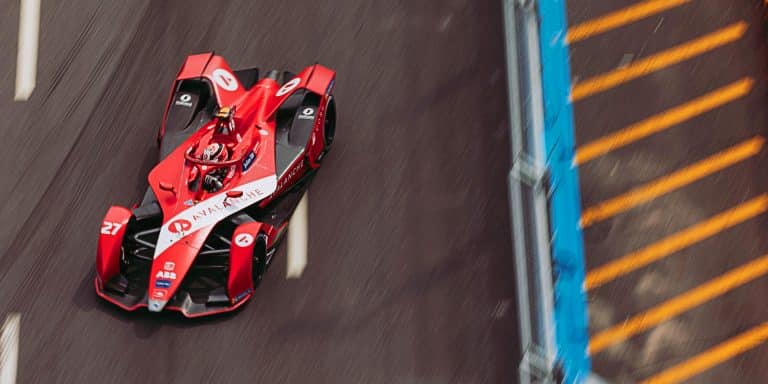
How much does Formula E sponsorship cost: the short answer
- Championship: from about $5 million a season for a lower-tier partner (RTR estimate) up to about $25 million for the title sponsor (reported figure for ABB). Average of the 13 deals in 2024-25: $5.5 million per partner.
- Team: from about $1 million a season for a small package up to $15 million for a main sponsor (RTR estimates).
- Race (E-Prix): up to about $2 million for the title sponsor with the full package (RTR estimate).
- On top of the price of the rights: activation costs and the production of branded materials, which add up.
What Formula E is and why it attracts sponsors
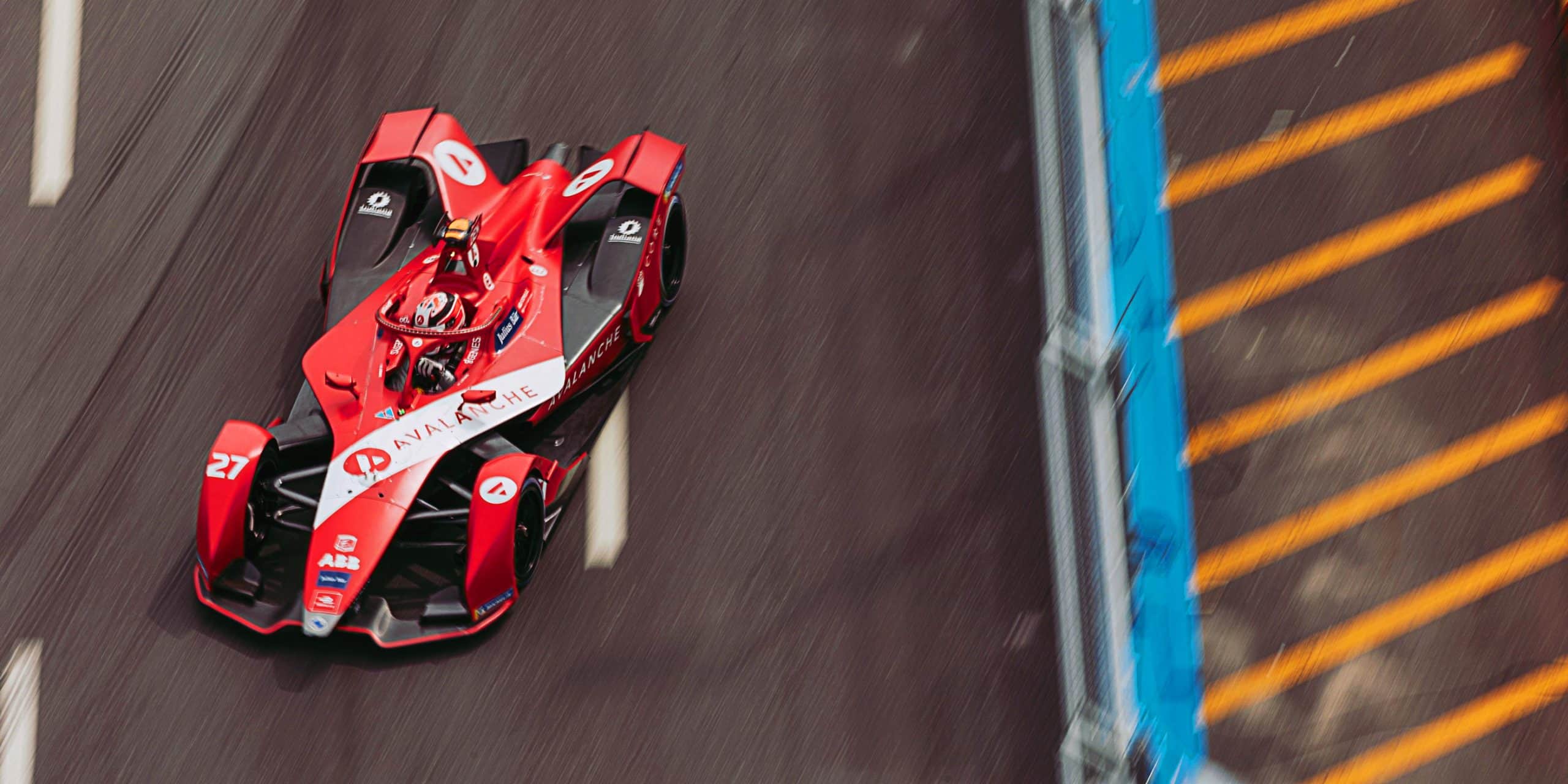
Formula E is the FIA world championship for single-seater electric cars, launched in 2014 and raced on city circuits in major metropolises. It has positioned itself on sustainability and technology, and within that frame it has built a portfolio of partners that includes ABB (title sponsor), DHL (logistics partner since 2014) and Hankook (tyre supplier until season 12). Liberty Global is the majority shareholder, with 65% since 2024, while Saudi Arabia’s PIF remains a minority shareholder.
The accounts show how much the series lives on sponsors. In 2022-23 Formula E Operations’ revenue rose 21.2% to €219.9 million, largely thanks to renewals with Julius Baer, DHL and Hankook and the agreement with the PIF, and sponsorship and E-Prix hosting fees together were worth €125.4 million. In 2023-24 revenue fell 13.7% to €189.6 million, with a pre-tax loss of €78.3 million, the highest in the series’ history. CEO Jeff Dodds explained in January 2026 that the championship prefers to invest in long-term growth rather than chase immediate profit.
The sponsorship levels and their costs
Contracts are not made public and there are no public price lists. The figures below are of two kinds, and should be kept apart: the verifiable data are aggregates and we cite them with their source; the bands for team, race and championship are RTR estimates based on our direct experience in negotiations, not official data. They vary widely with the team or race, the level of exposure and involvement desired, and the sponsor’s negotiating power.
Championship sponsorship
It is the top level: it ties the brand to the whole championship, with the logo on the championship’s promotional material and on the cars all season. For ABB, the series’ first title sponsor, reported figures point to about $25 million a season; the renewal of July 2025 covers at least three seasons, with an option for two more until 2030-31, with no official figures. Below the title sponsor, the 13 championship deals of 2024-25 were worth $72.2 million, about $5.5 million per partner.
In our estimates a lower-tier championship partner starts at about $5 million a season, with the brand on the championship’s material and hospitality perks such as VIP lounge and pit lane access, while a major sponsor can reach $20-25 million, for a full package with exclusive branding, VIP hospitality and benefits tied to the host cities.
Team sponsorship
It is the most common form. Team sponsors have their brand clearly visible on cars and clothing and on all the team’s promotional material. In 2024-25 there were 11 teams, with just over seven deals each on average; according to the analysis, the appeal of individual teams remains limited, which makes the team the most accessible way in.
In our estimates a small package starts at about $1 million a season, with the brand on car and clothing and some hospitality perks, such as access to the team’s garage and paddock; a main sponsor can reach $15 million for a full package with exclusive branding and VIP hospitality. From season 13 the grid changes, and a new entry is both an opportunity and a risk: McLaren showed it, leaving Formula E after three seasons at the end of 2024-25 (we wrote about it in McLaren’s exit from Formula E).
Race sponsorship (E-Prix)
The title sponsor of an E-Prix gives its name to the event, like the TDK Tokyo E-Prix and the Hankook London E-Prix in 2026, and its brand appears on the race material as well as on the cars during the weekend. There is also a lower level, that of single-event partner: in London in 2026, Tinder was an official partner on its motorsport debut.
In our estimates a title sponsor with the full package, which includes exclusive branding, hospitality, marketing opportunities and pit lane access, can reach $2 million.
Official supplier, innovation and sustainability
There is also a side door: suppliers. Hankook was sole tyre supplier from January 2023, for four seasons, and from season 13 the baton passes to Bridgestone; for the Gen4 the battery comes from Podium Advanced Technologies, the front motor from Marelli, and the chassis remains Spark Racing Technology’s. On sustainability, DHL, a partner since 2014, handles the championship’s logistics with a multi-modal transport strategy to cut emissions. These are roles that call for products and expertise, before a budget.
The price of the rights is the visible part of the iceberg
Whoever reads a sponsorship figure tends to mistake it for the cost of the operation. In our experience it is the visible part of an iceberg sponsorship: below the waterline are the activation costs (marketing, digital campaigns, promotion) and production costs (branded materials), which appear in no price list and which decide whether the rights bought pay off or remain an empty sticker.
In Formula E this holds more than elsewhere. The championship earns about $5 million a year globally from television rights, a marginal figure, because it favours free-to-air distribution: visibility is not bought by the broadcaster, but largely built by the sponsor with content and activations.
Formula E, Formula 1 and MotoGP: where the cost sits
To get your bearings: in Formula 1 entry packages of a few hundred thousand dollars have disappeared from the market and the lowest level, that of secondary partners, starts at about $2 million, as we explain in the guide to the cost of sponsorship in Formula 1; for MotoGP you will find the numbers in the guide to sponsorship costs in MotoGP. In Formula E, in our estimates, you enter at team level from about $1 million, an easier entry than in Formula 1, and it is the choice of those with an explicit positioning on sustainability and electric mobility, as we explain in the comparison between Formula E and Formula 1. For the overall picture of the championship, its sponsors and its future there is the article Formula E: sponsorship, business and future, and for a concrete team case the one on Andretti Autosport and Formula E.
The price of a place in Formula E is read quickly. What is harder to grasp is what one is buying: a place on a grid that is changing (new car, new manufacturers, new tyres), or belonging to a story, that of electric mobility, which each season moves its own point of arrival a little further away. It is a question that the price list, even if it existed, would not settle.

RTR Sports Marketing has been building motorsport sponsorships since 1995.
Sources: GlobalData and ResearchAndMarkets, The Business of Formula E 2024-25; Black Book Motorsport, 2023-24 accounts and ABB; Black Book Motorsport, 2022-23 accounts; Sportcal, 2022-23 revenue; Sportcal, ABB renewal; FE Notebook, ABB continues; Formula E, season 12 calendar; Hankook, London finale and four seasons in Formula E; Andretti Global, season 13 calendar; The Shop Mag, calendar and Gen4; Formula E, Opel’s entry; e-formula.news, Gen4 suppliers; Crash.net, McLaren leaves Formula E; Sportcal, TDK title sponsor of the Tokyo E-Prix; e-formula.news, Tinder at the London E-Prix; Formula E, DHL renewal.
Frequently asked questions
How much does Formula E sponsorship cost?
There is no public price list. The verifiable figure is an aggregate: the 13 championship deals of the 2024-25 season were worth $72.2 million, about $5.5 million per partner. RTR’s estimates indicate from about $1 to $15 million a season for a team, up to about $2 million for the title sponsor of an E-Prix, and from about $5 to $25 million for the championship.
How much does ABB pay to be Formula E title sponsor?
According to reported figures, about $25 million a season. ABB, the series’ first title sponsor, renewed in July 2025 for at least three seasons, with an option for two more until 2030-31; the value of the renewal has not been disclosed.
How much does it cost to sponsor a Formula E team?
In RTR’s estimates, from about $1 million a season for a small package up to $15 million for a main sponsor with exclusive branding and VIP hospitality. In 2024-25 the 11 teams had just over seven deals each on average.
Who are Formula E's sponsors?
ABB is the title sponsor; partners include DHL (logistics, since 2014) and Hankook (tyres until season 12, then Bridgestone). Saudi Arabia’s PIF is a minority shareholder. At single E-Prix level, in 2026 TDK gave its name to the Tokyo E-Prix and Hankook to the London E-Prix.
How does Formula E change with the Gen4?
Season 13 (2026-27) introduces the Gen4 car, with up to 600 kW and all-wheel drive, 21 races across 13 venues from Jeddah (18-19 December 2026) to Tokyo (July 2027), Bridgestone tyres replacing Hankook, and new entries such as Opel.
Does Formula E cost less than Formula 1?
At team level the entry is more accessible: in RTR’s estimates it starts at about $1 million, while in Formula 1 the lowest level, that of secondary partners, starts at about $2 million. The comparison should be made on the objective: Formula E is the choice of those focusing on sustainability and electric mobility.