

MotoGP sponsorship cost in 2026 ranges from approximately €75,000 for entry-level packages to €15 million for a title sponsorship with a top-tier factory team. The price depends on five variables: team level (factory or satellite), rider profile, logo position and size on the bike, the scope of the rights package, and contract duration.
This guide analyses every investment level in clear terms, explains the factors that drive costs, and answers the questions brands ask before entering the paddock – including the most frequent one: is it worth it? RTR Sports Marketing has brokered partnerships in motorcycle racing for over 30 years. That experience allows us to translate paddock prices into concrete, actionable budget benchmarks.
If you are evaluating an entry into motorsport, you can explore the broader context in our Complete Guide to MotoGP Sponsorship and check the 2026 MotoGP calendar before setting your budget.
TL;DR – MotoGP Sponsorship Costs at a Glance
MotoGP sponsorship is structured across six distinct tiers, each with a defined rights package and level of exposure. The table below summarises the full price range for the 2026 season.
| Sponsorship Tier | Investment Range (EUR) | Ideal For |
|---|---|---|
| Partnership Level | €75,000 | B2B brands testing MotoGP exposure |
| Technical Sponsor | €75,000 – €150,000 | Specialist suppliers and B2B service brands |
| Official Sponsor | €150,000 – €500,000 | Mid-range consumer or industrial brands |
| Premium Sponsor | €500,000 – €3M | National or regional consumer brands |
| Main Sponsor | €3M – €5M | Global brands seeking deep integration |
| Title Sponsor | €6M – €15M | Category leaders seeking maximum visibility |
In short: a brand can enter MotoGP for less than the cost of a single national television campaign, or dominate the premier class with a title deal worth up to €15 million per season. Measured in CPM, MotoGP’s advertising cost is among the most efficient in global sport. Where a brand sits on this scale should reflect objectives, geography, and category strategy – not guesswork.
Explore the MotoGP Sponsorship CalculatorWhat Factors Determine MotoGP Sponsorship Cost?
MotoGP sponsorship pricing is not a fixed rate card. The same budget can buy radically different exposure depending on four structural variables. Before entering negotiations, brands need to understand these levers: team level, rider profile, logo placement, and the breadth of the activation rights package. Contract duration, exclusivity clauses, and market geography also play a role, but the four variables below account for most pricing movement.
Team Level: Factory vs Satellite
Factory teams – Ducati Lenovo Team, Aprilia Racing, Red Bull KTM Factory Racing, Honda HRC Castrol, and Monster Energy Yamaha MotoGP – typically charge 2 to 3 times more than equivalent slots at satellite teams such as Pertamina Enduro VR46, Trackhouse Aprilia, Tech3 KTM, LCR Honda, or Pramac Yamaha. The premium reflects on-track performance, podium visibility, weight in pre-race coverage, and access to headline riders. For brands that prioritise reach, factory placement is non-negotiable; for those optimising efficiency, a satellite team often delivers a better cost per impression.
Rider Profile: World Champion vs Rising Talent
A reigning world champion – or a high-profile former champion – carries a significant premium on every package the team can sell. Marc Márquez, for example, attracts a disproportionate share of broadcast coverage, social engagement, and merchandising sales: all of which is priced into team-level sponsorship. A rising rider with strong results in the junior classes can cost a fraction of a champion’s package while still delivering excellent value if the brand is willing to build a multi-year narrative around his growth.
The RTR perspective: rider-centred activation is the most powerful lever, but MotoGP rider sponsorship cost must always be evaluated against expected media value – not just the name. For a current commercial overview of the 2026 grid, see our guide to the top MotoGP riders.
Logo Placement: Which Position on the Bike Costs Most?
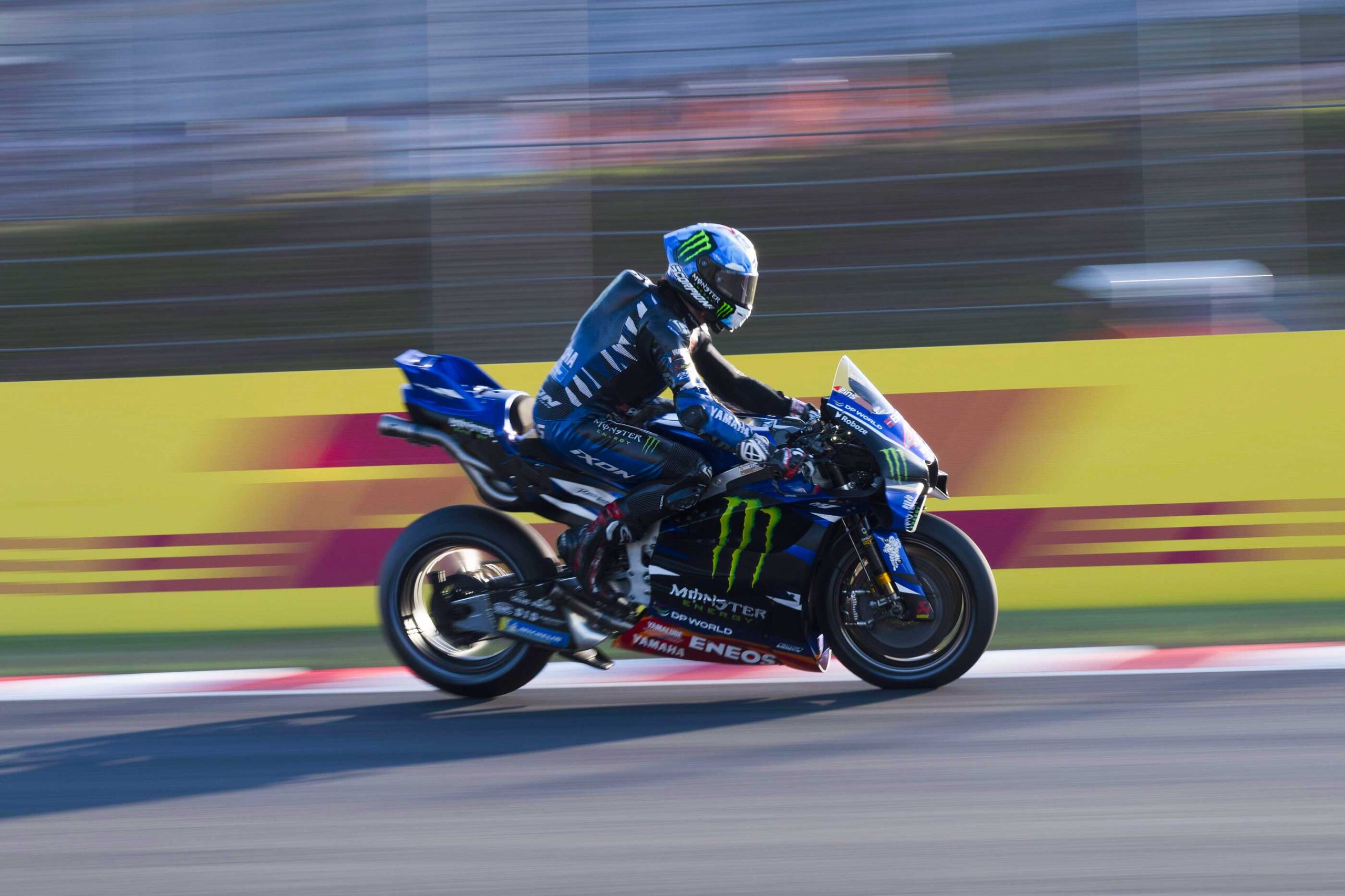
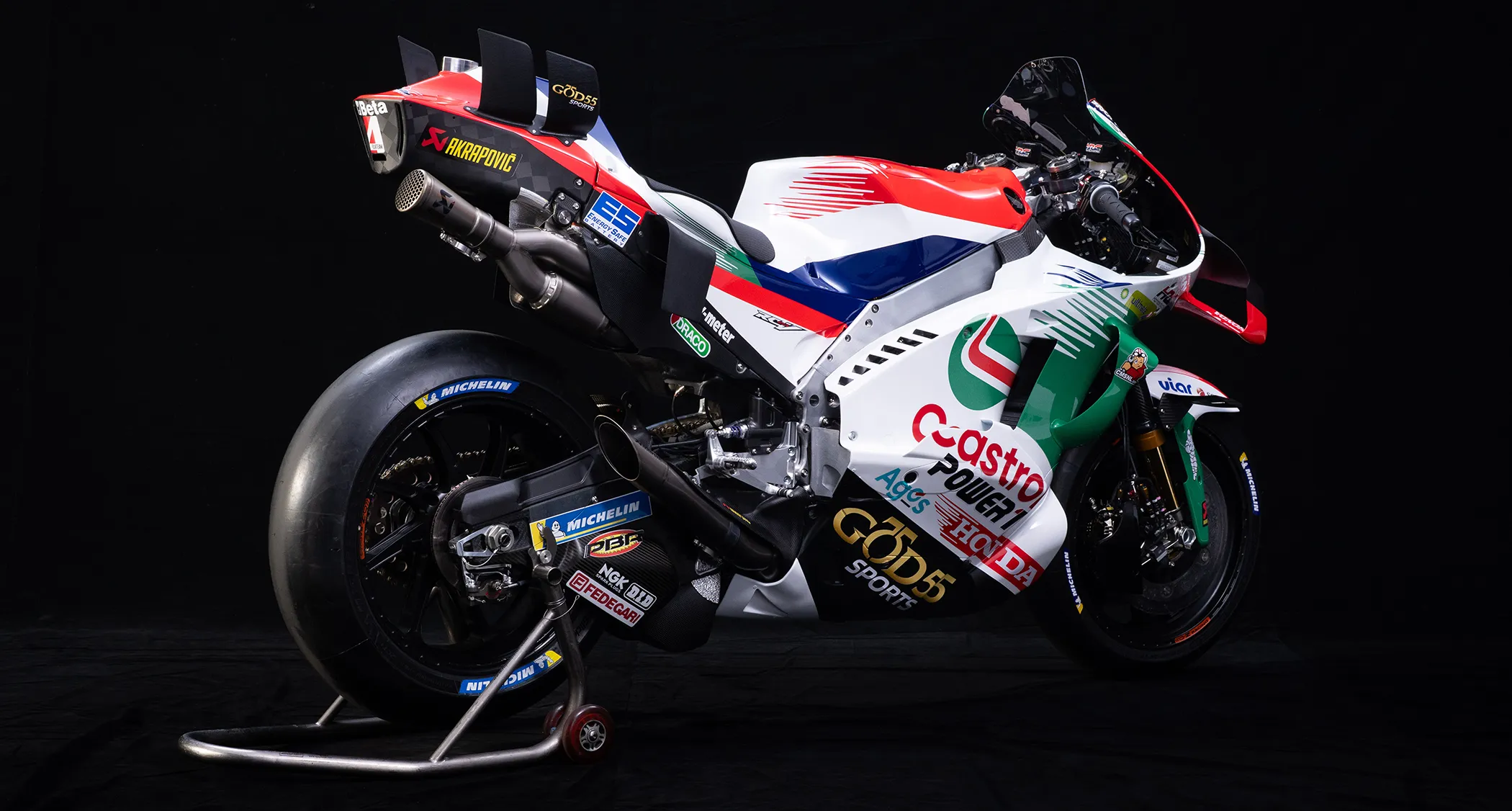
Logo position on the bike – and on the rider’s suit and helmet – is the most quantifiable cost factor in MotoGP sponsorship. Each surface carries a different broadcast value: the front fairing dominates head-on shots and grid walks; the tank dominates onboard footage; the helmet dominates podium and pit-lane close-ups. The table below shows the indicative share of the total package assigned to each position. Values are approximate – actual figures depend on team, rider, and any exclusivity clauses – but they help frame the negotiation.
| Position on Bike / Suit | Visibility Level | Indicative Share of Total Package |
|---|---|---|
| Fairing (front and side) | Maximum – hero broadcast shots | 30 – 45% |
| Tank and tail unit | High – onboard cameras | 15 – 25% |
| Helmet (front and side) | High – podium and pit-lane close-ups | 10 – 20% |
| Suit chest | Medium – grid walks and podium | 8 – 15% |
| Rear wing / aerodynamic spoiler | Medium – TV graphics and overtaking shots | 5 – 10% |
| Lower fairing and swingarm | Entry-level visibility | 3 – 8% |
To understand how visibility translates into media value, our guide to ROI in motorsport sponsorship explains the methodology RTR Sports Marketing uses to value every surface.
MotoGP Sponsorship Tiers: The Full Price Range
Below is the full price range for sponsoring a MotoGP team in 2026, from entry-level packages to title deals. For each tier: price range, ideal brand profile, and package content. Values reflect the midpoint between factory and satellite teams; individual team quotes vary.
€75,000 – Partnership Level: Entry Brand Presence
The Partnership tier is the entry point to the MotoGP paddock. Typical rights include a logo on the team transporter or hospitality area, a mention on the team’s official website, three or four hospitality passes per season, and standard image rights for B2B use. It is a fit for mid-market suppliers, regional B2B brands, or companies building an internal engagement programme around motorsport. This is not a media package in the conventional sense: visibility is primarily indirect, concentrated at the circuits and on team channels.
€75,000 – €150,000 – Technical Sponsor: Targeted Visibility
At this level a brand becomes a recognised supplier of a specific product or service to the team: components, IT, logistics, accessory lubricants, or B2B services. Typical rights include a logo on the lower fairing or rear of the bike, permanent garage presence, four to eight hospitality passes, joint PR on the supply relationship, and product credibility rights. Estimated impressions run into the millions per race weekend, with coverage across 100+ territories. This tier works best for industrial brands, software suppliers, and B2B service categories, where the technology endorsement matters more than raw reach.
€150,000 – €500,000 – Official Sponsor: Broadcast Exposure
The Official Sponsor is the first tier at which a brand begins to appear on television. Logos feature on the side fairing or tail unit of the bike, the brand enters the team’s pre-race graphics, and digital rights extend to short-form social content featuring the riders. At a satellite team, this budget secures meaningful incremental exposure; at a factory team, it positions the brand as a clearly recognisable secondary partner. Buyers at this level are often consumer electronics, financial services, or consumer goods brands seeking a mid-weight entry into motorsport. CPM at this tier is single-digit – this is where MotoGP begins to outperform traditional television.
€500,000 – €3 Million – Premium Sponsor: Global Brand Recognition
The Premium Sponsor unlocks a clear logo position on the side fairing or rider’s suit chest, several hours of broadcast exposure per season, structured rider appearance days, co-branded social and video content, and sub-category exclusivity. Good visibility at this level translates to several hundred minutes of clean brand screen time across the 22 races, plus hospitality and paddock activity that drives B2B conversion. Brands at this level typically activate across the full 2026 MotoGP programme, with customised launches around the Grand Prix in their home market.
The RTR perspective: the Premium tier is where the conversation shifts from logo placement to brand storytelling.
€3 Million – €5 Million – Main Sponsor: Deep Integration
Main Sponsor packages go beyond visibility: integration is the primary value. Rights include dominant logo positions, prominent space on the rider’s suit and helmet, showbike rights for on-site events and headquarters tours, multiple personal rider appearances per year, content rights for co-branded campaigns, and global category exclusivity. Buyers at this level are typically global brands using MotoGP as a flagship platform alongside other sports. The package simultaneously supports B2B hospitality programmes, dealer events, internal engagement, and consumer activation – which is why the investment justifies itself.
€6 Million – €15 Million – Title Sponsor: Maximum Exposure Across 22 Races
Title sponsorship is the most powerful platform in motorcycle racing. Cost ranges from approximately €6 million to €15 million per season, depending on team competitiveness, livery rights, and contract length (typically one to three years, with renewal negotiations beginning the year before expiry). The package includes team and livery naming rights, hero positions on the bike, rider suit, and helmet, plus full hospitality, content, and IP rights. Exposure: 22 races, 200+ countries, over 28,000 broadcast hours per season, and an audience of approximately 210 million MotoGP fans worldwide. For category leaders, this is the platform with the highest brand recall potential – and the highest commercial accountability.
What Do MotoGP Sponsors Actually Receive? Rights and Benefits
The cost of a MotoGP sponsorship only makes sense when you understand what it includes. Depending on the tier, the rights structured by RTR Sports Marketing fall into seven categories. The higher the tier, the broader and deeper each category becomes.
- Logo placement: branded space on the bike, rider’s suit, helmet, team transporter, garage, hospitality area, and official team communications.
- Hospitality access: paddock and team area passes for clients, partners, and internal stakeholders, with VIP-level packages at Title and Main Sponsor tier.
- Media rights: use of team and rider imagery for B2B and consumer marketing, with growing digital activation rights at higher tiers.
- Digital content: social, video, and behind-the-scenes content, often co-produced with the team’s media department.
- Co-branding: limited-edition product collaborations, co-branded merchandising, and joint go-to-market campaigns.
- Rider appearances: personal appearances at trade fairs, dealer conferences, client events, factory visits, and brand shoots.
- Exclusivity zones: category exclusivity within the team or, at Title level, within the championship for selected verticals.
To understand how these rights work in practice and how MotoGP compares with other disciplines, read our guides on how motorsport sponsorship works and on types of sponsorship in sport.
MotoGP Sponsorship ROI: Is It Worth It?
Is MotoGP sponsorship worth it for brands? Based on RTR’s experience and the most recent industry benchmarks, the answer is yes for any brand able to activate the platform to reach a global, predominantly male audience of approximately 210 million fans. MotoGP delivers an estimated CPM of $2 to $8 – significantly more efficient than the $25–50 range typical of US prime-time television. On a pure media basis, MotoGP’s advertising cost per thousand impressions is among the lowest in premium global sport. Across a 22-race season, sponsors gain access to over 28,000 broadcast hours and approximately 200 territories, with a strong digital and social tail reach through team and rider channels.
Brand recall studies in motorsport consistently show double-digit uplift among engaged viewers, particularly when activation is integrated rather than purely passive. The buying implication: a six-figure Official Sponsor investment can outperform a national television campaign on cost per engaged viewer, especially when paired with strong sponsorship activation. For brands willing to invest in activation, MotoGP is one of the highest-ROI properties in global sport.
How to Measure MotoGP Sponsorship Return
ROI measurement in motorsport sponsorship has evolved significantly. RTR Sports Marketing tracks four KPI families for every client: media value (logo exposure converted into equivalent advertising spend), brand lift (pre/post surveys against a control group), social share of voice (organic mentions, hashtag tracking, sentiment), and hospitality lead generation (qualified B2B opportunities generated at the circuit). Used together, these metrics provide a view of return that holds up in the boardroom.
If you want to model your scenario before committing budget, the article on the benefits of motorsport sponsorship outlines the assumptions to stress-test, while our team can build a custom simulator based on your category and geography.
MotoGP Sponsorship vs Formula 1: How Do the Costs Compare?
A frequent question from marketing directors is: how does MotoGP sponsorship cost compare to Formula 1? The short answer: MotoGP offers a comparable global footprint at a fraction of the F1 investment threshold. Entry into F1 typically starts at €500,000 to €1 million; in MotoGP it starts at €75,000. Title sponsorships in F1 can reach €40–100 million per year; in MotoGP they top out at €15 million. Audience profiles differ slightly – F1 is stronger in select markets, MotoGP has deeper engagement in Europe, Asia, and Latin America – but for cost-conscious brands, MotoGP is structurally the more efficient entry point into global motorsport.
| Metric | MotoGP | Formula 1 |
|---|---|---|
| Entry-level sponsorship | ≈ €75,000 | ≈ €500,000 – €1M |
| Title Sponsor range | €6M – €15M | €40M – €100M+ |
| Annual races | 22 Grand Prix | 24 Grand Prix |
| Global broadcast coverage | ≈ 200+ territories | ≈ 200+ territories |
| Broadcast hours | ≈ 28,000+ hours/season | ≈ 30,000 hours/season |
| Estimated CPM | ≈ $2 – $8 | ≈ $15 – $40 |
MotoGP’s cost-efficiency advantage is sharpest for brands that activate well: the absolute audience per individual Grand Prix may be smaller than F1’s, but the cost per engaged viewer is typically better by a factor of 3 to 5. For categories where deep emotional engagement matters more than raw reach – energy, lifestyle, B2B, industrial – this is a decisive advantage.
How to Get Started: Sponsoring a MotoGP Team with RTR Sports Marketing
Brands that extract the most from MotoGP sponsorship follow a simple, repeatable four-step process. RTR Sports Marketing – MotoGP sponsorship agency with three decades of paddock experience – guides clients through every step.
- Define your objectives. Clarify whether the priority is global brand awareness, B2B hospitality, entry into a new market, association with a talent, or category disruption. Each objective implies a different team, rider, and tier.
- Set your budget. Map your objectives against the price tiers outlined in this guide. RTR can help you calibrate the figure based on category exclusivity, contract duration, and geography.
- Select team, rider, and tier. Choose between factory and satellite; rider profile (champion, established profile, rising talent); and the sponsorship tier best suited to your objectives and risk tolerance.
- Activate and measure. Build the activation plan before signing – content, hospitality, dealer programmes, social – and set measurement from day one to demonstrate ROI.
MotoGP sponsorship in 2026 is one of the most efficient platforms in global sport – but only when budget, team, rider, and activation plan are aligned from the outset. The tiers in this guide are a starting point, not a quote: every deal depends on exclusivity, contract length, and how intensively the brand activates the rights it pays for.
If you want to see the brands already on the grid, our list of the most famous brands in MotoGP sponsorship is a useful reference point. When you are ready to move from research to a concrete deal, contact RTR Sports Marketing – over 30 years in the paddock, at every level, from €75,000 packages to €15 million title deals.
Frequently Asked Questions on MotoGP Sponsorship Cost
Cost ranges from approximately €75,000 for an entry-level Partnership package to €15 million for a title sponsorship with a top-tier factory team. The price depends on team level (factory or satellite), rider profile, logo placement, and the scope of the rights package.
Yes, for cost-conscious brands: entry into MotoGP starts at approximately €75,000 versus €500,000–€1,000,000 for F1, and a MotoGP Title sponsorship (€6–15 million) costs a fraction of an F1 title deal (€40–100+ million), while offering a comparable global television footprint (200+ territories in both cases).
Seven main categories: logo placement on bike, suit, and helmet; hospitality and paddock access; media rights for marketing; co-produced digital content; co-branding opportunities; rider appearances; and potential category exclusivity zones.
A factory team (e.g. Ducati Lenovo, Aprilia Racing, Red Bull KTM) typically costs 2–3 times more than an equivalent slot at a satellite team (e.g. Pramac Yamaha, LCR Honda), reflecting better on-track performance, podium visibility, and access to top riders.
RTR Sports Marketing tracks four core KPI families: media value (logo exposure converted into equivalent advertising spend), brand lift (pre/post surveys against a control group), social share of voice (organic mentions, hashtag tracking, sentiment), and hospitality lead generation (qualified B2B opportunities generated at the circuit).