A Formula 1 grid carries between 10 and 15 sponsors per car. Across all ten teams on a given race weekend, that represents potentially 150 commercial relationships operating simultaneously at different investment levels, with different rights, different obligations, and different commercial logics.
And yet, in almost thirty years of working on this market, I have seen the same misunderstanding repeated more times than I can count: the assumption that all sponsorships are essentially the same thing – a logo on a livery at a price that varies with prominence.
They are not. The difference is not simply economic. The types of sports sponsorship are distinct commercial categories with profoundly different contractual structures, rights packages, and communication objectives. Choosing the wrong one – even with the right property, even with an adequate budget – means wasting a real opportunity.
This guide covers all the main types of sports sponsorship, with a specific focus on motorsport, where the variety is greatest and the contractual structures are among the most evolved in global sport.
The Architecture of Sponsorship: A System, Not a Menu
The right metaphor is not a restaurant menu, where you choose a dish based on price. The right metaphor is a construction site: there are foundations, load-bearing structures, and finishing work. Each element has a function. Stacking two elements of the same category does not add value – it dilutes it.
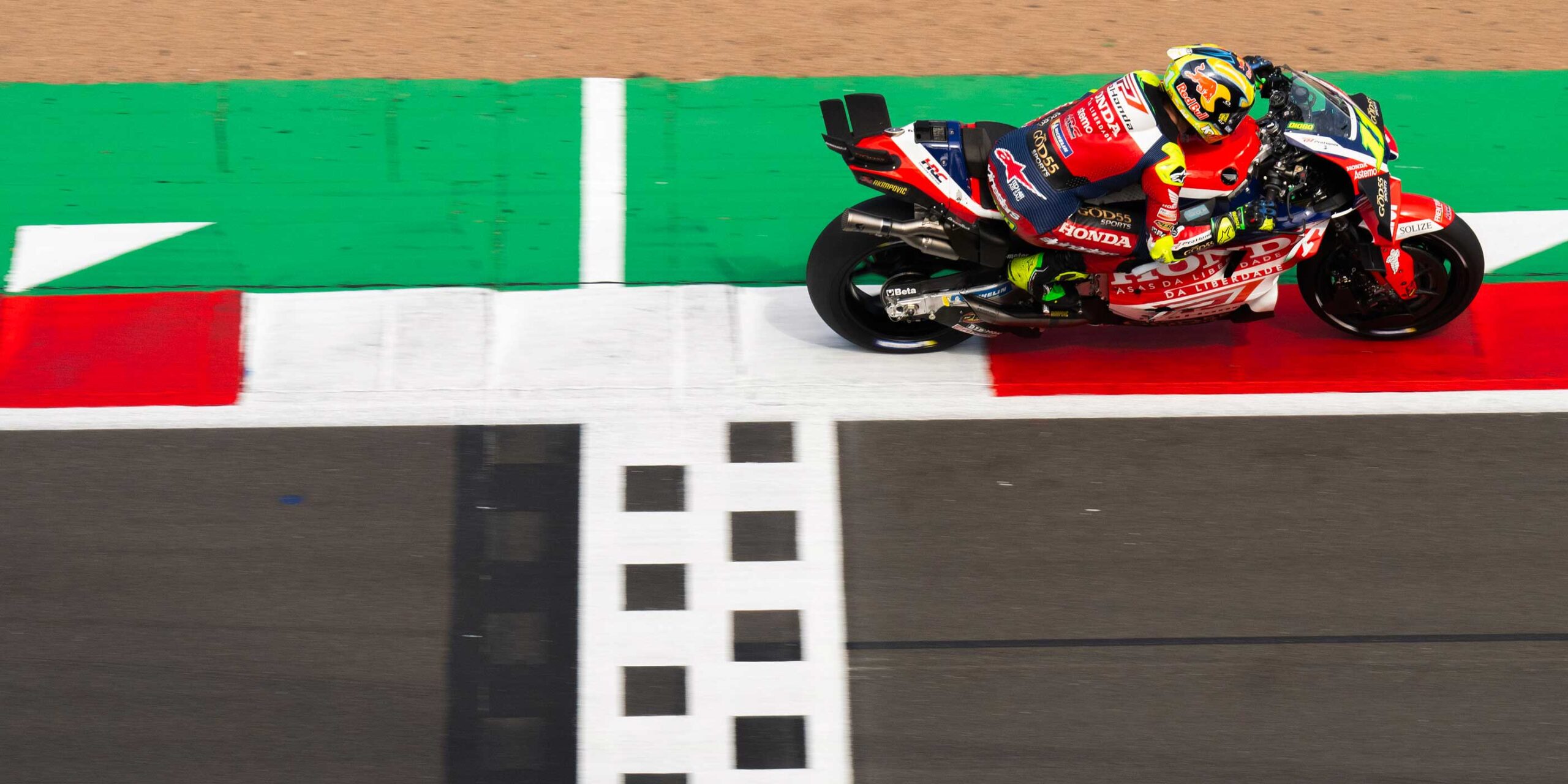
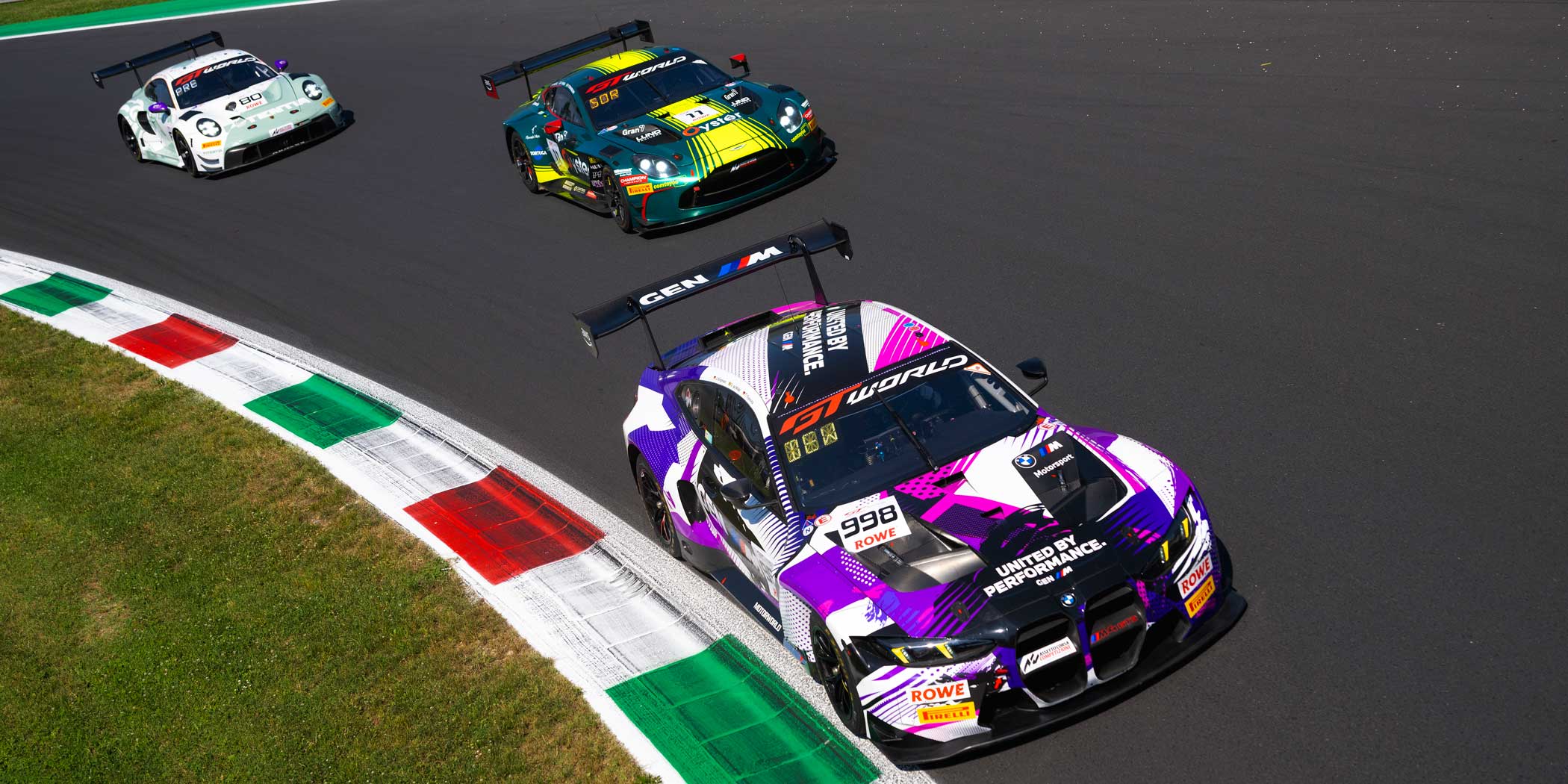
In motorsport, this principle is visible on the livery of every car. There is a hierarchical order that reflects exactly the contractual and commercial order of the individual agreements. Understanding that hierarchy is the first step to navigating the market.
To understand how these tiers fit into the broader commercial framework, the guide on how motorsport sponsorship works covers the full deal structure, negotiation process, and brand rights in detail.
The Types of Sports Sponsorship: The Complete Taxonomy
1. Title Sponsor (or Naming Sponsor)
This is the highest level of the hierarchy. The title sponsor gives its own name to the competition, team, or event. It does not simply obtain visibility – it obtains identity.
In 2024-2026 motorsport, the examples are numerous and revealing: Oracle Red Bull Racing in Formula 1, HP Scuderia Ferrari, Monster Energy Yamaha MotoGP Racing, Pertamina Enduro VR46 Racing Team. In each case, the sponsor’s brand is an integral part of the team’s official name – cited in press releases, in television broadcasts, in every official reference.
Cost in Formula 1 ranges from approximately $20 million to $100 million or more per year. But the reasoning should be inverted: you do not evaluate a title sponsorship based on what it costs – you evaluate it based on what the naming right is worth in that championship, in that market, at that moment in the competitive cycle.
Title sponsorship is most effective for large global brands seeking maximum brand fusion: the goal is not to be seen on the car but to become part of the car’s identity in public consciousness. It is the difference between advertising and belonging.
2. Main Sponsor (or Principal Sponsor)
The main sponsor is the primary sponsor of the livery: maximum graphic visibility, premium positions (bonnet, front sidepods, fairing), without naming rights over the team. This is an important distinction, often underestimated by those approaching the market for the first time.
The advantage of main sponsorship over the title is flexibility: maximum visual exposure is obtained without the commitment – and complexity – of sharing one’s name with the team’s sporting results. When the season goes poorly, a main sponsor is structurally less exposed in media terms than a title sponsor. Cost in F1 ranges from approximately $5 million to $20 million per year.
3. Associate Sponsor (or Co-Sponsor)
The associate sponsor occupies secondary positions on the livery – rear wings, helmets, suit secondary positions, rear bodywork. The contract includes proportionally lower visibility and proportionally lower cost.
It is not a “minor” sponsor by definition. It depends on the objective. A niche brand with a technical and passionate audience can extract more value from an associate position on the right team’s car, in a championship like WEC or WSBK, than from a main position on a team less relevant to its target. In Formula 1, associate investment can begin at $500,000 per year. In NASCAR, associate-level investment can begin at $15,000 to $40,000 per race – making motorsport genuinely accessible to brands that assumed it was structurally beyond their budget.
4. Official Partner
The official partner has communication and marketing rights – the ability to use logos, images, and the brand of the team or championship in its own commercial communication – without necessarily having direct visibility on the livery.
It is the most suitable instrument for brands that want to exploit the emotional association with a sport or team for B2C activities: promotions, co-branding, loyalty programmes. The marketing right is the resource, not the physical space on the car. Heineken’s relationship with Formula 1 as an official series partner demonstrates the model at scale: category exclusivity across the entire championship and the right to use F1 branding across its entire consumer marketing ecosystem.
To understand how activation rights like these are deployed effectively, the guide to motorsport sponsorship activation covers every activation format in detail.
5. Technical Partner (or Technical Supplier)
The technical partner provides products or technical services essential to the functioning of the team or competition. In exchange, it obtains communication rights proportional to the importance of the supply.
In motorsport the examples are everywhere: Michelin as the official MotoGP tyre supplier, Pirelli as the exclusive Formula 1 tyre supplier, Shell as fuel and lubricants supplier for Scuderia Ferrari since 1929, Brembo as a braking technical partner for dozens of teams across every championship. In these cases, the product is not a decorative addition – it is an integral part of on-track performance.
The communicative value of a well-structured technical partnership is extraordinarily high for certain product categories. The implicit performance certification obtained by saying “our brakes stop the world champion’s car” has no equivalent in other advertising channels. Costs range from approximately $500,000 to $15 million or more per year, depending on the depth of technical integration and the scope of co-branding rights.
6. Official Supplier
Similar to the technical partner, but with a broader perimeter: the official supplier can provide non-technical goods – clothing, catering, IT technologies, energy infrastructure – and obtain visibility and communication rights in exchange. The distinction from the technical partner is subtle but contractually relevant: “technical” implies direct involvement in sporting performance, “official” implies operational supply officially recognised by the sporting property.
7. Regional Sponsor
The regional sponsor obtains rights limited to a specific geographic territory. It is a particularly useful instrument for brands with strong regional presence but without global visibility ambitions – or for brands that want to test sports sponsorship as a channel before extending the investment.
In Formula 1 and MotoGP, regional contracts are frequent for high-potential markets such as South-East Asia or the Middle East, where a local brand can obtain exclusive rights in its own territory at lower costs than a global agreement.
8. Hospitality Sponsor
The hospitality sponsor does not invest in on-track visibility: it invests in the hospitality programme as a business development tool. Paddock club access, pit lane tours, meetings with drivers, technical tours – the entire experiential offering becomes an instrument for relationship management with clients, partners, and key stakeholders.
For a full understanding of how a comprehensive programme that includes hospitality components is structured, MotoGP sponsorship offers one of the richest and most accessible contexts in global motorsport.
9. Co-Title Sponsor
Less frequent but real: two or more brands share the naming right over a team or event. It is a complex contractual structure that requires prior agreements between co-sponsors to avoid positioning conflicts or sector overlaps. The advantage is reducing the unit cost of the naming right; the disadvantage is the lower perceived identity of each brand compared to an exclusive title.
10. Driver Sponsor (or Personal Sponsor)
In motorsport, the driver sponsor is the personal sponsor of the driver, distinct from the agreement with the team. The logo appears on the helmet, the race suit, in areas not covered by the team contract. It is a useful instrument for brands that want to associate with the specific personality of an athlete more than with the institution.
The complexity lies in the negotiation: the driver’s rights and the team’s rights partially overlap and must be carefully aligned. A consultant with experience on both sides of the table is indispensable to avoid contractual conflicts. Driver personal sponsorships at the F1 level typically range from $500,000 to $5 million per year, depending on the driver’s profile and social reach.
Sponsorship Type Comparison: Cost, Rights and Brand Fit (2026)
The table below provides a structured reference for the sponsorship tiers discussed above. Cost ranges reflect Formula 1 as the benchmark series; other series will vary accordingly.
| Type | What You Get | Cost Range (F1) | Ideal Brand Profile | Real Example |
| Title / Naming Rights | Team name integration, primary car/suit positions, full rights package, category exclusivity | $20M–$100M+/yr | Global brands seeking maximum brand fusion | HP x Scuderia Ferrari, Oracle x Red Bull |
| Main / Principal | High-visibility car positions, full comms integration, hospitality access, driver access, content rights | $5M–$20M/yr | Large brands seeking awareness and association | Google Chrome x McLaren, Aramco x Aston Martin |
| Associate / Co-Sponsor | Secondary car/suit positions, digital asset access, limited hospitality | $500K–$5M/yr | Brands testing motorsport or targeting hospitality ROI | Various mid-market and regional brands |
| Official Partner | Team IP/logo use rights, category exclusivity, campaign integration, limited trackside presence | Varies | Established brands seeking sales activation and IP rights | Heineken x Formula 1 |
| Technical Partner | Co-branding rights, performance-proof marketing, joint R&D, credibility association | $500K–$15M+/yr | Automotive, tech, engineering, materials brands | Shell x Ferrari, Pirelli x F1, AWS x F1 |
| Official Supplier | Official designation, logo rights, product supply recognition | Varies | Operational services brands – catering, apparel, IT | DHL x Formula 1 |
| Regional Sponsor | Territory-limited visibility and communication rights, market exclusivity | Lower than global rates | Regional brands testing sponsorship or defending a local market | Various Asia-Pacific and Middle East brands |
| Hospitality Sponsor | Hospitality programme access, business development tools, experiential rights | Varies | B2B brands using sport for client entertainment and pipeline | Various corporate hospitality packages |
| Driver Sponsorship | Helmet/suit logo placement, personal social amplification, driver appearance rights | $500K–$5M/yr | Lifestyle, consumer goods, personal-brand-aligned brands | Monster Energy x Lewis Hamilton |
The Five Most Common Mistakes in Choosing a Sponsorship Type
In nearly thirty years of contracts I have seen the same pattern repeat itself. Five mistakes, in 90% of cases.
First: choosing based on price, not objective. Cost is a consequence, not a starting point. Define first what you want to achieve – global awareness, B2B lead generation, technical legitimacy, hospitality – and then identify which type of sponsorship delivers it most efficiently.
Second: underestimating marketing rights. Many brands sign agreements concentrated on on-track visibility and never activate the marketing rights included in the contract. The result: a logo on a car, with no amplifier. Sponsorship without activation is an empty sticker on a livery.
Third: confusing visibility with reach. A logo in a main position on a mid-field team has less effective reach than a technical partnership with the world champion team. Reach depends on the media relevance of the property, not the size of the logo.
Fourth: ignoring category exclusivity. The most undervalued competitive advantage of sports sponsorship is exclusivity: your competitors cannot be where you are. If you do not protect it, they will.
Fifth: signing without an exit strategy. Multi-year contracts offer economic advantages but require flexibility. If the team’s competitiveness declines or its technical structure changes, the value of the investment changes. Structure the contract to protect yourself in advance.
Team-Level vs Series-Level Sponsorship
The choice between sponsoring a team and sponsoring a series is the most strategically significant decision a brand can make when entering sports sponsorship. Each structure delivers a fundamentally different commercial experience.
Series-level sponsorship – LVMH with Formula 1, Aramco with Formula 1, DHL with Formula 1 – delivers brand presence across every team at every race in every country the championship visits. The reach is unmatched. The commercial logic is brand ubiquity rather than tribal loyalty. The budget requirements are correspondingly larger.
Team-level sponsorship provides something the series level cannot: the intensity of fan tribal connection. Ferrari fans are not generic motorsport enthusiasts – they are Ferrari fans, a category with a decades-long emotional history and a purchase loyalty that consistently transfers to the team’s commercial partners. Most brands start at the team level. The depth of relationship it enables is difficult to replicate at a large scale.
For a full comparison of what each platform delivers in terms of commercial return, the guide to the advantages of sports sponsorship covers every ROI category in detail. For brands focused on electric racing, Formula E sponsorship offers urban circuit access and strong ESG alignment that traditional series cannot match.
How to Choose the Right Type of Sponsorship for Your Brand
It depends on three variables: communication objective, available budget, and target market. No answer is universal.
A B2B tech brand with enterprise clients that wants to do business development in a Grand Prix paddock will choose a different path from a consumer brand that wants to build global awareness. A regional brand that wants to protect a specific market will follow a completely different logic from a global brand seeking to establish itself in a premium segment.
What remains constant is the method: objective analysis, sponsorship type selection, property identification, contract structuring, activation. Skipping any one of these steps compromises the return on investment.
For a deeper understanding of how sponsorship ROI is structured and measured, the guide to motorsport sponsorship ROI provides the full measurement framework. RTR Sports Marketing has been operating as an independent motorsport sponsorship agency since 1995 – working on the brand side, not affiliated with any team or series, which means every tier recommendation is built around your objectives, not our preferred inventory.
Frequently Asked Questions on Types of Sports Sponsorship
Frequently Asked Questions
What is the difference between title sponsor and main sponsor?
The title sponsor gives its own name to the team or competition: the brand becomes part of the official identity (as in Oracle Red Bull Racing or HP Scuderia Ferrari). The main sponsor obtains maximum graphic visibility on the livery without naming rights. The distinction is contractual before it is economic: the title sponsor shares its name with the team’s sporting results, with all the reputational and media consequences that follow.
What does a technical partnership include in motorsport?
A technical partnership includes the supply of products or technical services – tyres, fuels, brakes, lubricants, composite materials – in exchange for communication rights: the right to cite the team as a reference, to use logos and images in advertising and, in many cases, visibility on the livery. The communicative value lies in the implicit performance certification that the partnership transfers to the supplying brand.
What is the difference between official partner and technical partner?
The official partner has communication rights that include the use of the property’s logos and brands in its own advertising, with or without direct livery visibility. The technical partner supplies products or services that directly impact on-track performance – and obtains communication rights tied to that supply. The key difference is in the nature of the relationship: commercial for the former, technical-performance for the latter.
What does being a regional sponsor mean in Formula 1 or MotoGP?
A regional sponsor obtains visibility and communication rights limited to a specific geographic territory – for example, the exclusive right to use the team’s logo in commercial communication in a single country or geographic area. It is a useful instrument for brands with strong regional presence that want to test sports sponsorship or protect a specific market without bearing the cost of a global agreement.
How do you choose the right type of sponsorship for your company?
The choice depends on three variables: communication objective (global awareness, B2B lead generation, technical legitimacy, hospitality), available budget, and target market. The correct method requires first defining the objective, then identifying the type of agreement that delivers it most efficiently, and finally selecting the property. Starting from budget or property instead of objective is the most frequent mistake companies make on their first approach to sports sponsorship.
The right choice is never the most expensive, nor the cheapest. It is the one that corresponds to the objective you declared before opening any negotiation.
The type of sponsorship comes before the budget. Always.