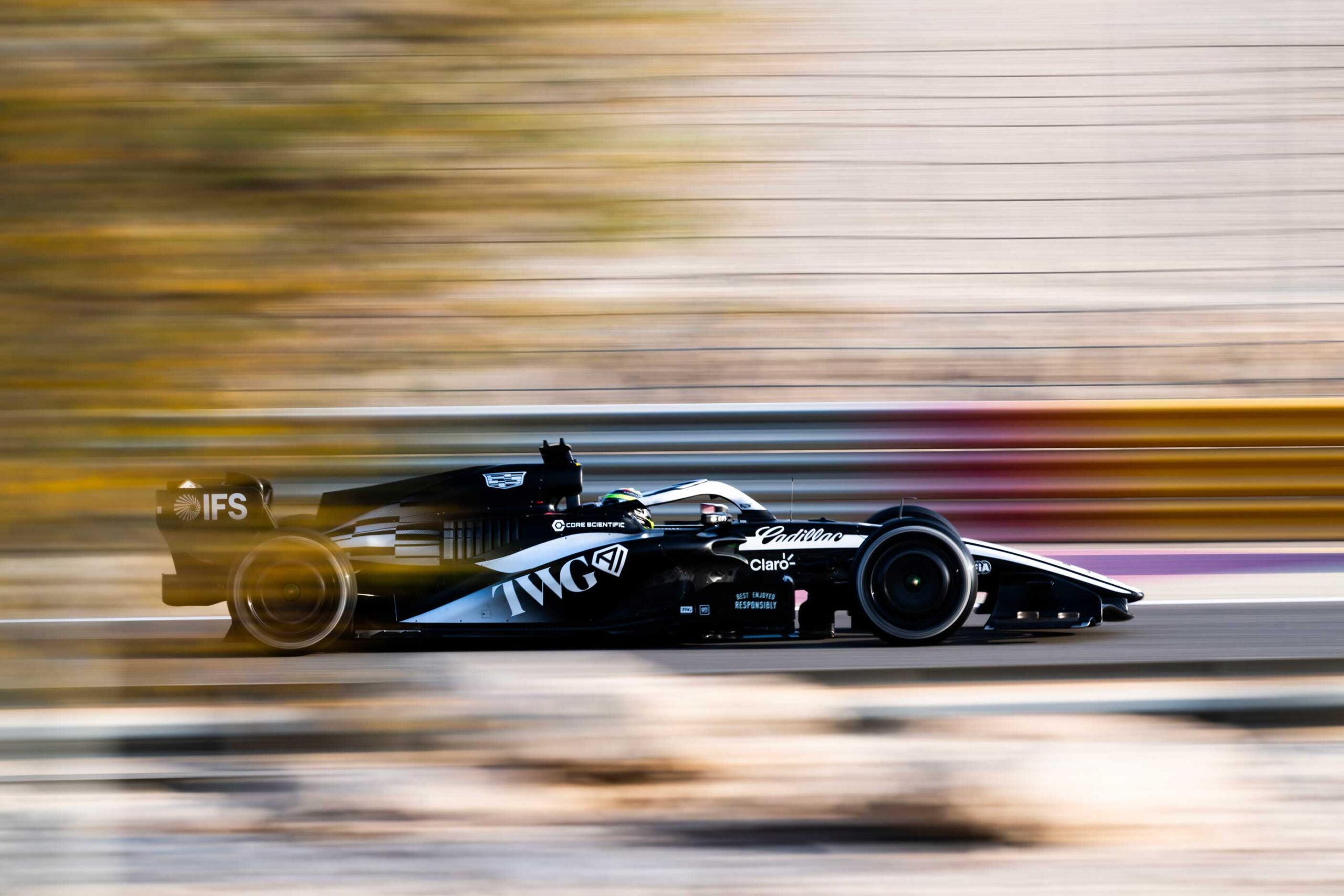
Spring 2020. Racing has stopped, circuits are closed, and a twenty-year-old spends his evenings in front of a webcam, driving on a simulator, joking with fellow drivers and answering the chat. His name is Lando Norris, he races for McLaren, and over those months on Twitch he builds an audience that goes well beyond what his results on track were giving him at the time. At the end of the same year he launches Quadrant, a brand of his own that mixes gaming, apparel and content. A little over five years later, in December 2025, he becomes Formula 1 world champion.
The title has nothing to do with streaming, of course. But when it came, Norris had long been a driver with an audience of his own, recognisable, following him even on the days when there was no racing. And that is exactly what a sponsor looks at, even before lap times.
This article tries to answer the question many drivers, especially in the junior categories, ask us most often: what makes a driver attractive to sponsors? Our answer, from the brands’ side, runs largely through social media. Not as a shop window, but as evidence.
The driver as a media channel
For decades a driver mainly sold space to sponsors: the race suit, the helmet, the side of the car. That space still has value, but on its own it is worth less than it used to be, because, in our experience, TV visibility is concentrated in a few categories and on a few names. For everyone else, commercial value depends more and more on a simple question: who follows you, and how closely do they listen?
Data on the Formula 1 audience explains it well. The 2025 Global F1 Fan Survey, run by Formula 1 and Motorsport Network among more than 100,000 highly engaged fans in 186 countries, found that in the United States 40% of fans follow a driver first, rather than a team or the championship. And 76% of respondents believe sponsors enhance the Formula 1 experience. The driver is no longer just an athlete carrying a logo: he is a direct point of contact with an audience that has chosen him.
For a sponsor, this changes the way a deal is assessed. A driver sponsorship becomes, at least in part, a partnership with a small publisher. And as with any publisher, the brand wants to understand who is reading, with how much attention and how much trust.

The sponsor’s five questions
When we assess a driver on behalf of a company, the questions we ask about their social channels are more or less always the same. We have set them out because it seems the most honest way to explain to a driver what they need to build.
Who the audience is. Not how many followers, but who they are: age, country, interests. A company selling software to businesses and an energy drink brand are looking for different people, and a huge but wrong audience is worth less than a small but right one.
How attentive it is. The engagement rate, meaning how many people comment, save and share compared with how many see a piece of content, says far more than the follower count. A profile with a few thousand people who genuinely respond is more interesting than one inflated by bought followers, which often give themselves away with engagement out of proportion to the numbers.
How consistent it is. The sponsor needs to know what to expect: a tone, a style, a publishing frequency. A driver who only posts on race weekends, or who changes register every week, is hard to fit into a communication plan.
How safe it is. Brands also buy the reputation of whoever carries them around. Gratuitous controversies, inappropriate content or promotions of products that clash with the sponsor are a risk, and investors weigh it carefully.
How measurable it is. At the end of the season the sponsor has to be able to show, inside its own company, what it achieved. A driver who provides clear data on the reach, views and interactions of dedicated content makes life easier for whoever has to renew the contract.
Building a profile a sponsor wants to buy
A few practical choices follow from these questions. The first is the story. A driver has a story nobody else has: the beginnings, the family, the sacrifices, the team, the days without racing. Storytelling is not a stylistic exercise, it is the reason people come back to the profile even when there is no result to celebrate. Above all, it has to be true: audiences quickly recognise what has been manufactured.
The second is the choice of platforms, which are not all the same. Instagram remains the place for images and day-to-day storytelling, TikTok and short videos tend to bring in a younger and newer audience, YouTube rewards long-form content and behind-the-scenes footage, Twitch and streaming work for those with a genuine passion for sim racing, as the Norris case shows. And then there is LinkedIn, which many drivers underestimate: it is where it is easiest to reach companies’ marketing managers, and where a driver can present themselves as a professional partner, not just an athlete.
The third is continuity. A simple editorial calendar, kept all year round, is worth more than a few spectacular posts concentrated on race weekends. The season lasts a few months, the relationship with the audience twelve.
The fourth is how you talk about the sponsors you already have. A partner shown naturally, within the driver’s real life, is the best calling card for the next one. A logo forced into every post has the opposite effect. We discussed this from the companies’ side in how social media multiplies the impact of a motorsport sponsorship.
Social media in the contract
As a deal gets closer to signature, social media stops being a general topic and becomes a set of clauses. How many dedicated posts, on which platforms, with what notice and what approval from the brand; who can reuse photos and videos, for how long and on which channels; what data the driver commits to sharing at the end of the season. These are details worth defining early, because they are where misunderstandings start.
Then there is the regulatory side. Sponsored content must be recognisable as such. In Italy, for example, on 23 July 2025 AGCOM, the communications regulator, updated its influencer guidelines and approved a code of conduct: they apply to anyone with at least 500,000 followers or one million average monthly views on at least one platform, provide for inclusion in a list published by the authority and require advertising content to be flagged according to the Digital Chart of the Italian advertising self-regulation institute (IAP). Similar rules exist in many other countries. A driver who knows and applies them is a more reliable partner, whatever their follower count.
What does not work
We see some mistakes again and again. Buying followers, first of all: it inflates a number no serious sponsor looks at in isolation and lowers the engagement rate, which is precisely the figure that matters. Then treating social media as an archive of results, with a podium photo and nothing else: that is content the audience can find anywhere, and it builds no relationship.
Another frequent mistake is approaching a sponsor with nothing but social media numbers, without any idea of how the brand could use them. Companies are not looking for a billboard, they are looking for an opportunity to tell a story. It is the same logic as brand activation in motorsport: visibility is the starting point, value comes from what you build on top of it.
Finally, there is the mistake of thinking social media can replace everything else. It cannot. A driver with no results, no credible programme and no serious team remains hard to sponsor even with a million followers. Social media does not create value out of nothing: it makes it visible, measurable and therefore saleable.
A season lasts a few months, an audience lasts longer
At the top of motorsport this logic has already become the norm. Just look at the Formula 1 drivers most sought after by sponsors: all of them have built, over time, a personal audience that follows them beyond the team and beyond any single championship. For those racing in the junior categories, the lesson is that this audience does not arrive with victory: it is built beforehand, one piece of content at a time, and it becomes the reason a sponsor is willing to bet on you even when the results have yet to come.
For companies, the same applies the other way round. Choosing a driver means choosing an audience, and it is worth examining it with the same care you would give a media plan. If you are considering a sponsorship and want to understand how to set it up, start with the questions to ask an agency before signing.
Frequently asked questions about social media and sponsors for drivers
What makes a driver attractive to sponsors?
Beyond results and the sporting programme, a sponsor assesses the driver’s audience: who follows them, how engaged they are, how consistent their communication is, how safe their reputation is and how measurable the results of dedicated content are. Social media is where all of this becomes visible.
Do followers or engagement matter more?
Engagement. The follower count alone says little: a small profile with an audience that comments, shares and saves content is often more interesting than a large but passive one. Bought followers, besides often being detectable through an audience analysis, lower precisely the engagement rate.
Which social media should a driver use to attract sponsors?
It depends on the audience and the sponsors they are looking for. Instagram is central for day-to-day storytelling, TikTok tends to bring in a younger audience, YouTube rewards long-form content and behind-the-scenes footage, and streaming works for those with a real passion for sim racing. LinkedIn is often underestimated, but it is the channel where it is easiest to reach companies’ marketing managers.
What should a social media sponsorship contract include?
The number and type of dedicated posts, the platforms, the timing and approval process on the brand’s side, the rights to reuse photos and videos (duration and channels), the rules for flagging advertising, and the data the driver will share at the end of the season to measure results.
Do drivers have to disclose sponsored content?
Yes, advertising content must be recognisable. In Italy, the guidelines and code of conduct approved by AGCOM on 23 July 2025 apply to anyone with at least 500,000 followers or one million average monthly views on at least one platform and require advertising content to be flagged according to the Digital Chart of the Italian advertising self-regulation institute. Similar rules exist in many other countries.
Can social media replace results on track?
No. Social media makes a driver’s value visible and measurable, but it does not create it out of nothing: results, a credible sporting programme and a serious team remain the foundation. An audience built consistently, however, can persuade a sponsor to invest even before the results arrive.