There is a version of motorsport sponsorship that everyone understands. A brand pays money. Their logo appears on the car. People watching the race see it. This is not wrong exactly. It is simply the smallest possible interpretation of a much larger and more structurally interesting commercial arrangement — and brands that stop at that interpretation consistently leave the majority of the value on the table.
What Is Motorsport Sponsorship? (And Why Brands Invest in It)
Motorsport sponsorship is, at its core, a commercial partnership in which a brand pays a team, driver, or series for a defined package of marketing rights. Those rights can encompass logo placement on car and team infrastructure, broadcast exposure across race weekends and global replay coverage, physical presence in paddock hospitality environments, content and IP access for co-branded campaigns, B2B activation rights, and digital amplification through team social channels with audiences built over decades.
The global motorsport sponsorship market was valued at $5.11 billion in 2023[1], growing at a compound annual growth rate of 9.7%. The brands investing at scale — Oracle, HP, LVMH, Aramco, Mastercard — are not doing so for stickers. They are doing so because the motorsport sponsorship model offers something the rest of the marketing landscape cannot replicate: the intersection of genuine emotional intensity, a genuinely global audience, and a measurement infrastructure sophisticated enough to satisfy a CFO who has never watched a qualifying session in his life.
This guide is written for brands and marketing teams evaluating that opportunity. Not for racing teams looking for sponsors. The framing matters because the calculation is entirely different depending on which side of the table you are sitting on.
Key Parties in a Motorsport Sponsorship Deal
Three principals sit at the table in any significant motorsport sponsorship. The first is the brand — the company bringing commercial capital to the arrangement, typically motivated by some combination of global awareness growth, B2B pipeline development, product credibility amplification, and measurable sales impact. The second is the rights holder: the team, driver, or championship series that controls the commercial rights being licensed. The third is the one most brands overlook, particularly when approaching the market for the first time: the independent specialist agency.
An independent agency works exclusively on behalf of the brand. It has no financial relationship with the properties it recommends and no incentive to steer a client toward one team over another for reasons unrelated to that client’s commercial objectives. Its function is to match the brand’s specific needs to the right series, right tier, and right rights package — then negotiate with full knowledge of what deals at this level should actually contain, what they typically cost, and where teams routinely underdeliver on their stated commitments. For brands without an internal team that has spent years inside motorsport paddocks, this expertise is genuinely difficult to replicate. It is also where the largest gap between stated ROI and actual ROI tends to originate.
Team sponsorship vs series sponsorship vs driver sponsorship
Three structural formats exist within the motorsport sponsorship commercial structure. Team sponsorship places the brand with a specific constructor: Oracle’s relationship with Red Bull Racing embeds the technology company’s identity into every aspect of the team’s communications and physical presence. Series sponsorship operates at the macro level: LVMH’s €1 billion, ten-year agreement with Formula 1 delivers presence across all 24 races and all ten teams, buying access to the entire ecosystem rather than a single competitor within it. Driver sponsorship is the most personal format, placing the brand on the driver’s helmet and race suit while accessing their full personal media footprint. Each pathway carries a different cost profile, a different audience relationship, and a different activation logic. Selecting the right format is a strategic question. Not a budget one.[2]
How a Motorsport Sponsorship Deal Is Structured – Step by Step
The motorsport sponsorship process follows a recognizable sequence, even if the timeline and complexity vary considerably by series and investment level. Understanding the five stages before entering any negotiation is the single most effective protection against the errors that generate poor ROI.
Stage 1 — Brief and Objectives
Before any conversations with teams or agents begin, the brand must define precisely what it needs from the partnership: unaided awareness growth in a specific geographic market, B2B pipeline development through paddock hospitality, product credibility through technical co-branding, or measurable direct sales attribution. Without this clarity, every subsequent decision is made in the wrong direction.
Stage 2 — Series and Team Selection
F1 reaches 826.5 million fans globally; NASCAR delivers 75 million predominantly US-based consumers across a 36-race schedule; MotoGP is the most powerful single platform for Asia-Pacific market penetration. The brand’s target audience geography is the primary filter. Budget is the secondary one.[3]
Stage 3 — Commercial Negotiation and Rights Definition
This is where independent agency expertise earns its value. The motorsport sponsorship structure of any deal is defined here: logo tier and placement specifics, content and IP rights, hospitality allocation, digital amplification obligations from team channels, category exclusivity provisions, and the measurement framework that will govern ROI reporting throughout the season.
Stage 4 — Contract and Legal
Sponsorship agreements cover deliverable schedules, penalty clauses for reputational events, exclusivity terms, IP usage rights, and early termination provisions. Performance-related clauses — protecting the brand if the team’s on-track results fall materially below expectations — are available and worth negotiating at every investment level.
Stage 5 — Activation and Measurement
The signed contract is not the conclusion. It is the starting point for the work that actually determines whether the investment returns anything at all. The motorsport sponsorship mechanism that converts signed rights into measurable brand outcomes is activation — and it is covered in detail later in this guide.
What Does a Motorsport Sponsor Actually Get?
The rights package available to a sponsor is considerably more expansive than a broadcast logo. A well-structured deal delivers value across six distinct categories, each of which represents a marketing channel in its own right.
Logo and livery placement are the most visible
The brand’s identity appears on car bodywork, pit wall equipment, team uniforms, race suits, helmets, motorhomes, and all official team communications — generating a frequency and scale of visual exposure that brands in other categories spend hundreds of millions of advertising dollars attempting to approximate through pure media buying.
Broadcast exposure
Broadcast exposure flows from that placement across television, streaming, and social platforms — across qualifying sessions, practice runs, race weekends, post-race highlights, and social clips that extend the exposure window far beyond the race itself.
Hospitality and paddock access
Hospitality and paddock access give the brand physical presence at circuits worldwide, with environments like the Paddock Club and the MotoGP VIP Village functioning as the most commercially intensive hospitality settings in global sport.
Content and IP rights
Content and IP rights allow the brand to produce and distribute co-branded material using team and driver imagery across every channel it controls. B2B activation rights convert trackside access into client entertainment and commercial pipeline development. And digital amplification through team social channels — which in Formula 1 reach tens of millions of followers per team — places the brand in front of audiences that took decades to construct.
Brands like American Express and Coca-Cola have built entire consumer programmes on these foundations. In both cases, the logo was the entry point. It was never the destination.
Logo placement tiers: where your brand appears on the car, suit and team assets
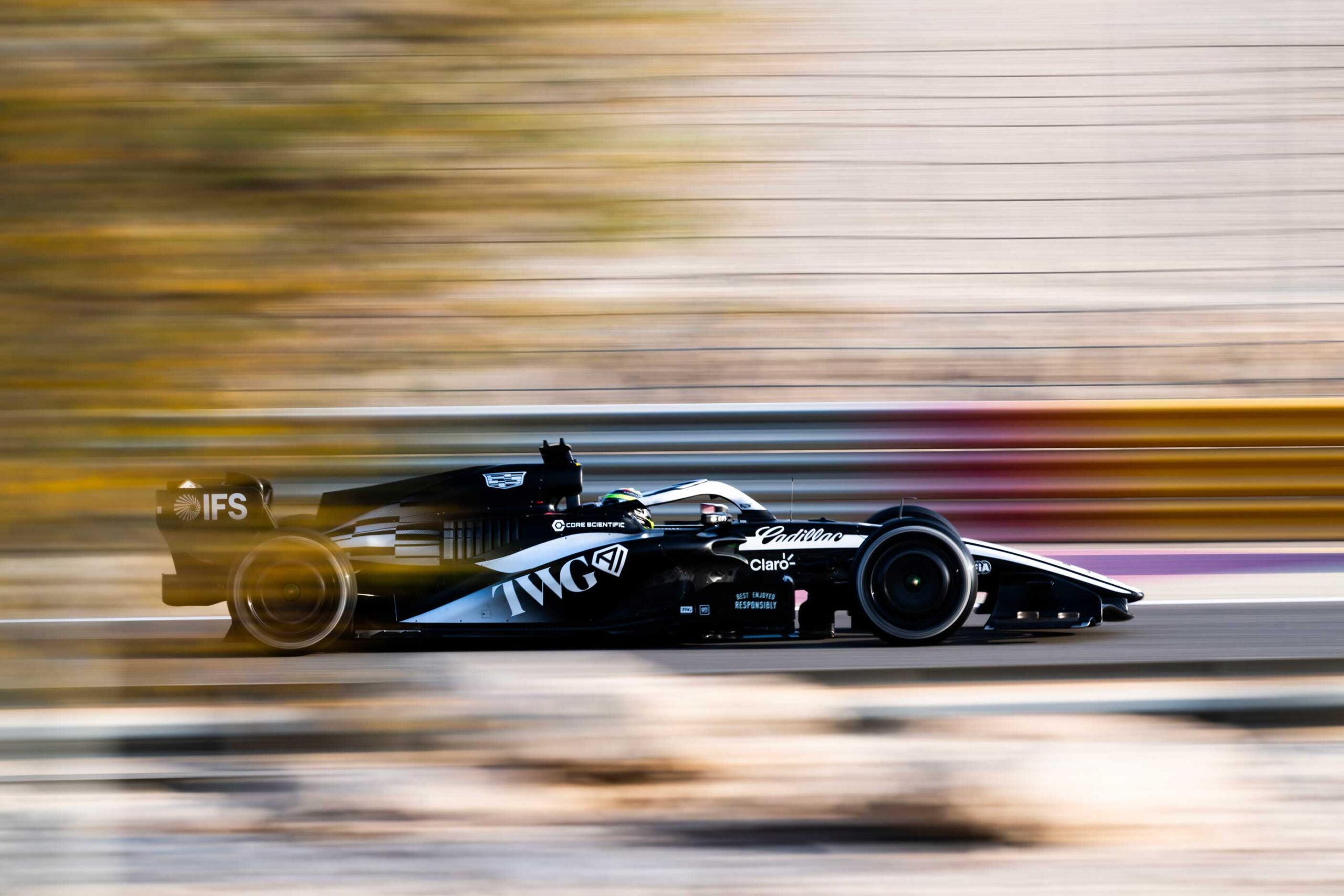
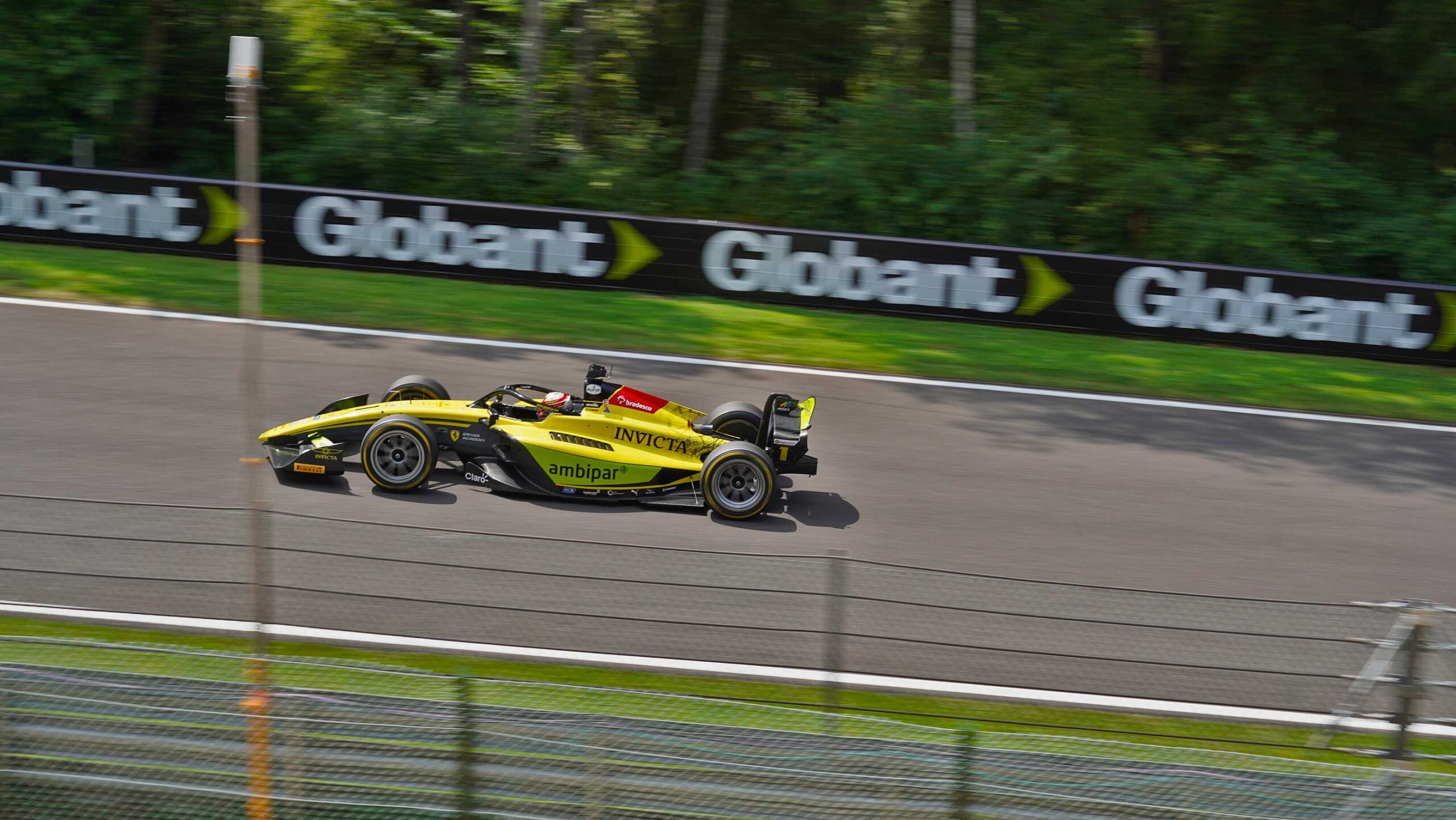
Commercial partnerships are structured hierarchically. A title or principal sponsor commands the most prominent real estate: nose cone, engine cover, sidepods, and the primary positions on the race suit and helmet — the areas that dominate broadcast close-ups, media photography, and social content. Primary sponsors occupy the next tier with high-visibility positions and full integration into team communications. Associate and technical partners appear on the rear wing, mirrors, and secondary suit positions.
Understanding which tier a given deal actually represents — and whether the placement genuinely corresponds to market rates for that tier — is the first variable in any credible sponsorship ROI calculation.
Hospitality, VIP access and B2B client entertainment rights
There is no precise equivalent in corporate entertainment. The Paddock Club and the MotoGP VIP Village are not merely premium hospitality environments — they function as commercial accelerators in which the extraordinary nature of the access reshapes how guests relate to the host brand. CSM Research has established that hospitality has shifted from a peripheral benefit to a primary driver of sponsorship decision-making for many professional services, fintech, and technology brands. Executives who arrive as guests at a race weekend do not leave as spectators. The track is where the conversation begins. The paddock is where it closes.
How Motorsport Sponsorship Is Measured – ROI, Media Value and Brand Lift
Measurement is the discipline that separates brands extracting genuine value from their investment from those that are renewed by institutional inertia. Forrester Research found in 2024 that 76% of US consumer marketers who invested in sports sponsorship said they struggle to calculate ROI — a remarkable figure given that the measurement tools available to the market have never been more capable or more granular.[4]
Media equivalency — also expressed as Opportunity to See — establishes the baseline: what would the brand’s broadcast and digital exposure have cost to purchase as advertising? The 2025 Australian Grand Prix generated $41 million in total sponsor media value across 16 broadcast countries as measured by Relo Metrics, whose AI-powered computer vision now tracks F1 logo exposure across all broadcasts and streaming platforms in near-real time. [5]
Brand lift studies track the change in unaided awareness, brand favourability, and purchase consideration between pre- and post-campaign measurement points; IEG benchmarks well-activated sponsorships as capable of driving a 10–15% uplift in unaided awareness. Direct sales attribution through promo codes, UTM parameters, and QR code capture connects the investment to commercial outcomes. Independent third-party measurement through agencies like Nielsen Sports, Relo Metrics, and SponsorPulse provides the verification layer that team-produced wrap reports cannot. [6]
RTR Sports works with independent measurement partners as a structural element of every engagement — not as an optional add-on. For a complete framework, the dedicated guide on motorsport sponsorship ROI provides the full methodology.
Types of Motorsport Sponsorship: Which Format Is Right for Your Brand?
The motorsport sponsorship business model is not a single product. Five structural formats govern the market, each with a different cost profile, a different rights logic, and a different fit depending on what a brand is actually trying to achieve.
- Financial sponsorship — a cash investment in exchange for a defined rights package — is the most common entry point and the format most brands default to when they first approach the market. It is also the most straightforward to understand: the brand pays, the rights are defined, and the measurement framework tracks the return.
- Technical partnership substitutes products or services for cash, with co-branding and performance association rights in return. Shell’s fuel and lubricant relationship with Ferrari, maintained since 1929, demonstrates how a technical partnership can become the foundation of a brand’s entire performance positioning over time. This format is most naturally suited to automotive, engineering, technology, and materials companies for whom the proof-of-performance claim is genuinely central to their marketing.
- Title and naming rights deals integrate the brand into the team or event identity at the deepest level that the motorsport sponsorship revenue model offers. HP Scuderia Ferrari and Mastercard McLaren are the current benchmarks at team level. The brand name becomes part of the team’s operational identity — in every press release, broadcast, and piece of team communications — and the commercial rights are correspondingly comprehensive.
- Race event sponsorship places the brand as the naming partner for a specific Grand Prix or series round, with F1 race title rights ranging from approximately $5 million to $20 million. The motorsport sponsorship funding model here is discrete: the brand pays for a specific event association rather than a season-long team relationship, which suits brands with campaign windows tied to specific markets or dates.
- Official series partnership — as Aramco and Heineken have each demonstrated with Formula 1 — buys category-exclusive presence across the entire property, at every race, with every team. The reach is unmatched within the sport, and category exclusivity means no direct competitor can occupy the same commercial space within that championship.
Cost profiles reflect the access each format provides: an F1 team deal ranges from around $2 million at the associate level to over $50 million per
year at the title level, while sponsorship in NASCAR as an associate partner can begin at $15,000 per race, making it one of the most accessible premium-sport entry points available to brands with US market objectives.
The dedicated guide to types of motorsport sponsorship breaks down every tier in full, with cost ranges and real-world examples across F1, MotoGP, and NASCAR.
What Is Sponsorship Activation — And Why It Matters More Than the Logo
Sport Dimensions, one of the most consistently cited sponsorship research bodies, recommends that brands invest $2 in activation for every $1 spent on rights. This is not a guideline. In practice, it is the difference between owning a marketing asset and operating one — and the distinction separates the brands that get talked about from the brands that get forgotten by the end of the season.[7]
Activation is the process of converting commercial rights into audience engagement: taking what the contract grants and turning it into something people encounter, experience, and retain. The formats available span digital content series, fan zone experiences at race weekends, B2B hospitality programmes, retail tie-ins, social amplification, and creator partnerships that deliver 40% higher engagement rates than standard branded advertising. [8]
Coca-Cola’s Racing Family programme for NASCAR generated more than 15 million views across a six-part video series, with individual episodes sustaining engagement rates above 10%. American Express’s Fan Experience at the Las Vegas Grand Prix built a tiered, cardholder-only activation that created genuine consumer exclusivity in one of the world’s most competitive entertainment markets.
Without activation, what remains is, as RTR Sports has consistently described it, a blank sticker on a car. With it, the sponsorship becomes a living commercial programme generating measurable outcomes across every channel the brand controls. The complete guide to motorsport sponsorship activation covers the full methodology and activation planning framework.
How to Choose the Right Motorsport Series for Your Brand
The series selection decision is where the most ROI is won or lost before a contract is ever signed — and it is the question where misalignment between brand objectives and series characteristics is most common and most costly.
- Formula 1 is the most globally distributed platform: 826.5 million fans worldwide, weekly race audiences exceeding 100 million viewers, and a demographic that skews affluent, technology-adjacent, and increasingly American — with the Las Vegas, Miami, and Austin rounds delivering premium domestic reach. Entry at the associate level begins at approximately $2 million per year. For a complete picture of what that investment delivers and how the commercial structure works, the[13] Formula 1 Sponsorship section of our site covers the full breakdown.
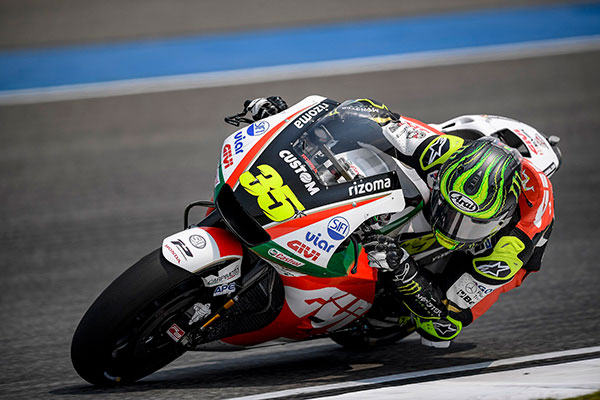
- MotoGP is the correct answer for brands targeting Asia-Pacific markets, with a passionate and demographically loyal fanbase that no other motorsport property can match in the region. Understanding MotoGP Sponsorship costs and commercial tiers is the starting point for any brand considering the series.
- NASCAR delivers 75 million US consumers across a 36-race schedule, with the most direct access to American mass-market audiences available in the sport. Sponsorship in NASCAR at associate level begins at approximately $15,000 per race — one of the lowest entry points in premium motorsport — and scales to full-season principal deals for brands that need sustained national exposure.[9]
- Formula E is structured for brands with active ESG or sustainability commitments: all-electric racing in urban environments across four continents, with an audience that values the series’ environmental positioning explicitly. The Formula E Sponsorship platform is particularly well-suited to brands navigating investor and consumer scrutiny around their green credentials.
- IndyCar provides premium US exposure at a lower cost threshold than F1, with a technically sophisticated audience and strong Midwest and Southeast market presence. The dedicated IndyCar Sponsorship guide covers entry costs and the commercial logic for US-focused brands.
The decision should be driven by target geography, audience demographics, available budget, and primary commercial objective — not by which series receives the most press coverage in any given week.
Common Risks in Motorsport Sponsorship — and How to Protect Your Brand
No investment of this scale is without exposure. Four risk categories deserve honest attention before any contract is signed — and each has a structural response available to a brand that approaches the market correctly.
Driver or team controversy — doping violations, conduct issues, reputational incidents — creates association risk for sponsor brands. Well-constructed contracts include specific penalty clauses and early termination rights triggered by defined events, providing a contractual exit that preserves the brand’s position without requiring proof of financial damage.
On-track performance – It is the second risk. Sponsorship generates media value, hospitality value, and brand association value regardless of race results, but the emotional intensity of a winning team’s environment is measurably stronger. Research by Jensen and Cobbs found that F1 sponsors generated approximately $822,000 in additional brand exposure value per championship point earned over a five-year study period. Performance-related contractual protection — which is available and worth negotiating at every investment level — manages this exposure without eliminating the upside.[15]
Schedule and logistical complexity – It is the third and most consistently underestimated risk. A 24-race Formula 1 season spanning 21 countries requires activation management, hospitality logistics, content production, and staffing coordination across an extremely demanding calendar. Without specialist support, this complexity routinely exceeds internal brand team capacity.
Rights conflicts and exclusivity gaps – a brand may believe it has category protection when its contract contains less than airtight exclusivity provisions. There is a useful analogy here. A fan who has supported Ferrari for twenty years does not easily redirect their loyalty toward a rival team. The same structural stickiness exists in sponsor-fan relationships — but only when the partnership was constructed and activated correctly, and only when the exclusivity language that underlies it is specific enough to actually hold.
Why Work With a Motorsport Sponsorship Agency? (And How to Choose One)
The case for an independent agency rests on four structural advantages that directly affect commercial outcomes.
Negotiation leverage. An agency placing multiple brands across multiple seasons knows what a given rights package is worth at a given level. It negotiates with data, not approximation, and without the conflict of interest inherent in any direct approach to a team’s commercial department, which is selling its own inventory at its own pricing.
Stakeholder access. Knowing which decision-makers to approach within teams, series organisations, and driver management companies — and in what sequence — is knowledge accumulated over years inside the paddock. It is not available from a standing start.
Activation management. The most commercially significant element of any sponsorship is also the most operationally demanding. Most brand marketing teams have neither the motorsport-specific expertise nor the calendar bandwidth to manage it effectively alongside their existing responsibilities.
Independent ROI measurement. A verified third-party performance report — produced without any financial relationship with the property being evaluated — is what makes the renewal conversation with a CFO a data-driven decision rather than an act of faith.
A specialist motorsport sponsorship agency that operates exclusively on the brand side, with no financial interest in the properties it recommends, offers the cleanest possible structure for a brand entering or expanding within motorsport. For a full picture of what properly managed partnerships deliver commercially, the guide to the benefits of motorsport sponsorship is the appropriate reference point.
Going direct to teams vs working with an agency
Teams are sophisticated commercial organizations with well-developed sales processes and significant incentives to close at the highest available price. They are selling their own inventory. An independent agency represents the brand’s interests alone. The distinction becomes most material in rights definition, exclusivity clause negotiation, and activation obligation specification — the areas where the gap between what was promised and what was delivered tends to appear. Direct approaches to teams are not impossible. For brands without prior motorsport experience, they are simply the more expensive way to learn the market.
Motorsport Sponsorship Trends in 2026: What Brands Need to Know
Formula 1 recorded $2.04 billion in total sponsorship revenue in 2024 — the highest figure in the sport’s history — driven by the continued expansion of its North American fanbase and the cultural momentum built by Drive to Survive, a Netflix documentary series that drove an 86% increase in F1’s primary sponsorship revenue between 2017 and 2024. Technology brands now account for 17.5% of F1 sponsor spend, reflecting the series’ appeal to companies that need to demonstrate innovation credentials on a global scale. LVMH’s landmark deal — approximately €1 billion across ten years — signals that luxury and lifestyle categories are deepening their structural commitment to the property rather than treating it as a seasonal activation.[11][12]
Creator partnerships, embedding individual content creators within race weekend programmes, are delivering 40% higher engagement rates than standard branded advertising formats and generating a volume of organic amplification that traditional media buying cannot replicate. Formula E is attracting an accelerating number of sustainability-aligned brands as its broadcast reach and urban racing identity continue to develop. The direction of travel across all series is consistent: deeper integration, longer partnership timelines, and a structural shift from logo frequency toward experience design as the primary value driver.
Frequently Asked Questions
How much does motorsport sponsorship cost?
Costs vary significantly by series and tier. An associate sponsorship in NASCAR can begin at $15,000–$40,000 per race, while an F1 associate deal starts around $500,000 per year and scales to $50 million or more for principal partnerships. Title sponsorships of F1 race events range from $5 million to $20 million. Budget should also account for activation costs, which ideally match or exceed the rights fee.
How long do motorsport sponsorship deals last?
Most deals run between one and three years, though multi-year agreements are standard at the higher investment levels. Research consistently shows that brand recall and purchase intent increase with sponsorship duration — fans are more than 40% more likely to choose a brand’s product when it has been associated with their team for multiple consecutive seasons. Single-year deals can establish proof of concept; multi-year commitments are where the compounding returns materialize.[13]
Can small brands afford motorsport sponsorship?
Yes. Entry points exist at every level. A NASCAR associate deal can begin at $15,000 per race. Technical partnerships — where a brand supplies products or services to a team in exchange for co-branding — are also accessible for smaller companies, particularly in automotive, technology, engineering, and materials sectors. An independent agency’s primary value for smaller brands is identifying the specific entry point that maximizes commercial return for the budget available, rather than defaulting to the most prominent available package.
Do you need a consultant or agency for motorsport sponsorship?
Not in the strict sense, but the data consistently indicates that brands working with independent specialist agencies outperform those that approach teams directly. An independent agency negotiates without a conflict of interest, ensures all rights are properly structured, manages activation, and provides verified ROI measurement. For brands entering motorsport for the first time, the expertise required to do all of that well is genuinely difficult to replicate internally on a reasonable timeline.