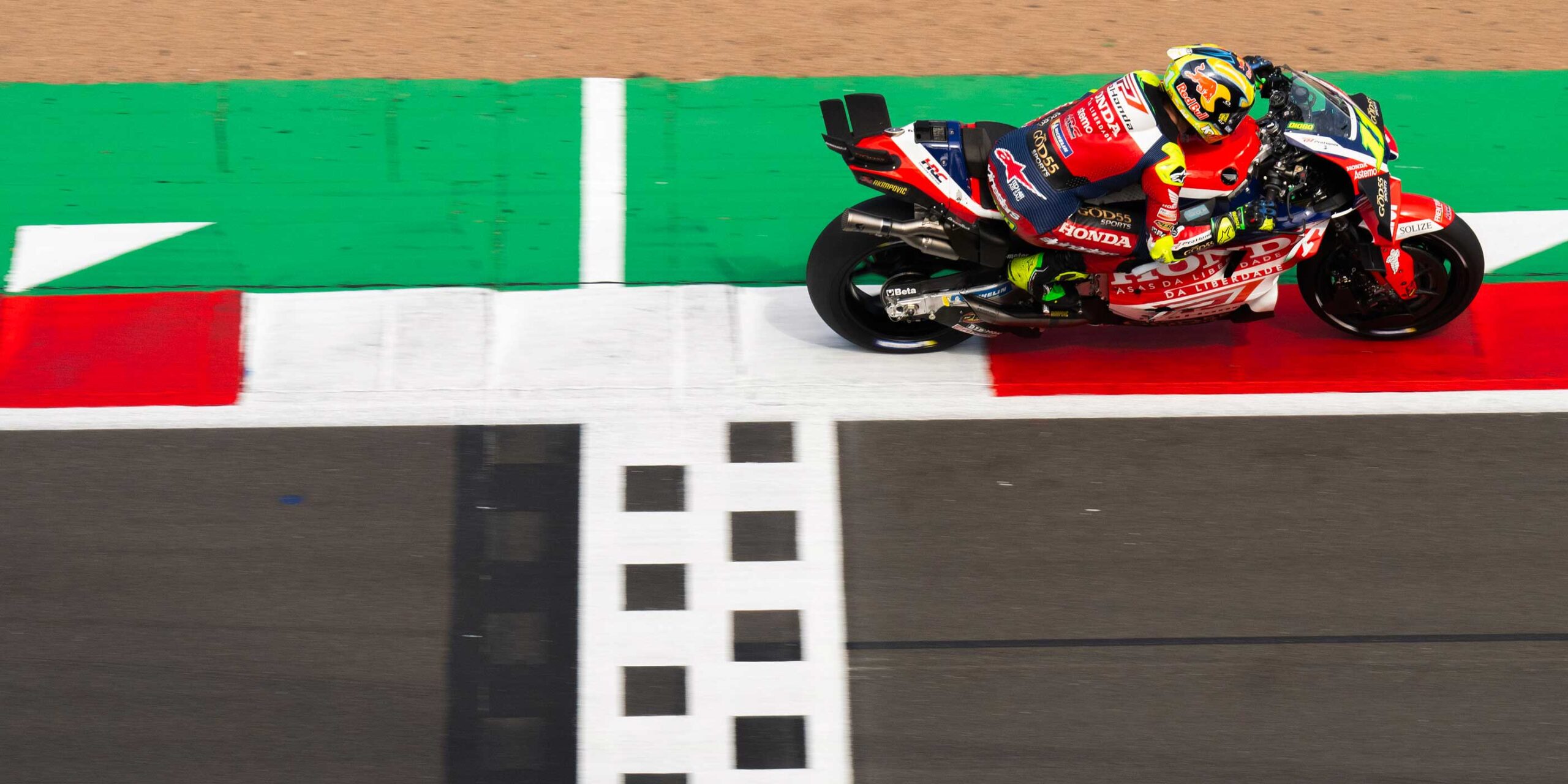


Ninety-two million dollars a year. That is what Honda paid to have its name on the Repsol Honda MotoGP livery — not for a row of banners along the track. For a team, a bike, a story.
If you have ever wondered why major brands choose to sponsor a team rather than fill every available metre of pitch-side signage, the answer does not lie in industry habit. It lies in how the human mind actually works when watching a race.
I have seen this pattern repeat itself across thirty years of working with Formula 1 and MotoGP teams: brands that invest in passive visibility collect little memory. Those that integrate with the sporting subject build something different. Here is what changes, and why.
The problem with pitch-side advertising: being in the visual field is not being in the memory
Run this experiment. Search YouTube for Simons and Chabris’ invisible gorilla test. If you have never seen it, watch it before reading on.
What it shows is simple and brutal: when our attention is focused on an ongoing action, everything else disappears from the cognitive field. It is not processed, not memorised. It is as if it were not there.
Applied to pitch-side signage, the mechanism is identical. The fan in the stands or in front of the television follows the ball, the bike, the car. Banners exist in peripheral vision, not in attentional focus. To break through, they need very high exposure frequency — and even then, what is memorised is rarely tied to a specific emotional content.
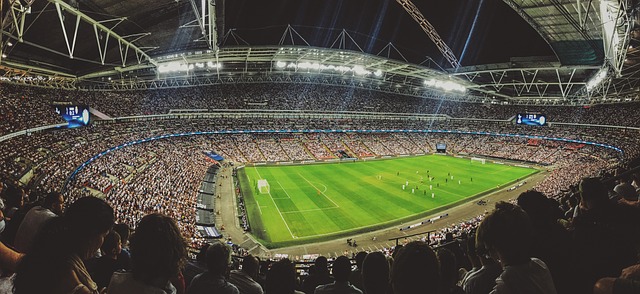
In MotoGP and Formula 1 circuits, where the number of exposed brands is deliberately kept low, the situation is better. In many football stadiums or minor sporting events, however, 30 to 40 different brands may be displayed during a single match through rotating LED panels. The end result is a wall of signals with no centre.
What happens instead when a brand associates with a team or athlete
When your brand is on a Formula 1 team’s livery or on a MotoGP rider’s helmet, you are not buying a space. You are entering the object of the fan’s passion.
This makes a difference that numbers are documenting with increasing clarity. According to Nielsen Sports Fan Insights 2024, 82% of fans report a significantly more favourable opinion of brands that sponsor the team or championship they follow. 72% consider them preferable to competitors when making a purchasing decision.
This is not magic. It is the psychology of association: the brain emotionally links what it sees together within a meaningful context. The team they love and its main sponsor become, over time, part of the same mental cluster.
The journey from first contact to purchase has three precise stages. The brand becomes familiar (brand awareness). Then it is preferred on equal terms (brand preference). Finally it is actively chosen at the point of purchase (purchase intention). Industry data shows that this journey completes in a measurable way in roughly 8 to 9 cases out of 10 among the most engaged fans — those who follow their sport for at least 5 hours a week.
The four concrete advantages of sponsorship over pitch-side advertising
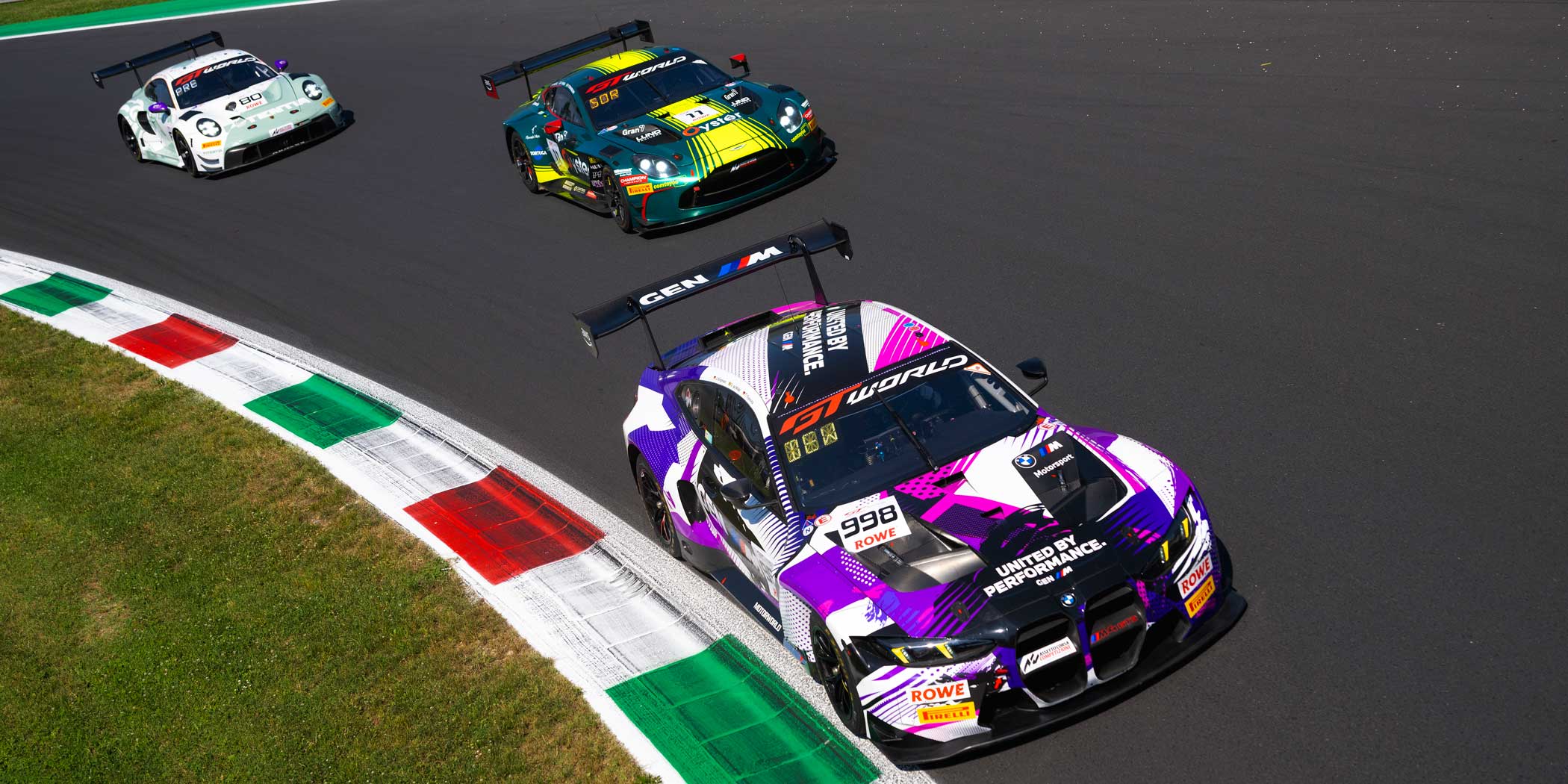
First: you are at the centre of the action, not on the margins. The livery, the helmet, the suit, the pit lane graphics — all of this lives inside the sporting narrative, not on its edges. The camera follows the subject. If your brand is on the subject, the camera takes you with it.
Second: you can activate. Pitch-side advertising does what it does. A partnership with a team opens a catalogue of activities: hospitality and direct client experiences, co-branded content, paddock access, promotional licensing, social media campaigns. Each activity multiplies the return on the initial investment. A logo on a banner does not scale. A relationship with a team does.
Third: you benefit from performance peaks. When the team you sponsor wins an important race, your visibility multiplies at no additional cost. The brand associated with the winner ends up in newspapers, on social media, in news broadcasts. This is an effect pitch-side advertising cannot replicate.
Fourth: other brands work for you. In MotoGP or Formula 1, the team produces content, press releases, photos and videos with the livery in evidence. Other sponsors do the same. If a technical partner produces a case study showing the bike, your brand is in the photograph. The communication of other partners generates additional exposure for everyone. This loop does not exist in pitch-side advertising.
The market already knows: 77 billion reasons
The global sports sponsorship market reached 77 billion dollars in 2024, growing 9% year on year according to estimates from Statista and KPMG. This is not a coincidence. It reflects a rational, repeated choice by thousands of CFOs and CMOs who have seen the returns and kept investing.
In top-tier motorsport, prices reflect this awareness. A title sponsor in MotoGP premier class typically moves between 15 and 25 million dollars per season, depending on the team and the activation package. A pitch-side advertising package at a tier-one circuit runs in the order of 500,000 to 2 million dollars per event.
Translated into commercial language: those who choose sponsorship do not do so because it is cheaper. They do so because the return justifies the spend. According to IEG/GroupM analyses, activated sports sponsorships produce an estimated average ROI of between 3:1 and 5:1 on total investment — compared to significantly lower values for comparable display advertising, including LED pitch-side panels.
The classic mistakes I see brands make
The first mistake is confusing visibility with communication. The two concepts are not equivalent. A brand that appears 40 times in 90 minutes on LED panels has generated visibility. It has communicated nothing — not the brand’s values, not its identity, not a message.
The second mistake is choosing pitch-side advertising because the budget is limited, without calculating the cost per unit of memory generated. If the objective is brand recall — and in most briefings I receive it is — the cost per point of awareness gained tends to be higher in signage than in a well-activated sponsorship.
The third mistake is treating sponsorship as if it were signage. Buying a logo on a livery and doing nothing else is the equivalent of buying the software that runs in production and using it only for the keynote demo. The space is there, but the value is left on the table.
Across thirty years of negotiations, I have seen many companies come back asking for an activation plan only after understanding this. The best time to build it is before signing, not after.
How we evaluate the choice with our clients
When a brand asks us to compare the two options, we use three parameters: communication objective (pure awareness, preference, or conversion), strategic time horizon, and willingness to invest in activation beyond the logo.
If the objective is pure awareness in a market where the brand is already known, pitch-side advertising can make sense as a tactical complement — in a high-frequency space with low competitor clutter. If the objective is building preference and relationship over time, sponsorship is difficult to beat.
In MotoGP and Formula 1, where we have operated for over thirty years, the answer for our clients is almost always the same: integration with the sporting subject produces results that signage cannot replicate. Not because we are biased — we are biased, that is obvious. But because renewal data confirms it: brands that activate their sponsorships keep renewing them.
If you are evaluating both options for the next season, you can start here: MotoGP sponsorships and Formula 1 sponsorships.
Integration comes before the logo. Always.
FAQ: Sponsorship vs pitch-side advertising
Is it better to invest in pitch-side advertising or in sponsoring a team?
Sponsoring a team or athlete produces systematically superior results in terms of brand recall, preference and purchase intention. Pitch-side advertising makes sense as a tactical complement in high-frequency, low-clutter spaces, but cannot replicate the emotional bond created between a sponsoring brand and fans. According to Nielsen Sports Fan Insights 2024, 82% of fans report a more favourable opinion of brands associated with the team they support.
How does the journey from sponsorship to purchase work?
The journey develops in three stages: brand awareness (the brand becomes familiar), brand preference (it is preferred on equal terms), and purchase intention (it is actively chosen at the point of purchase). Industry data indicates this process completes in a measurable way in roughly 8 to 9 cases out of 10 among the most engaged fans — those who follow their sport at least 5 hours a week.
What is the typical ROI of sports sponsorship compared to traditional advertising?
According to IEG/GroupM analyses, activated sports sponsorships produce an estimated average ROI of between 3:1 and 5:1 on total investment. Comparable display advertising and pitch-side signage record significantly lower values. The gap widens further when sponsorship includes activations: hospitality, co-branded content, team social media.
When does pitch-side advertising make sense?
Pitch-side advertising can make sense as a tactical complement when the objective is pure awareness in a market where the brand is already known, when few brands are displayed (low clutter), and when exposure frequency is high. In top-tier competitions such as MotoGP and Formula 1, where the number of sponsors is limited, the effect is greater than in contexts with 30 to 40 brands rotating every 90 minutes.
How is a sports sponsorship in MotoGP or Formula 1 evaluated?
The key parameters are: communication objective (awareness, preference or conversion), strategic horizon (at least 2 to 3 seasons to extract maximum value), and willingness to invest in activation beyond the logo. In MotoGP, a title sponsor in the premier class moves between 15 and 25 million dollars per season, with ROIs that justify the investment when activation is structured.