Emerson Fittipaldi is a retired Brazilian driver from São Paulo: two Formula 1 world titles (1972 with Lotus, 1974 with McLaren), 14 F1 wins, the 1989 CART title and two Indianapolis 500 wins (1989 and 1993). In 1993 he refused the winner’s milk and drank orange juice instead.
Updated in October 2026.
Two Formula 1 world titles, two Indianapolis 500 wins and a bottle of orange juice. Emerson Fittipaldi is all three, and for many people the last has overshadowed the first two, as Motor.es notes. In my view his career reads better as a sequence of choices, each with its own bill. This profile lines up the facts the sources confirm, says where they disagree and draws out what matters to anyone who sponsors.
Emerson Fittipaldi at a glance
- F1 titles: two, in 1972 with Lotus and in 1974 with McLaren (Formula1.com, GrandPrix.com, Crash.net).
- F1 numbers: 14 wins, 35 podiums and 6 pole positions (Crash.net, Formula One History).
- The record: in 1972 he became champion at 25, the youngest until then, and the record stood until 2005 (Formula1.com, Crash.net, Formula One History).
- The most debated choice: at the end of 1975 he left McLaren for his brother Wilson’s team, backed by Copersucar (GrandPrix.com, Crash.net).
- Indianapolis: the 1989 CART title and two Indianapolis 500 wins, in 1989 and 1993 (Formula1.com, GrandPrix.com, Crash.net).
- Retirement: he left F1 at the end of 1980; in CART he raced from 1984 to 1996, and his last race was the Michigan 500, which ended in a serious crash (GrandPrix.com, Crash.net, Motor Sport Magazine).
From 1969 to Lotus: the first choice
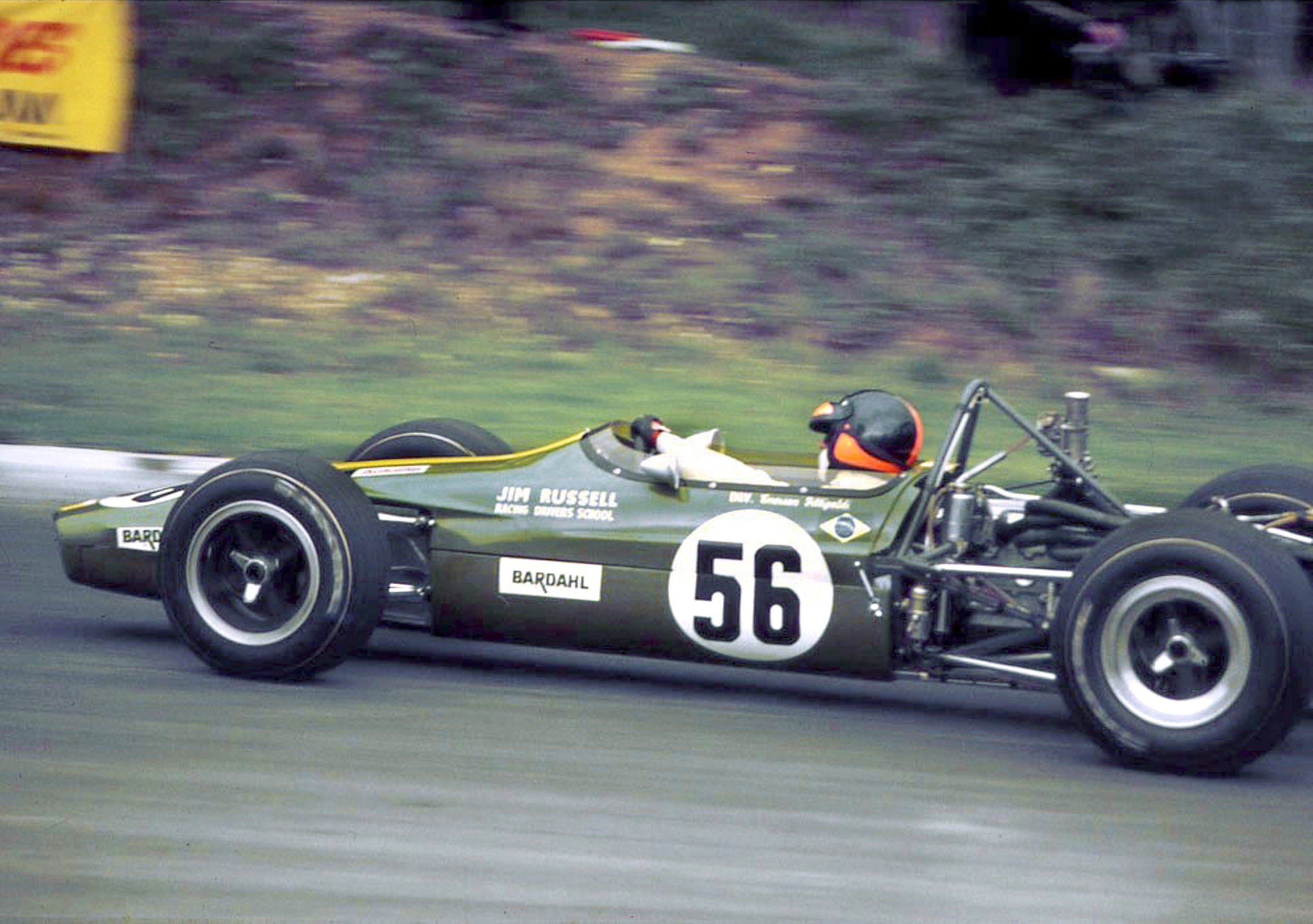
In 1969 Fittipaldi left Brazil for England and in the same year won the British Formula 3 championship in the Jim Russell school’s Lotus 59 (Motor Sport Magazine, Wikipedia). In 1970 Lotus fielded him as third driver: he made his debut at the British Grand Prix at Brands Hatch (Motor Sport Magazine). After Jochen Rindt’s death at Monza he became the team’s lead driver and won the United States Grand Prix at Watkins Glen, his first F1 win (Motor Sport Magazine, Formula1.com, GrandPrix.com).
Leaving was the easiest choice to tell and the riskiest to make: nobody guaranteed him a seat in Europe. That is our reading, not a data point.
1972 to 1975: four years at the top
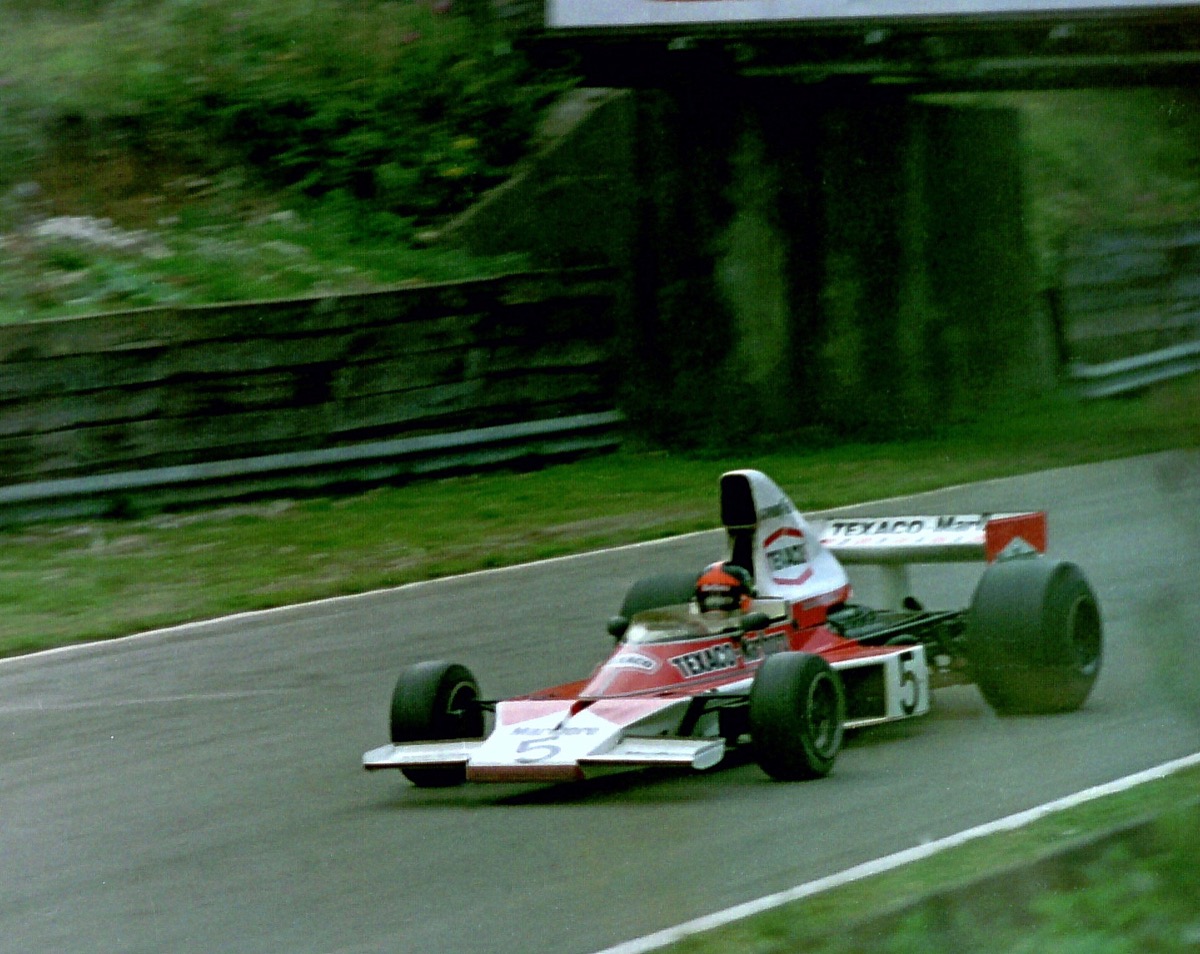
With Lotus he won five races in 1972 and the title at 25, the youngest champion in history until then: the record lasted 33 years, until Fernando Alonso in 2005 (Formula1.com, Crash.net, Formula One History). In 1973 he won three races (Formula1.com, Wikipedia). In 1974 he moved to McLaren and won his second title with three wins (Formula1.com, GrandPrix.com, Wikipedia). In 1975 he finished second in the championship, with two wins, behind Niki Lauda (Crash.net, Formula One History, Wikipedia).
In 1974 changing team was the choice that paid: a title in his first season at McLaren.
1976: the choice with the highest bill
At the end of 1975, after a season finished second with McLaren, Fittipaldi announced he would move to his brother Wilson’s team, backed by Copersucar, a Brazilian sugar and alcohol cooperative (GrandPrix.com, Crash.net, Wikipedia). Years later he explained that for him it was a challenge: building a Brazilian F1 team (Motor Sport Magazine).
Results are measured on track: in five seasons with that team his best race result was a second place, at the 1978 Brazilian Grand Prix (GrandPrix.com, Crash.net). Copersucar withdrew its sponsorship at the end of 1979 (GrandPrix.com, Wikipedia). Fittipaldi left F1 at the end of 1980 (GrandPrix.com, Formula One History) and the team outlived him by two seasons (GrandPrix.com).
This is RTR’s reading, not a published figure: the money of a national sponsor brought a team into being, it did not make it competitive. The driver was the same one who had won the 1974 title with McLaren, and what changed was the structure around him. How much budget, engineering and other factors weighed, no source we read quantifies.
From Formula 1 to Indianapolis: the second career
In 1984 Fittipaldi made his debut in the American CART series (Motor Sport Magazine, Crash.net). In 1989, with Patrick Racing, he won the CART title and the Indianapolis 500 (GrandPrix.com, Crash.net, Formula1.com). The race was decided between lap 196 and lap 199: Al Unser Jr. passed him on lap 196, Fittipaldi pulled alongside in traffic and the two cars touched wheels in turn 3; Unser hit the wall and Fittipaldi won (Indianapolis Motor Speedway, Wikipedia). He was the first foreign-born winner since Graham Hill in 1966 (Indianapolis Motor Speedway, Wikipedia).
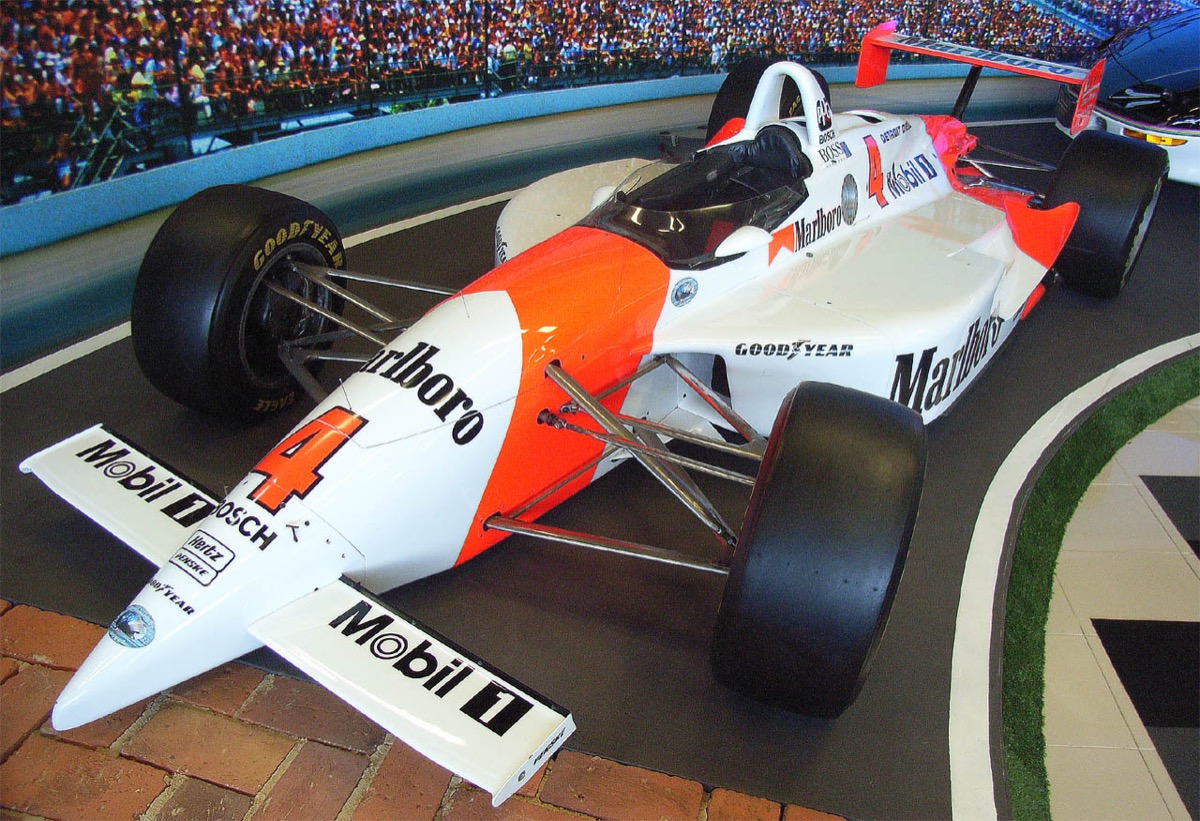
In 1993 he won his second Indianapolis 500. Nigel Mansell, an oval rookie and the reigning F1 world champion, led until lap 184; at the restart Fittipaldi and Arie Luyendyk passed him (Autosport, Wikipedia). The finishing order was Fittipaldi, Luyendyk, Mansell (Motor.es, Wikipedia).
The orange juice: when activation goes against ritual
In the 1993 victory lane Fittipaldi refused the traditional bottle of milk and drank orange juice in front of the cameras: he owned orange plantations in Brazil and wanted to promote the family business (Wikipedia, Motor.es). He pushed the bottle away three times (Motor.es, Wikipedia). Fan reaction was negative and a week later, in Milwaukee, he was booed (Wikipedia, Motor.es).
This is RTR’s reading: in his career it is the sharpest case of a personal commercial message colliding with a shared ritual. Live on TV and in front of the Indianapolis crowd, the gesture weighed more than the sporting result, as Motor.es suggests.
Where the sources disagree
Some numbers change from one source to another and we left them out: Grands Prix contested (144 starts or 149 entries, depending on the count), Formula 3 wins in 1969, laps led at the 1989 Indianapolis 500 and the race number of his first F1 win. We use only what the sources agree on.
On 1976 the sources tell the choice and the result, not the financial or technical why: that is why ours remains a reading.
What it teaches sponsors
What follows is RTR’s reading, not a published figure. Three things.
First: read the role, not the record. Fittipaldi at McLaren and Fittipaldi at his brother’s team are the same driver in two different structures, with two very different results. Whoever buys a name buys half of the equation.
Second: a national sponsor can bring a team into being, but budget does not replace technical structure. The guide to the cost of sponsorship in Formula 1 gives the entry thresholds and the page on sponsorship in Formula 1 shows how we work.
Third: before taking your own message into a ritual the public considers its own, measure that ritual. The 1993 orange juice was an activation consistent with the business of the person doing it and wrong for the people watching: for what comes after the contract there is the guide to sports sponsorship activation.
The driver chooses. The sponsor signs. The bill reaches both.
RTR Sports Marketing has built motorsport sponsorships since 1995.
Images: Fittipaldi’s Lotus 59 at Brands Hatch, 1969 (Gerald Swan, CC BY-SA 3.0); McLaren M23 at Brands Hatch, 1974 (Martin Lee, CC BY-SA 2.0); Penske PC-22 on display in a museum (Morio, CC BY-SA 3.0). Featured image: Fittipaldi’s Lotus 72 in practice for the 1971 German Grand Prix (Lothar Spurzem, CC BY-SA 3.0 DE).
Sources: Formula1.com, Emerson Fittipaldi in the drivers’ Hall of Fame; GrandPrix.com, the Emerson Fittipaldi profile; Crash.net, Emerson Fittipaldi; Formula One History, Emerson Fittipaldi; Motor Sport Magazine, lunch with Emerson Fittipaldi (2007); Indianapolis Motor Speedway, Fittipaldi and Al Unser Jr. at the 1989 Indy 500; Autosport, Mansell’s Indianapolis 500 near miss; Motor.es, Indy 500 1993, Fittipaldi and the orange juice; GrandPrix.com, Copersucar, sponsor of the Fittipaldi team; Wikipedia, Emerson Fittipaldi; Wikipedia, the 1993 Indianapolis 500; Wikipedia, Fittipaldi Automotive; RTR Sports Marketing, sponsorships in motorsport.
Frequently asked questions
Who is Emerson Fittipaldi?
He is a retired Brazilian driver from São Paulo, twice Formula 1 world champion (1972 with Lotus, 1974 with McLaren), 1989 CART champion and twice winner of the Indianapolis 500 (1989 and 1993) (Formula1.com, GrandPrix.com, Crash.net).
How many F1 world titles did Emerson Fittipaldi win?
Two: in 1972 with Lotus, at 25, and in 1974 with McLaren. In 1972 he was the youngest champion until then, a record broken by Fernando Alonso in 2005 (Formula1.com, Crash.net, Formula One History).
Why did Fittipaldi leave McLaren for his brother's team?
At the end of 1975 he announced the move to his brother Wilson’s team, backed by Copersucar. He explained that for him it was a challenge: building a Brazilian F1 team. With that team his best race result was a second place, in Brazil in 1978 (GrandPrix.com, Motor Sport Magazine, Crash.net).
How many times did he win the Indianapolis 500?
Twice: in 1989 and 1993. In 1989 he won after the contact with Al Unser Jr. on lap 199; in 1993 he passed Nigel Mansell, who was leading, at the restart (Indianapolis Motor Speedway, Autosport, Wikipedia).
Why did Fittipaldi drink orange juice at Indianapolis in 1993?
He refused the traditional winner’s milk because he owned orange plantations in Brazil and wanted to promote the family business. Fan reaction was negative and a week later he was booed in Milwaukee (Motor.es, Wikipedia).
When did Emerson Fittipaldi retire?
He left Formula 1 at the end of 1980. In CART he raced from 1984 to 1996, and his last race was the Michigan 500, which ended in a serious crash (GrandPrix.com, Crash.net, Motor Sport Magazine).