Jochen Rindt (Mainz, 18 April 1942 – Monza, 5 September 1970) is the only driver in history to have been crowned Formula 1 world champion posthumously. He died in qualifying for the 1970 Italian Grand Prix with 45 points to his name, and no rival ever managed to catch them. In his career he won 6 Grands Prix, took 10 pole positions and, in 1965, won the 24 Hours of Le Mans.
Updated October 2026.
People nearly always remember how Jochen Rindt’s story ended. They remember less well how he built that lead: five wins in the first nine races of 1970, in a new car, for a team that was among the first to race in a sponsor’s colours. The title arrived without him, but it was already entirely his. This is the story of how he got there, and of what it still teaches anyone working in motorsport sponsorship.
Who was Jochen Rindt: from Mainz to Graz, and on to Formula 2
Karl Jochen Rindt was born in Mainz, Germany, on 18 April 1942. His parents were killed in Allied bombing raids when he was about fifteen months old, and he was raised by his maternal grandparents in Graz, Austria. His grandfather kept German citizenship, but Rindt always raced on an Austrian licence, which is why he is remembered as Austria’s world champion even though he was born in Germany.
It is not true, as is often written, that he threw himself into racing with no apprenticeship at all. He began in 1961 in touring cars (Abarth-Simca and Alfa Romeo), moved to single-seaters in 1963 with Formula Junior and Formula 2, and on 18 May 1964 won at Crystal Palace ahead of Graham Hill. It was the start of a period of domination: in total he won 29 Formula 2 races, nine of them in 1967 alone, the year the press called him the king of the category.
In Formula 1: from Cooper to Lotus
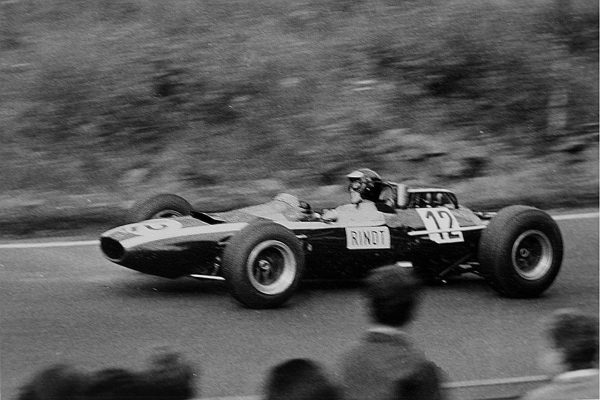
His Formula 1 debut was the 1964 Austrian Grand Prix in a Brabham BT11 run by Rob Walker’s team: he retired on lap 58 with a broken steering component. From 1965 to 1967 he drove for Cooper, in 1968 for Brabham, and in 1969 he moved to Colin Chapman’s Lotus. In between came a result that does not belong to F1: in 1965 he won the 24 Hours of Le Mans with Masten Gregory in a Ferrari 250 LM run by the North American Racing Team.
His first F1 win came at the 1969 United States Grand Prix at Watkins Glen, driving the Lotus. He was 27, in his fifth full season in the category.
Jochen Rindt’s Formula 1 numbers
- Grands Prix contested: 60 starts (62 entries);
- Wins: 6, the first in 1969 at Watkins Glen and the other five in 1970;
- Pole positions: 10;
- Podiums: 13;
- World title: 1970, with 45 points, ahead of Jacky Ickx (40) and Clay Regazzoni (33).
1970: five wins in nine races
The 1970 season opens with a win that was both lucky and deserved: at Monaco, on 10 May, Rindt starts eighth and works his way up behind Jack Brabham, who is leading. At the final corner of the final lap Brabham takes the inside line, loses grip on the dust off the racing line, locks his wheels and ends up against the barriers. Rindt goes through and wins. Four more consecutive wins follow: the Netherlands, France, Britain and Germany, mostly in the new Lotus 72 designed by Chapman.
In Austria, in the ninth race, he stops with an engine failure. By the end of the season those 45 points would still be his, and they were enough to win the title.
Monza, 5 September 1970
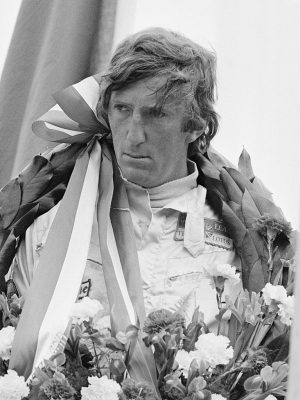
On the Saturday of qualifying for the Italian Grand Prix, at the Parabolica, Rindt’s Lotus, with its wings removed to cut drag, suffered a mechanical failure: according to most accounts, a front brake shaft. The car hit a poorly installed barrier. Rindt was 28. Lotus withdrew from Sunday’s race, which was won by Clay Regazzoni in a Ferrari on 6 September.
The championship still had three races to run. Mathematical certainty came at the United States Grand Prix, won by Emerson Fittipaldi (in a Lotus) for his first F1 victory. Ickx finished on 40 points, Rindt on 45, and he remains the only driver to have won the world title after his death.
Rindt, business and sponsorship
You often hear that Rindt despised the commercial side of the sport. The facts say the opposite. In 1965, aged 23, he launched a racing car exhibition in Vienna, the Jochen Rindt Show, and presented a monthly motorsport programme on television, Motorama. The show continued after his death and over the years became the Essen Motor Show, which still exists today. Anyone who invents something like that at that age understood, before most people, that an industry is built around racing.
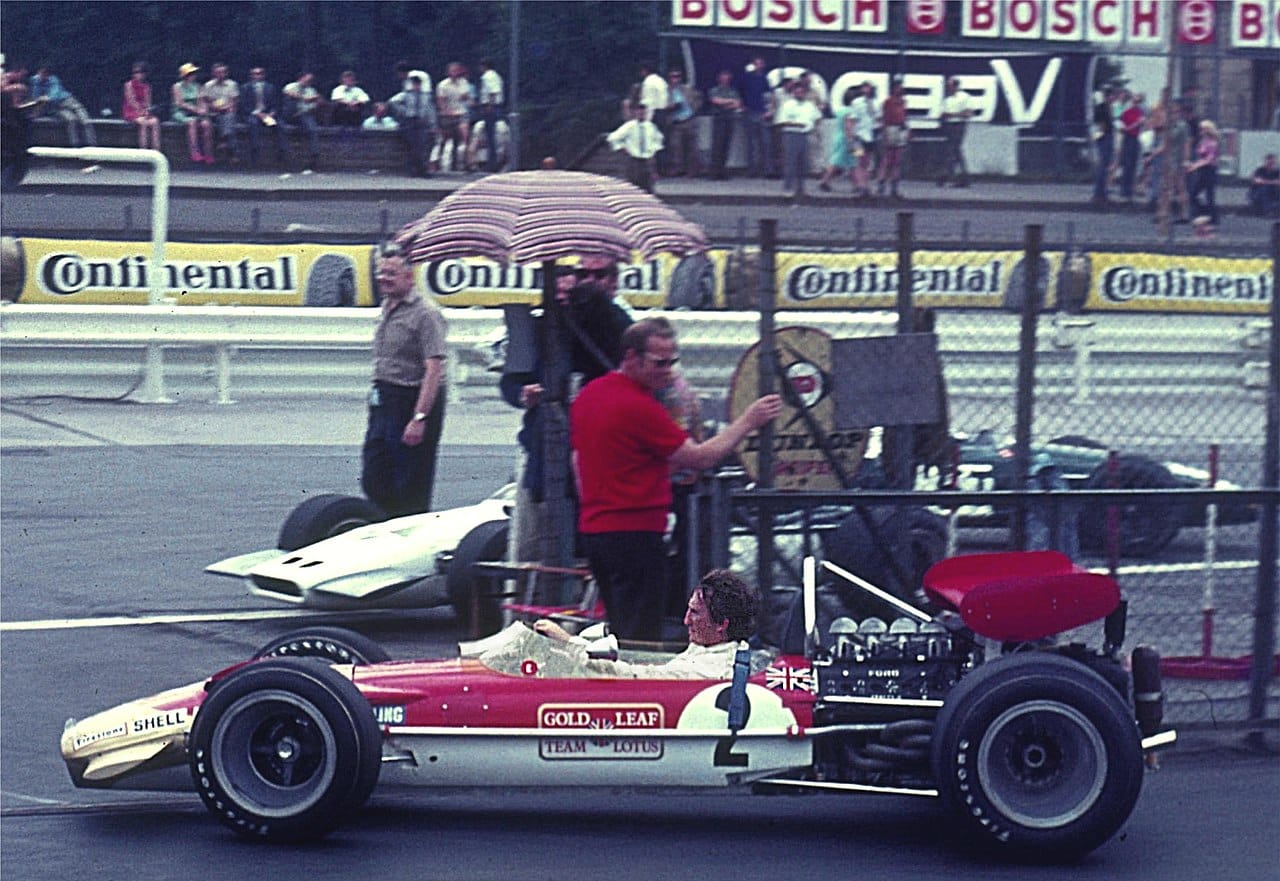
The 1970 title is also a sponsorship case. From 1968 Lotus raced in the colours of Gold Leaf, a brand owned by Imperial Tobacco: it was the first regular team to contest an F1 championship in its sponsor’s livery, red and gold. Rindt won the 1970 world championship for Gold Leaf Team Lotus. We do not quote the figures of the deal, because the sources disagree.
Tobacco later left Formula 1 because of restrictions on advertising, and other brands now sit on the cars: who they are, and how much they pay, is covered in our guide to the title sponsor of every team in 2026. On the relationship between sport, advertising and regulation, see also our piece on alcohol advertising in F1. To understand what it means to enter the paddock today, there is the overview of the cost of Formula 1 sponsorship.
Rindt’s legacy
That was a different Formula 1: in the 1970 championship the cars did not have today’s safety standards, and Monza did not have the protections we now take for granted. But Rindt remains a reference point for a reason that has nothing to do with nostalgia. He was fast, he was quick to grasp the value of everything around the track, and he left a record that nobody can equal, because nobody would want it to happen again.
The title arrived without him. The value, however, was already all there in the races.
RTR Sports Marketing has been building motorsport sponsorship programmes since 1995.
Sources: Wikipedia, Jochen Rindt; F1 Fansite, Jochen Rindt; Wikipedia, 1970 Formula One season; Wikipedia, 1970 Monaco Grand Prix; Wikipedia, 1970 United States Grand Prix; Wikipedia, 1970 Italian Grand Prix; Sports Car Digest, Gold Leaf Team Lotus; jochenrindt.com, Jochen Rindt Show.
Frequently asked questions
Who was Jochen Rindt?
An Austrian driver of German birth (Mainz, 1942 – Monza, 1970), Formula 1 world champion in 1970 with Lotus and winner of the 1965 24 Hours of Le Mans. In F1 he won 6 Grands Prix and took 10 pole positions.
Why is Jochen Rindt a posthumous world champion?
He died on 5 September 1970 in qualifying for the Italian GP at Monza with 45 points in the standings. In the remaining races no driver managed to overtake them: Jacky Ickx finished second with 40, Clay Regazzoni third with 33.
How many Grands Prix did Jochen Rindt win?
6: the 1969 United States GP and, in 1970, Monaco, the Netherlands, France, Britain and Germany. He also took 10 pole positions and 13 podiums in 60 starts.
Was Jochen Rindt German or Austrian?
He was born in Mainz, Germany, but grew up in Graz, Austria, with his maternal grandparents. He always raced on an Austrian licence and is remembered as Austria’s world champion.
How did Jochen Rindt die?
On 5 September 1970, in qualifying for the Italian GP, at the Parabolica at Monza, after a mechanical failure on his Lotus (according to most accounts a front brake shaft) and an impact with a poorly installed barrier. He was 28.