

TL;DR – The 4 Key Signing Windows
- Q3–Q4 of the preceding year: Primary inventory window for F1, MotoGP, and NASCAR. This is the best time to sign a motorsport sponsorship deal: widest choice, strongest leverage, full activation runway.
- Q1 of the race year: Associate-level and mid-tier inventory; primary positions largely closed for F1 and MotoGP.
- Mid-season: Activation-only discussions; occasional associate entries where sponsors have exited; renewal conversations for existing partners.
- Off-season (post-season): Multi-year renewal planning. Brands locking in 2027 now are in the strongest commercial position available.
Why Motorsport Sponsorship Has Its Own Commercial Calendar
The motorsport sponsorship buying calendar is driven by three structural realities that distinguish it from most other sponsorship categories. The first is planning lead time. Teams build their commercial rosters 12 to 18 months in advance because sponsor integration shapes car design, livery, pit crew branding, hospitality infrastructure, and driver commitments. A title sponsor that signs in February of the race year is late enough to disrupt creative already in production. Teams prefer and price for early commitment. The second is category exclusivity. Exclusivity slots are allocated sequentially: the first brand in a category locks out all subsequent applicants in that category at that team. This creates a genuine first-mover advantage. Understanding motorsport sponsorship inventory availability 2026 requires checking this before any other step. A bank that approaches an F1 team in January may find the financial services category was closed eight months earlier. The third is inventory tiering. Primary inventory fills first, at premium pricing. Associate-level follows. Mid-season positions are typically second-tier slots vacated by early exits. The best motorsport sponsorship contract timing is always the earliest stage of the commercial cycle, allowing brands to thoroughly unlock the long-term benefits of motorsport sponsorship.The 2026 Motorsport Sponsorship Buying Calendar: Month by Month
| Month | Available Inventory Type | Series Focus | Action for Brands |
| Jan–Feb | Associate-level; some mid-tier primary slots | F1, MotoGP | Last viable window for current season; limited choices and reduced activation runway. Not the best time to sign a motorsport sponsorship deal for full-season impact. |
| Mar–Apr | Mid-season associate; activation-only entry in some series | NASCAR, WEC | NASCAR mid-season entry possible; WEC associate positions available; F1/MotoGP primary now closed |
| May–Jul | Renewal discussions; occasional mid-season exits | All series | Existing partners: initiate performance review and renewal conversation; monitor for mid-season exits |
| Aug–Oct | Primary inventory for following season opens; title/principal first | F1, MotoGP | Peak window for next season. This is the best time to start motorsport sponsorship negotiations, strongest leverage, widest choice |
| Nov–Dec | Peak primary deal-closing window for following season | F1, MotoGP, NASCAR | Most productive signing window for primary inventory; first-movers secure best positions and pricing |
Formula 1: The Tightest Inventory Windows in Motorsport
F1 primary inventory title and principal sponsorships typically closes between September and November of the preceding year. Associate-level inventory runs from January to February of the race year. The 2026 season brought an unusual mid-cycle dynamic: the sport’s most significant regulatory overhaul in its history prompted commercial restructuring at several teams, creating some additional motorsport sponsorship inventory availability 2026 that does not reflect normal seasonal patterns. For the 2027 season, the primary window is open now. Brands that initiate engagement before the end of the current 2026 season are operating at the best time to sign a motorsport sponsorship deal for 2027, with the best deal quality, positioning, and pricing. F1 sponsorship spend exceeded $3 billion in 2026 for the first time (Ampere Analysis), making inventory competition the highest in the sport’s commercial history. Brands can utilize a Formula 1 sponsorship calculator to contextualize these premium outlays against real-time market values.MotoGP: A More Flexible Entry Timeline, With a Strategic 2027 Window
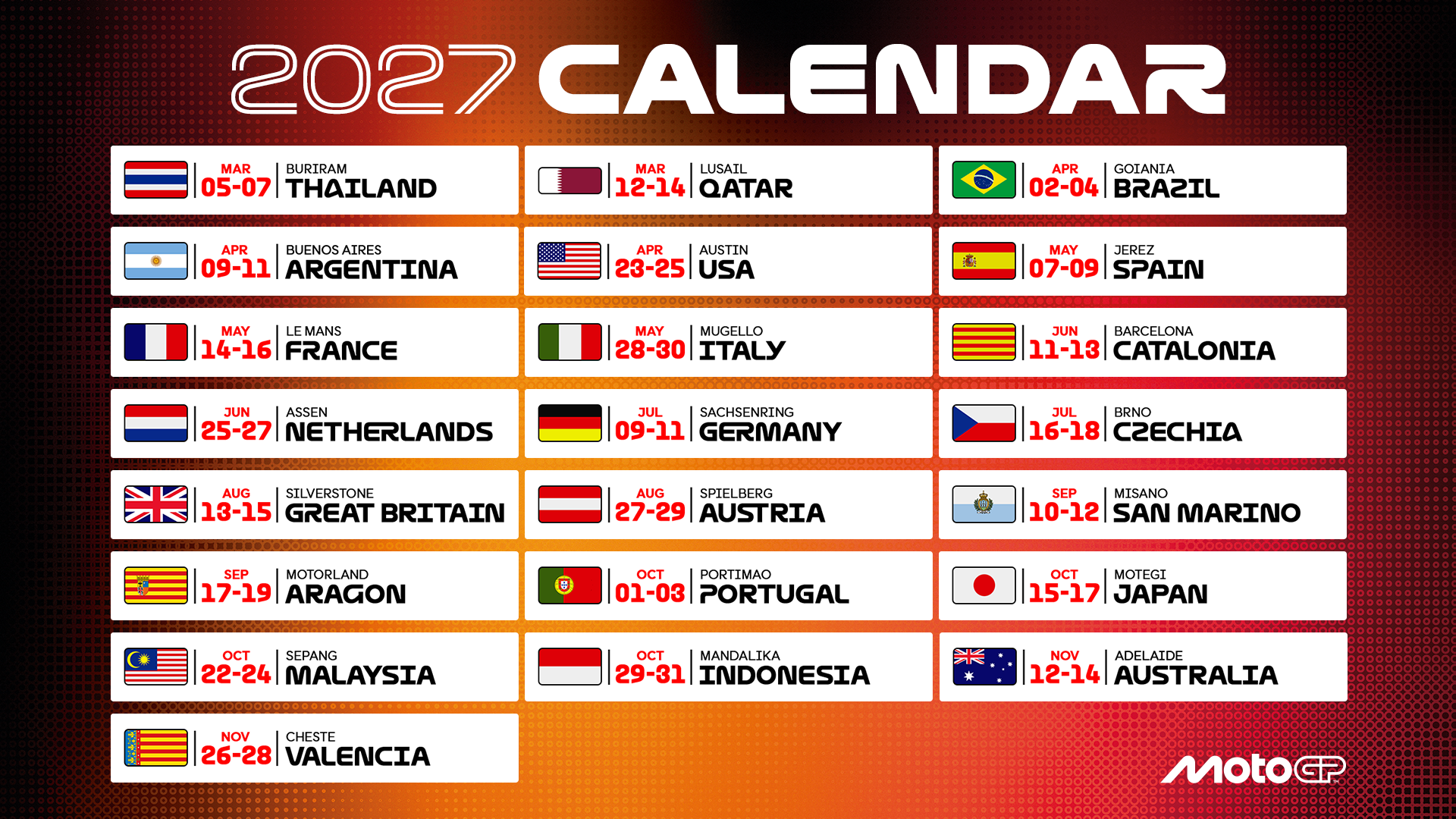
MotoGP’s F1 sponsorship deal timeline equivalent has historically been more accessible – primary deals closing October–December, associate positions available through March of the race year. Liberty Media’s Dorna acquisition (July 2025) has begun professionalising the commercial infrastructure; the previous flexibility assumptions are becoming less reliable. The 2027 season carries a specific signal: brands signing multi-year deals in 2026 or early 2027 are locking in pre-escalation rates before Liberty’s commercial professionalisation reprices the series. Understanding when to start motorsport sponsorship negotiations for MotoGP 2027 means starting now. This is a defined window, not an ongoing availability.NASCAR: The Longest Commercial Window in Major Motorsport
NASCAR’s motorsport sponsorship buying calendar is the most forgiving of the major series – commercial discussions run year-round, primary sponsorship for the following season closes August–October, and associate-level positions remain available through January of the race year. Mid-season associate entries are more common in NASCAR than in any other premier series. The December 2025 charter settlement introduced evergreen charter protections, stabilising motorsport sponsorship contract timing across the Cup Series. Charter-holding teams can now offer sponsors genuine long-term certainty that was previously unavailable, supporting multi-year structures below the primary tier.| Series | Primary Inventory Closes | Associate Available Until | Mid-Season Entry? | 2026/27 Note |
| Formula 1 | Sep–Nov (preceding year) | Jan–Feb (race year) | Rare – sponsor exit only | 2026 regulation year created some mid-cycle restructuring; 2027 window now open |
| MotoGP | Oct–Dec (preceding year) | March (race year) | Associate level possible | Liberty Media acquisition professionalising commercial calendar; 2027 technical reset pricing window open now |
| NASCAR | Aug–Oct (preceding year) | January (race year) | Yes – associate level | Charter settlement (Dec 2025) increased team stability; motorsport sponsorship contract timing is more predictable |
| WEC | Oct–Dec (preceding year) | Feb–Mar (race year) | Yes – more flexible | Le Mans inventory commands premium and closes earliest; full-season associate is more accessible |
Why Timing Affects Price and Leverage, Not Just Availability
The commercial consequence of late entry extends beyond reduced inventory choice. A team negotiating with a brand that has approached in Q3 of the preceding year has multiple competing options the brand has maximum leverage. A team negotiating with a brand in January of the race year knows the brand’s options are limited and the activation runway is already reduced. This is the core commercial argument for understanding the best time to sign a motorsport sponsorship deal: timing affects price, not just what is available.How Early Should a Brand Start the Motorsport Sponsorship Process? Series-by-Series Timing Windows
To ensure your capital is efficiently deployed to maximize motorsport sponsorship ROI, a structured, early approach is mandatory:Formula 1 Inventory Timing
Start the independent evaluation and agency briefing process in Q2 of the preceding year (18 months before target season start). Approach teams via independent representation from Q3. Target deal completion by November. A brand beginning when to start motorsport sponsorship negotiations for F1 in Q1 of the intended race year is working against the commercial calendar in every meaningful respect.MotoGP Entry Timeline
Start evaluation in Q2 of the preceding year. Primary approach from August. Target deal completion by December. Apply the same Q2 start discipline as F1, the commercial calendar is being tightened as Liberty professionalises the series.NASCAR Commercial Window
Start evaluation in Q1–Q2 of the preceding year. Primary approach from June. Target deal completion by October for primary positions, January for associate-level. The longer motorsport sponsorship buying calendar window in NASCAR does not mean later is equally good, it means there is more flexibility in the associate tier, not the primary tier.WEC Timing
Start evaluation in Q2 of the preceding year. Primary approach from September. The 24h Le Mans slot closes earliest. Full-season associate positions have more flexibility, with entry possible through Q1 of the race year for non-Le Mans-dominant positions.Which Series Should a First-Time Brand Target in 2026?
In the context of the current motorsport sponsorship buying calendar, the motorsport sponsorship inventory availability 2026 picture is: F1 2026 primary largely closed, 2027 now open; MotoGP 2026 associate positions may exist with reduced activation runway, 2027 is the better entry; NASCAR 2026 associate accessible; WEC 2026 non-Le Mans associate accessible. For most first-time brands, the best time to sign a motorsport sponsorship deal for a fully resourced programme is targeting 2027 and beginning the process now.When Is It Too Late? The Cost of Late Entry
After February of the race year, primary inventory in F1 and MotoGP is effectively closed. What remains is associate-level inventory at standard rates, negotiated without leverage, and backed by a shortened sports sponsorship activation runway that starts two to four months into the calendar. This is the worst motorsport sponsorship contract timing from every angle: price, choice, and activation runway. If the current calendar puts a brand outside the optimal window for its target series, the correct response is to treat this year as preparation and use this time to align with a specialized Motorsports Brand Licensing Agency or consultant, conduct the brand-objectives mapping, and position for the following season’s primary window. A brand that begins planning motorsport sponsorship negotiations now for the 2027 season – within the Q3 window already open – is in the strongest position available in the market. That is where the commercial opportunity is. Why choose RTR Sports? RTR Sports Marketing has managed motorsport sponsorship entry timings across F1, MotoGP, NASCAR, WEC, and more since 1995. If you are evaluating a 2026 or 2027 entry, the right starting point is an independent assessment of available inventory against your objectives and budget.Q3 and Q4 of the year before the target season, when primary inventory opens for F1, MotoGP, and NASCAR: this window offers the widest choice, the strongest negotiating leverage, and a full activation runway. Brands that wait until January of the race year find the primary positions already closed.
Typically between September and November of the year before the race season. Associate-level inventory stays available through January-February of the race year, but with reduced negotiating leverage.
Yes, historically more flexible: primary deals close between October and December, and associate positions remain open until March of the race year. Since Liberty Media's acquisition of Dorna (July 2025), this flexibility is narrowing as the series' commercial infrastructure professionalises.
Primary inventory in F1 and MotoGP is effectively closed by then. What remains is associate-level inventory at standard rates, negotiated without leverage, with an activation runway shortened by two to four months versus the race calendar.
Because commercial discussions run year-round and associate-level positions stay open through January of the race year. The December 2025 evergreen charter settlement also stabilised team participation, supporting multi-year sponsorship structures even below the primary tier.