

Indianapolis, 26 July 2026. Corey Heim wins the Brickyard 400, one of the NASCAR crown jewels. On the final restart, with thirty or so laps to go, he goes round the outside of Denny Hamlin, who is also co-owner of the team Heim will drive for from 2027. Then he holds off Christopher Bell by 0.287 seconds. He is 24 and still races in the Cup Series part-time: the full-time seat, with 23XI Racing, will only come in 2027. Nobody that young had won the race since 1994, when the first running went to a 23-year-old Jeff Gordon.
Gordon’s name is enough to explain why that win weighs more than most. The NASCAR crown jewels are the races that count for more than the calendar that contains them. There are four: the Daytona 500, the Coca-Cola 600, the Southern 500 and the Brickyard 400 itself. They pay the winner the same points as any other Sunday, but whoever wins one joins a list that fans know by heart.
What are the NASCAR crown jewel races?
You will not find the definition in a rulebook. It is a convention, one that the press, the teams and NASCAR itself use to single out the Cup Series races with the most history and the most prestige. Today the accepted list runs to four races, each tied to a circuit and to a time of year. Daytona in February, Charlotte over the Memorial Day weekend, Indianapolis in high summer, Darlington at the end of summer.
It was not always so. In the 1980s and 1990s there were four big races as well, but Talladega stood where Indianapolis stands now. The Brickyard 400 dates only from 1994 and earned its place quickly, for a simple reason: racing at Indianapolis, for an American driver, has always carried a different weight.
Daytona 500, the race that opens the season
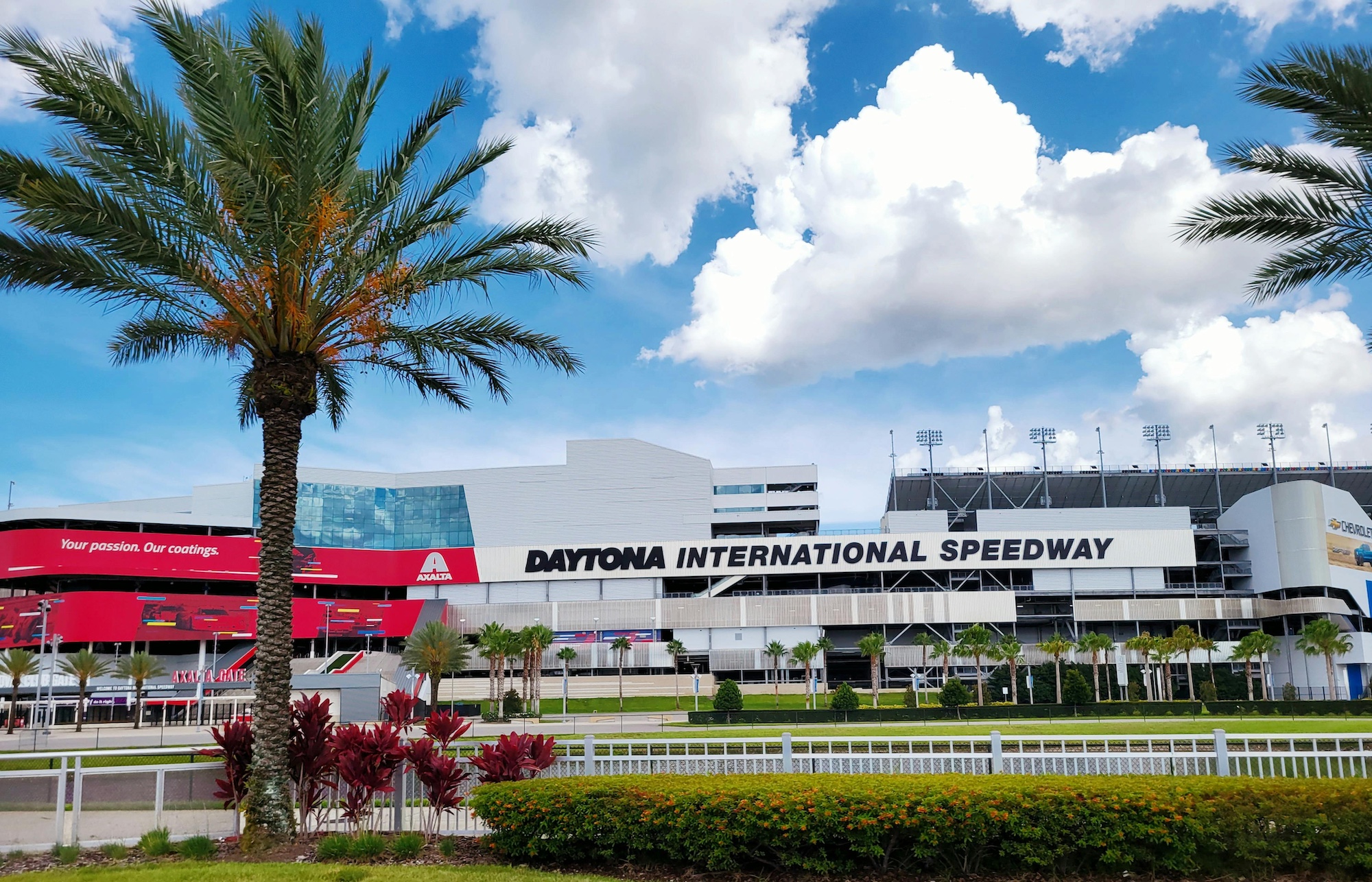
The Daytona 500 is the first points-paying race of the season, and it is also the most eagerly awaited. It is run in February at Daytona International Speedway in Florida, and its roll of winners goes back to 1959. The record for wins belongs to Richard Petty, who won the race seven times. In the United States they call it ‘The Great American Race’.
The format helps the storytelling. On an oval this fast the cars run in a pack, a few centimetres from one another, and a race can change hands on the last lap. In 2026 it was won by Tyler Reddick, who started twenty-sixth and beat Ricky Stenhouse Jr. to the line.
Coca-Cola 600, the longest of the year
The Coca-Cola 600 is run at Charlotte Motor Speedway, in the area that is home to most of the NASCAR teams, over the Memorial Day weekend. It covers six hundred miles, the longest distance on the calendar: the race starts in afternoon light and finishes under the floodlights, and the track changes with the temperature. Darrell Waltrip won five of them, more than anyone else.
In 2026 the race was run three days after the death of Kyle Busch, a two-time Cup Series champion, and it became a tribute to him. There was a large number 8 on the grass along the straight, and fans held up eight fingers on the eighth lap. Rain stopped it twenty-seven laps from the end. Daniel Suárez won, the third victory of his Cup Series career, ahead of Christopher Bell and Denny Hamlin. Suárez, who had driven for Busch’s team in the lower series, celebrated with a flag dedicated to Busch’s fans.
Southern 500, the Darlington tradition
The Southern 500 is the oldest of the four: the first running at Darlington, South Carolina, took place in 1950. The track has an irregular shape and a surface that eats tyres, and for decades it has been known as ‘The Track Too Tough to Tame’ and ‘The Lady in Black’. The wall often leaves its mark on the right-hand side of the cars, and the drivers regard it as more or less the price of admission.
Jeff Gordon won it six times, the race record. In 2026 victory went to Christopher Bell. Since 2015 Darlington has also been the track for throwback liveries. Teams and sponsors bring back colours from the past, first over the Southern 500 weekend and, since 2021, over the weekend of the spring race. Since 2026 NASCAR has no longer treated the throwback as an official fixture, but many teams carry on doing it. For a brand it is one of the rare moments when the history of NASCAR turns into ready-made communications material.
Brickyard 400, NASCAR at Indianapolis
The Brickyard 400 is run at the Indianapolis Motor Speedway, the home of the Indianapolis 500. NASCAR arrived there in 1994, and since then the race has had a less straightforward history than the others. For three seasons, from 2021 to 2023, the Cup Series raced on the infield road course, and in 2024 it returned to the oval. Jeff Gordon won it five times, including the first running.
Heim’s win in 2026 belongs to exactly this story. A driver who still races part-time wins at the most famous circuit in America, and the comparison with Gordon suggests itself. It is the kind of story the crown jewels produce almost every year, and one that the other races struggle to build.
Who has won the most: Gordon and the Winston Million
Jeff Gordon holds the record for crown jewel wins: seventeen, made up of three Daytona 500s, three Coca-Cola 600s, six Southern 500s and five Brickyard 400s. No other driver comes close. Jimmie Johnson, second on the list according to Hendrick Motorsports, stopped at twelve.
The value of these races, after all, also owes something to a sponsor. R.J. Reynolds gave the championship its name through the Winston brand. From 1985 to 1997 it put up a million dollars for any driver who won three of the four big races of the day in the same season. Only two drivers won the Winston Million: Bill Elliott in 1985, ‘Million Dollar Bill’ to everyone ever since, and Jeff Gordon in 1997. A prize invented to promote a brand of cigarettes ended up fixing in fans’ minds which races mattered most.
Why the NASCAR crown jewels matter to sponsors
For a brand, the value of the crown jewels does not stop at the Sunday audience. It lies in what happens afterwards. A win at Daytona or Indianapolis comes back in anniversaries, in end-of-season reviews and in comparisons with the champions of the past, like the one between Heim and Gordon. It is visibility that carries on beyond the race, and that a logo on the bodywork collects without any further investment.
Then there is the part you do not see on television. These are the weekends when teams and circuits lay on the most hospitality for clients, and when a sponsor can bring to the track the people it does business with. To see who is investing in NASCAR today there is our list of NASCAR sponsors, while costs and formats are in the guide to NASCAR sponsorship. Anyone choosing between two American championships will find the comparison between NASCAR and IndyCar. And anyone who wants to know how fast these cars go has our article on the speed of NASCAR race cars.
Kyle Larson won the 2026 championship, on 8 November at Homestead, without winning any of the four. The title is still the title, of course. But thirty years from now, when people talk about this season, it is likely that someone will remember first the kid who won at Indianapolis as a part-time driver.
Frequently asked questions about the NASCAR crown jewels
What are the crown jewel races in NASCAR?
The crown jewel races are four Cup Series races regarded as the most prestigious on the calendar. They are the Daytona 500 in February, the Coca-Cola 600 at Charlotte over the Memorial Day weekend, the Southern 500 at Darlington and the Brickyard 400 at Indianapolis. The definition is not in the rulebook: a crown jewel is a matter of custom, shared by the press, the teams and the fans.
Who has won the most NASCAR crown jewels?
Jeff Gordon, with seventeen wins: three Daytona 500s, three Coca-Cola 600s, six Southern 500s and five Brickyard 400s. Second is Jimmie Johnson with twelve, according to the count kept by Hendrick Motorsports, the team both of them drove for.
Who won the crown jewel races in 2026?
Tyler Reddick won the Daytona 500, Daniel Suárez the Coca-Cola 600, in a race run in tribute to Kyle Busch and stopped by rain, and Christopher Bell the Southern 500. The Brickyard 400 went to Corey Heim, who at 24 is the youngest winner at Indianapolis since Jeff Gordon in 1994. The championship went to Kyle Larson.
What was the Winston Million?
A one-million-dollar prize put up by R.J. Reynolds, sponsor of the championship through its Winston brand. From 1985 to 1997 it was on offer to any driver who won three of the four main races in the same season. Only Bill Elliott, in 1985, and Jeff Gordon, in 1997, ever won it. At the time the four included Talladega in place of Indianapolis.
Is the Brickyard 400 always run on the Indianapolis oval?
Almost always. The race began in 1994 on the oval of the Indianapolis Motor Speedway, but from 2021 to 2023 the Cup Series raced on the infield road course. In 2024 it returned to the oval, and that is where Corey Heim won the 2026 race.
Why do the crown jewels matter to sponsors?
Because they are the races fans remember longest and the ones on which teams and circuits concentrate their hospitality for clients. A crown jewel win comes back in anniversaries and in comparisons with the champions of the past, and the visibility for whoever is on the car lasts well beyond the Sunday of the race.