

Updated 20 November 2026
Does Nike sponsor any F1 teams? No. The Nike F1 deal announced on 19 November 2026 is a long-term agreement with Formula 1, meaning the championship, and no team is part of it. From 2027 Nike will be an Official Partner of the championship and the official supplier of clothing and uniforms for its staff, as well as a partner of F1 Academy. Adidas has done the opposite: it kits out two teams, Mercedes since 2025 and Audi since 2026. In my view Nike has chosen the more cautious route. But fans buy their own team’s shirt, and sooner or later Nike will have to reckon with that.
Think about it for a moment. The last time you saw someone in a Formula 1 cap, which logo was on it? The F1 one or Ferrari’s prancing horse? I can guess the answer. And that is exactly where sportswear’s two old rivals part ways.
What does the Nike F1 deal cover?
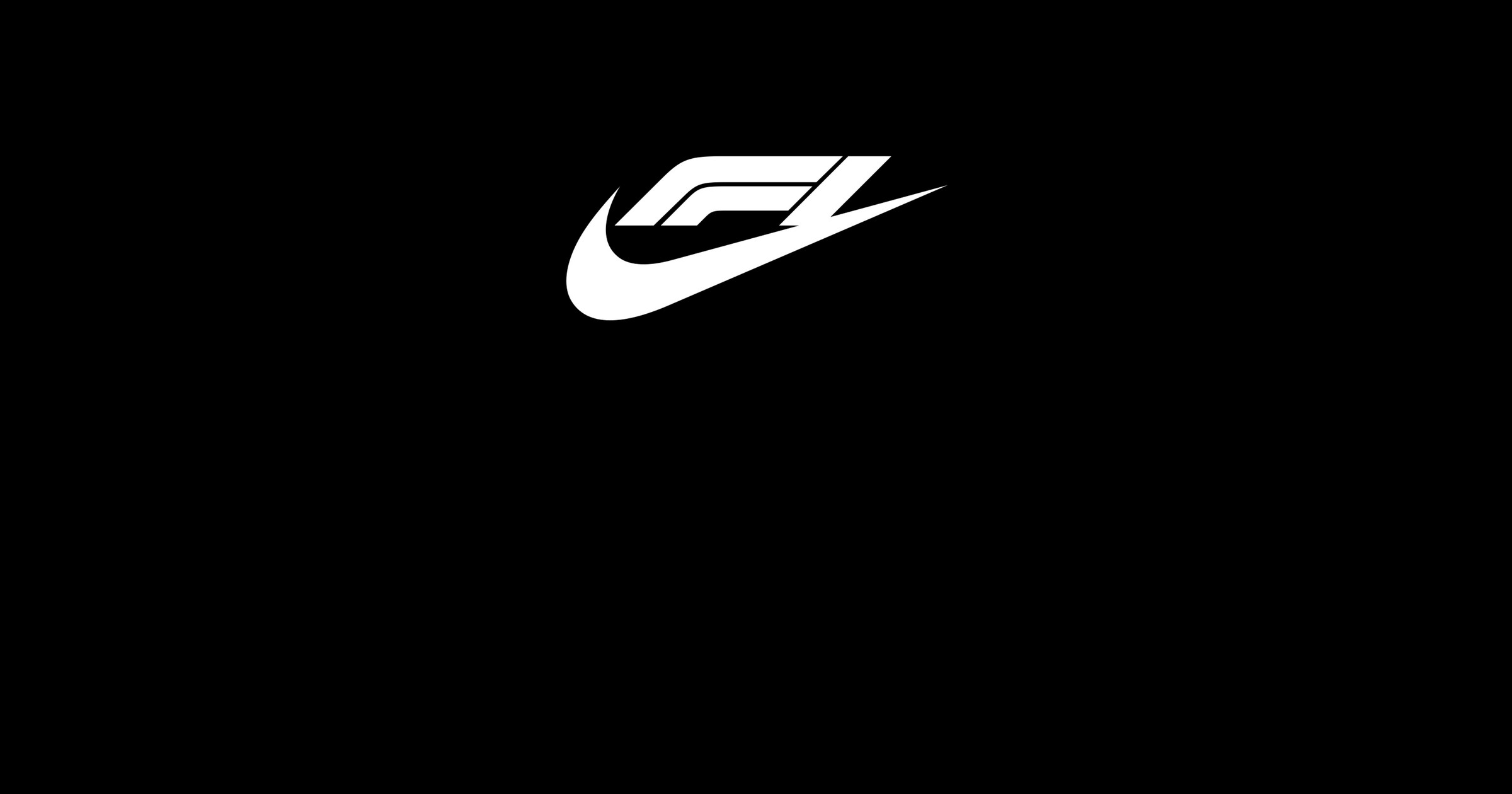
Nike has signed with Formula 1, meaning the company that runs the championship and sells its commercial rights, and not with a team. The deal was announced on 19 November 2026 by Nike and Formula 1 and starts with the 2027 season.
Here is what it covers, going by the official press releases:
- Uniforms for staff. For Formula 1, Nike becomes “Official Apparel and Uniform Supplier”: it will dress Formula 1 staff (not team staff) in co-branded Nike and F1 uniforms at events around the world.
- Collections for fans. Racing-inspired footwear, clothing and accessories, with limited-edition capsules (small collections produced in short runs and tied to an event) and trackside experiences for fans from 2027.
- A first taste now. The first capsule, dedicated to the Las Vegas Grand Prix, debuts on 20 November 2026, over the race weekend. It is available at the Nike Las Vegas store at Caesars Palace and at the F1 Hub at the Venetian.
- F1 Academy. According to Formula 1’s press release, Nike is also Official Partner and sportswear partner of F1 Academy, the series for female drivers that Formula 1 launched in 2023.
- Figures. Neither the length nor the value has been disclosed. The two companies speak only of a “long-term” agreement.
For Nike it is a return. Between 1996 and 2002 it worked with Michael Schumacher, producing his race boots and a trainer that bore his name, the Air Zoom Schu.
Since 2024 the job of supplying staff uniforms has been Puma’s. According to The Race and FashionUnited it passes to Nike from 2027, although Puma is not named in the official press releases. The title changes too. Puma was announced on 4 May 2023 as “Official F1 Provider”, in other words an official supplier. On Formula 1’s partners page it appears among the Official Providers, listed below the Official Partners: the title Nike will hold. We covered what Puma does in F1 in our article on Puma and Formula 1.
From 2027, then, the people working behind the scenes in the paddock for Formula 1 will have the Nike swoosh on their chests. The drivers will carry on wearing whatever their teams choose.
How did Adidas get into Formula 1?
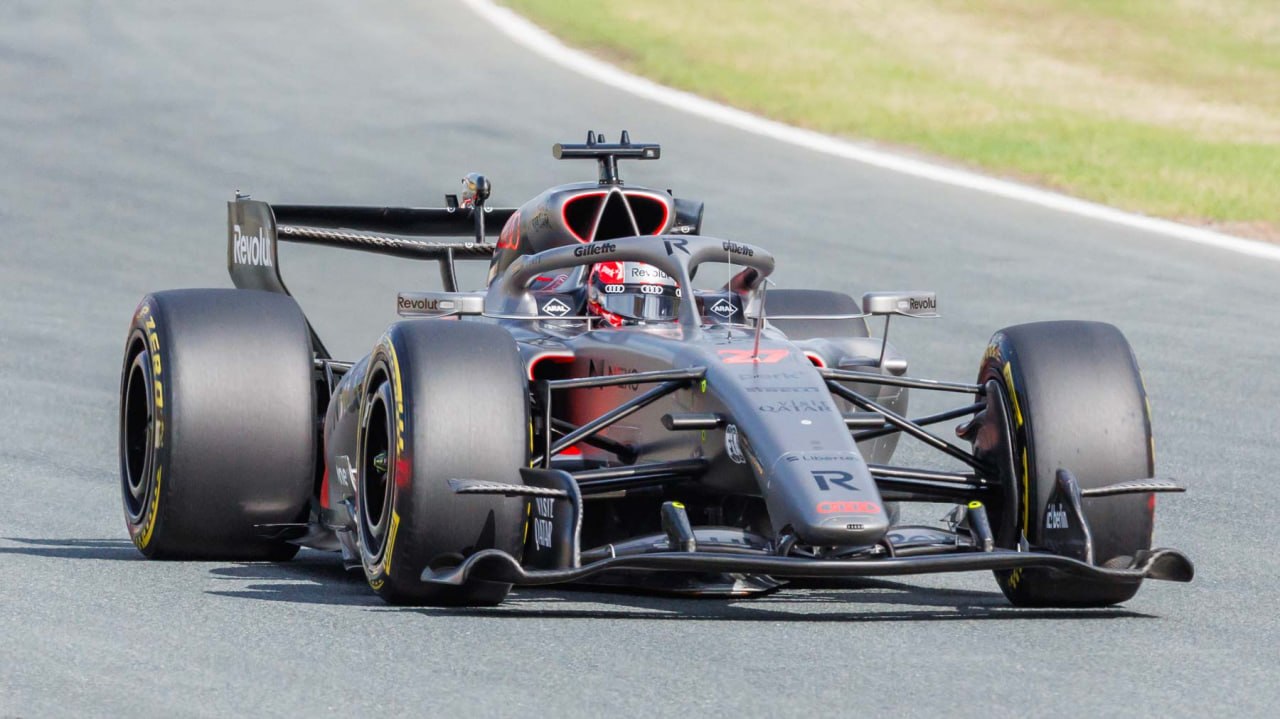
Adidas came into Formula 1 through the teams’ door. On 7 January 2025 it announced its entry into Formula 1 with Mercedes, previously kitted out by Puma. On 10 September 2025 it added Audi, which made its Formula 1 debut in the 2026 season.
In both cases Adidas supplies teamwear to everyone, from the drivers to the engineers and mechanics. To fans it sells clothing, footwear and accessories in the team’s colours.
The early results, according to Adidas, are good. In its first-quarter 2026 results, published on 29 April, the company wrote that the collections for Mercedes and Audi were well received by partners and consumers. It also listed motorsport among the clothing categories that grew at double-digit rates.
There is also a rumour worth keeping an eye on. In March 2026 the German daily Bild reported that Adidas would also be kitting out Red Bull from 2027. In early November, photos circulated of Max Verstappen in Adidas-branded Red Bull clothing. To date neither company has announced it; in March Adidas had replied that it did not comment on speculation.
In short, Adidas bought the actors and Nike bought the stage.
What is the difference between kitting out the teams and kitting out the championship?
Kitting out a team means tying yourself to its fans and its results. Kitting out the championship means being there at every Grand Prix, whoever wins, but with no beloved team shirt to sell.
Take an everyday example. Anyone who goes to a football ground buys their own club’s scarf. The one with the league’s logo on it, if there is one, is the one the tourist buys.
Nike knows this model well, but in the United States it works differently. It has kitted out the NFL since 2012 and the NBA since the 2017-18 season. There, the contract with the league covers the uniforms of every team.
Not in Formula 1. Each team sells its own rights and chooses its own supplier. In 2026 Puma kits out Ferrari, McLaren and Aston Martin, Adidas kits out Mercedes and Audi, and Castore kits out Red Bull, Alpine and Haas. The full list of the championship’s partners is on our page on Formula 1 partners in 2026.
That is why, in my opinion, Nike has bought the Formula 1 brand, its staff uniforms and F1 Academy, but not the Ferrari shirt.
Teams or championship: the pros and cons of each route
Neither route is better in absolute terms. Teams bring passion and visibility on the drivers’ backs; the championship brings presence everywhere, with no sporting risk. Here is how I see it, point by point.
The teams, the Adidas route
Pros:
- The team shirt is the one fans want to wear: the passion is already there, and it is just a matter of selling it.
- The brand is on the drivers in the paddock, in interviews and on the team’s social media.
- Products and initiatives are made to measure, together with the team.
Cons:
- You go where the team goes. A bad season, or a much-loved driver switching teams, weighs on the brand too.
- You are talking to the fans of one team in eleven.
- The best-loved teams often already have a supplier: Puma has kitted out Ferrari since the 2005 season.
The championship, the Nike route
Pros:
- You are present at every Grand Prix, whoever wins, with no risk tied to results.
- You are talking to the whole Formula 1 audience, which in 2025, according to the championship’s figures, numbered 827 million fans.
- You deal with one party instead of eleven, and you get to join championship projects such as F1 Academy.
Cons:
- There is no flag to rally round. Fans get emotional about their team and their driver, rarely about the organiser.
- On television the drivers are seen far more than the championship’s staff.
- You sit alongside all the championship’s other partners, and being remembered takes more effort.
If I put myself in the shoes of whoever signs the contract for Nike, I understand the choice. You deal with one party, you do not suffer anyone’s bad seasons and you have time to get to know the Formula 1 audience before backing anyone. A bit like renting in a new city before you buy there.
What will the Nike Formula 1 partnership bring from 2027?
From 2027 we will see Nike uniforms on Formula 1 staff at events around the world, co-branded collections and capsules dedicated to individual races. The first, for Las Vegas, debuts on 20 November 2026.
The rest is my own reading, and I keep it separate from the facts.
The audience is the right one for anyone selling trainers and hoodies. According to Formula 1’s figures for 2025, 43% of fans are under 35 and 42% are women; among new fans, women account for 48%. F1 Academy, which Nike will kit out, is the most direct route to part of that audience.
My bet is that the championship is only the first step. Nike is used to selling champions and teams, and I believe that sooner or later it will also want a driver’s race suit or a team’s shirt. That is my opinion: to date nobody has announced anything of the kind.
And Adidas? If Bild’s report of March 2026 is confirmed, and Adidas does kit out Red Bull as well from 2027, it would have three teams out of eleven. At that point the contest would be clear: Nike would be kitting out the championship, Adidas six drivers.
What can sponsors learn from Nike vs Adidas in F1?
The lesson is that the right question comes before the budget: do you want a story to tell, or do you want to be everywhere?
It is the same choice every company entering Formula 1 has to make, just with smaller sums. A team, if you want fans to win over, drivers to use in your communications and a story that is all yours. The championship, if you want presence at every race and do not want to bet on someone else’s results. (It depends on your objectives, of course, I hear you say. That is exactly the point.)
You can also do both. Aramco, for example, is a Global Partner of Formula 1 and at the same time title partner of Aston Martin. We compared the costs and rights of the two routes in our article on sponsoring an F1 team or the championship. And there is a third, smaller route: licensing, meaning the right to use the brand of a team or of the championship on your own products. We talk about it on our brand licensing page.
One limitation of this analysis needs spelling out. Nike’s and Adidas’s contracts are not public, and neither are the sales figures for individual collections. We are going on what the companies have disclosed and on what the trade has taught us.
In my opinion Nike has bought the best seat in the grandstand. One question remains: how many fans will buy the Formula 1 hoodie when their team’s is hanging next to it?
Sources: Nike, press release on the agreement with Formula 1; Formula1.com, Formula 1 and Nike; The Race, Nike’s return after 24 years; FashionUnited, Nike in place of Puma; Formula1.com, Puma as official F1 supplier; Mercedes-AMG Petronas F1, agreement with Adidas; Audi, agreement with Adidas; Adidas, first-quarter 2026 results; GrandPrix.com, the Adidas and Red Bull rumours; Formula1.com, the 2025 season in numbers.
Photo: Nike, from the press release of 19 November 2026.
Frequently asked questions
Does Nike sponsor any F1 teams?
No. Nike’s contract is with Formula 1, meaning the championship, and covers staff uniforms, F1-branded collections and F1 Academy. The teams have their own suppliers: in 2026 Puma kits out Ferrari, McLaren and Aston Martin, Adidas kits out Mercedes and Audi, and Castore kits out Red Bull, Alpine and Haas.
Does Nike sponsor F1?
From the 2027 season, yes. Nike announced a long-term agreement with Formula 1 on 19 November 2026. It becomes an Official Partner of the championship and its Official Apparel and Uniform Supplier, which means it dresses Formula 1’s own staff. It does not dress the teams or the drivers.
What does the Nike F1 deal include?
It includes co-branded Nike and F1 uniforms for Formula 1 staff, collections for fans with limited-edition capsules, trackside experiences from 2027 and a partnership with F1 Academy. The first capsule, for the Las Vegas Grand Prix, debuts on 20 November 2026.
How much is the Nike F1 deal worth?
The value has not been disclosed, and nor has the length: Nike and Formula 1 speak only of a long-term agreement. At present there are no official figures, and any number should be treated as an estimate.
Is Nike replacing Puma in Formula 1?
Only for the championship’s staff uniforms, according to the press. Puma, announced in 2023 as Official F1 Provider, has supplied them since 2024. According to The Race and FashionUnited the job passes from 2027 to Nike, which will hold the title of Official Partner, although the official press releases do not name Puma. Nike’s contract does not cover the teams.
Which F1 teams does Adidas sponsor?
In 2026 Adidas kits out two teams: Mercedes, since 2025, and Audi, since its Formula 1 debut in 2026. In March 2026 the German daily Bild reported that Adidas would also kit out Red Bull from 2027. As of November 2026 neither Adidas nor Red Bull has announced it.
Does the Nike deal include F1 Academy?
Yes. According to Formula 1’s press release, Nike is also Official Partner and sportswear partner of F1 Academy, the series for female drivers that Formula 1 launched in 2023. In my view it is the most direct route to part of Formula 1’s audience: according to Formula 1’s figures for 2025, 42% of fans are women.
Is it better to sponsor an F1 team or the championship?
It depends on what you want to achieve. A team gives you fans, drivers and a story to tell, but ties the brand to results. The championship gives you presence at every race without sporting risk, but no flag to rally round. In my view, anyone wanting to sell a product to fans is better off starting with a team.