

In 2026, a brand can put its name on Red Bull’s car for a reported $110 million a year, or hold a category-exclusive Formula 1 global partner slot across every race of the season for less than half of that. The first buys a team. The second lets you sponsor the F1 championship itself, at every round, whoever wins. This guide settles the F1 team vs championship sponsorship decision for a brand that has already chosen Formula 1 and still has to choose the property. It covers what each side sells, what each costs, where the risk sits, and what is actually available.
TL;DR
- The price gap is smaller than it looks. Team title deals run from about $25 million to $110 million a year; F1 global partner slots typically sit around $40 million to $50 million, with LVMH the reported outlier at up to $150 million a season.
- The cheapest true championship entry is an official partner. That tier runs at roughly half the global partner rate, which puts the Formula 1 championship sponsorship cost at entry level below a principal deal at a top team.
- They buy different things. A team buys identity, drivers and bespoke activation; the championship buys neutrality, every race and broadcast-controlled rights.
- They fail differently. Team deals carry sporting and churn risk; championship deals carry escalator and attribution risk.
- Availability often decides before budget does. F1’s sponsorship revenue reached about $840 million in 2025, 21.7% of its $3.87 billion total, and the top tier is deliberately kept small.
F1 team vs championship sponsorship: the two properties and the four variables that separate them
A team deal is bought from one of the eleven constructors and is scoped to that entrant’s car, kit, drivers, and channels. A championship deal is bought from Formula 1 itself, the commercial rights holder often still called FOM, and is scoped to the series across every race and territory. Both sit inside how motorsport sponsorship works, but different companies sell them.
Four variables separate them, and the rest of this piece resolves them in order. First, what rights each actually conveys. Second, what each costs, with the Formula 1 championship sponsorship cost set against team pricing. Third, how the risk differs. Fourth, what is actually available in your category.
The tier definitions behind both ladders are in our guide to types of motorsports sponsorship. The decision matrix at the end maps objective and budget onto one property, or both.
What you buy when you sponsor an F1 team: car, driver and team-scoped exclusivity
A team deal is the purchase of a defined, negotiable inventory owned by one commercial entity. Everything on the list belongs to that team and is priced by it. The inventory is concrete and the negotiation flexible, but everything you buy is bounded by one car’s place on the grid.
F1 team sponsorship rights: livery position, driver access and naming integration
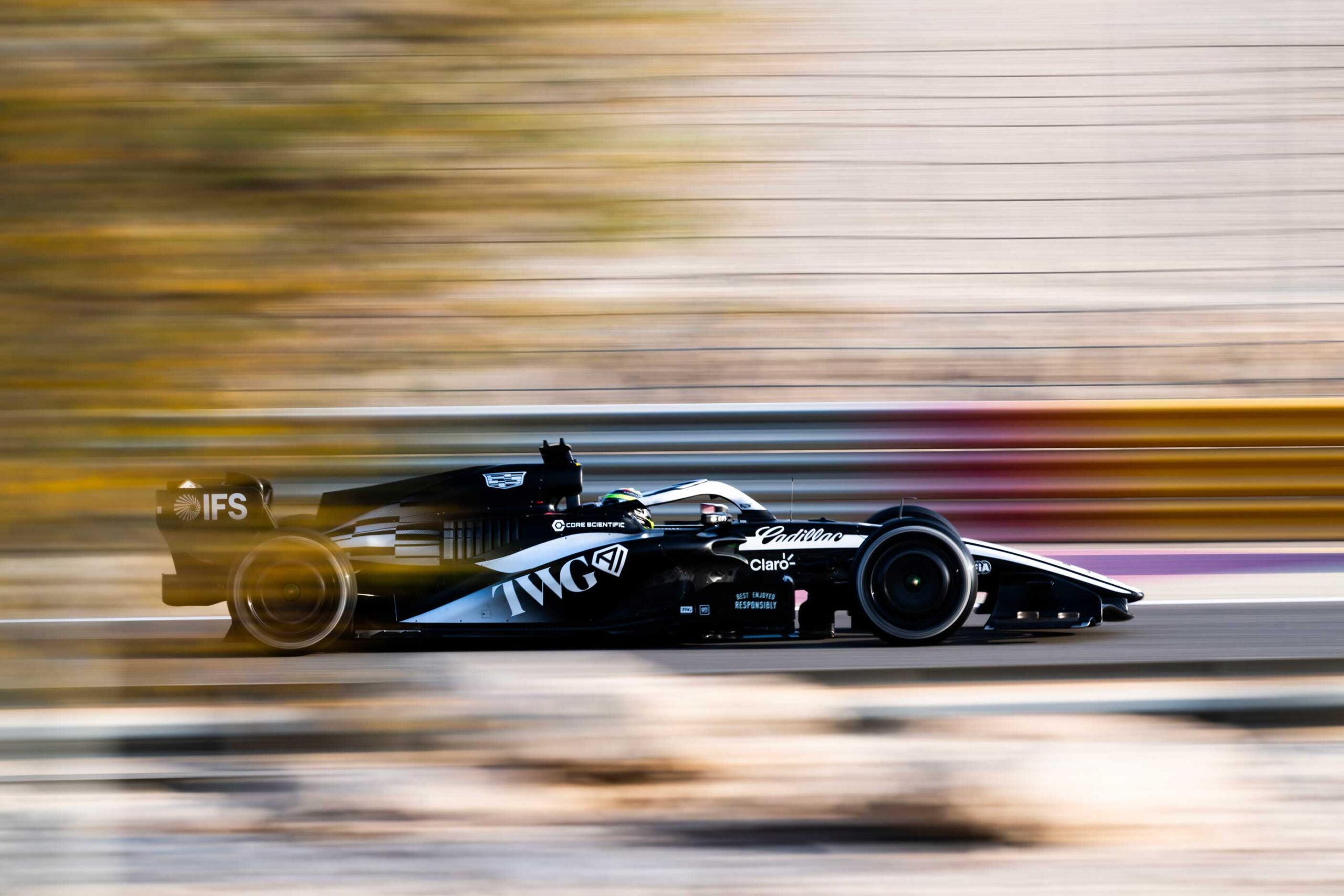
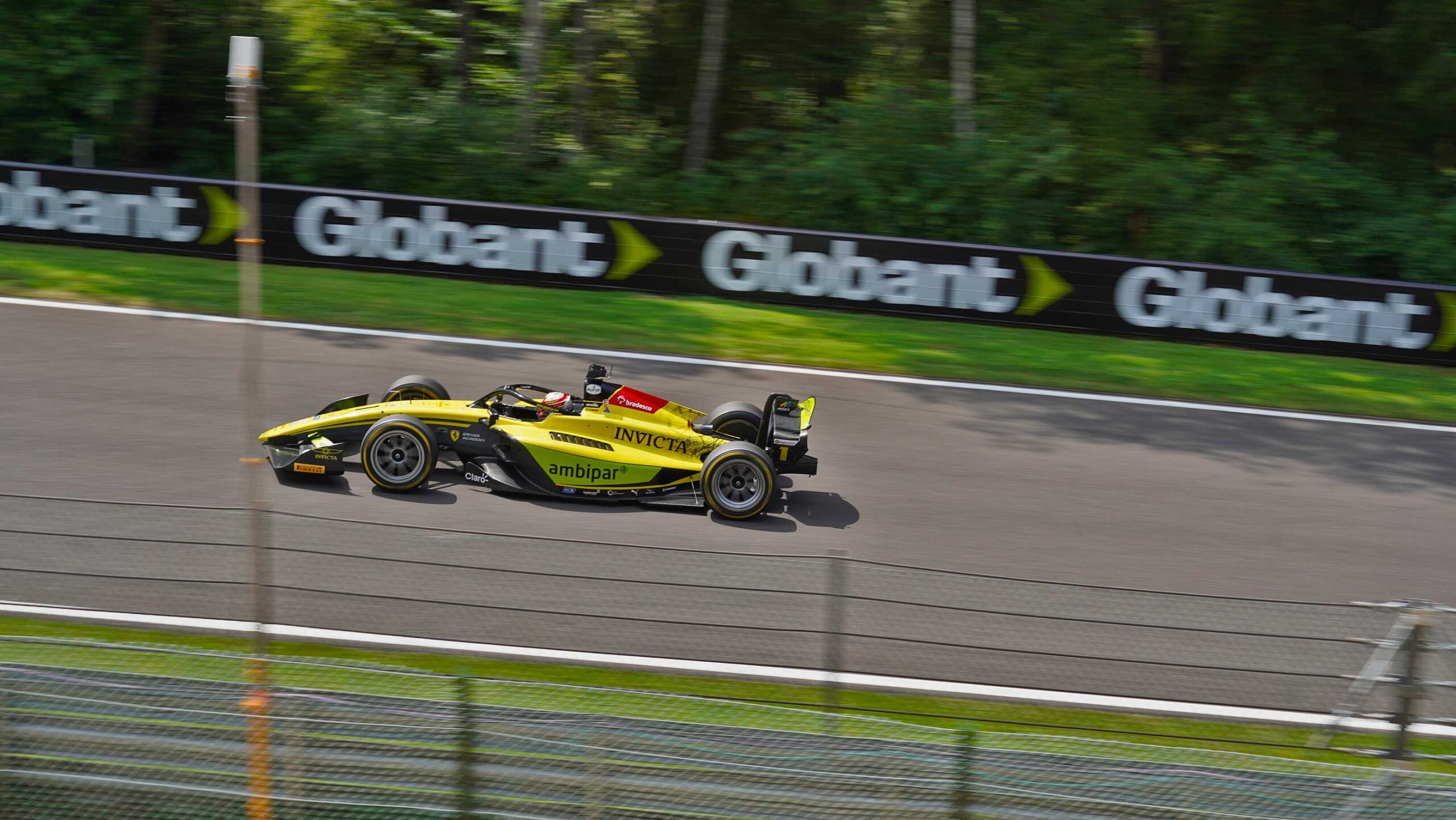
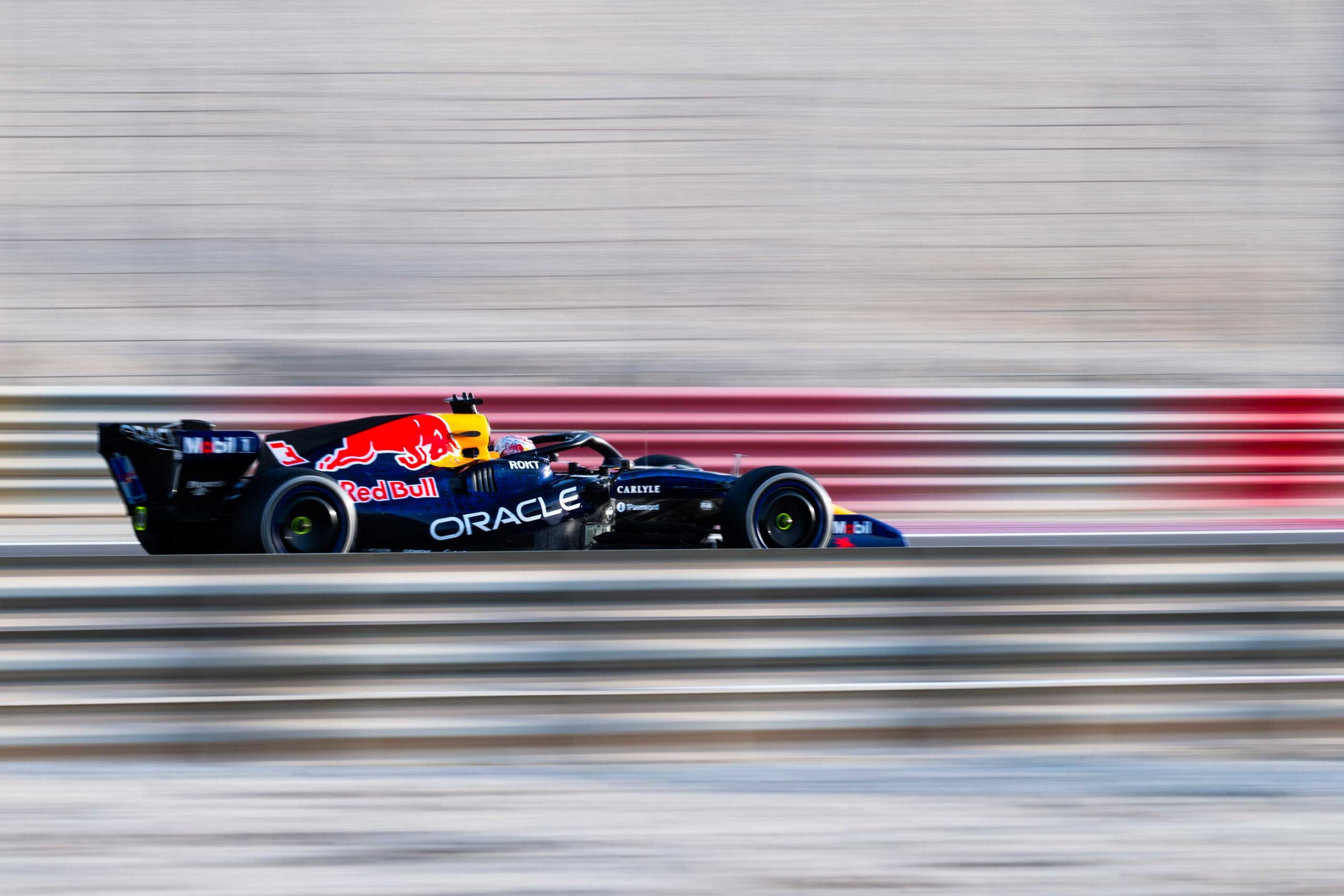
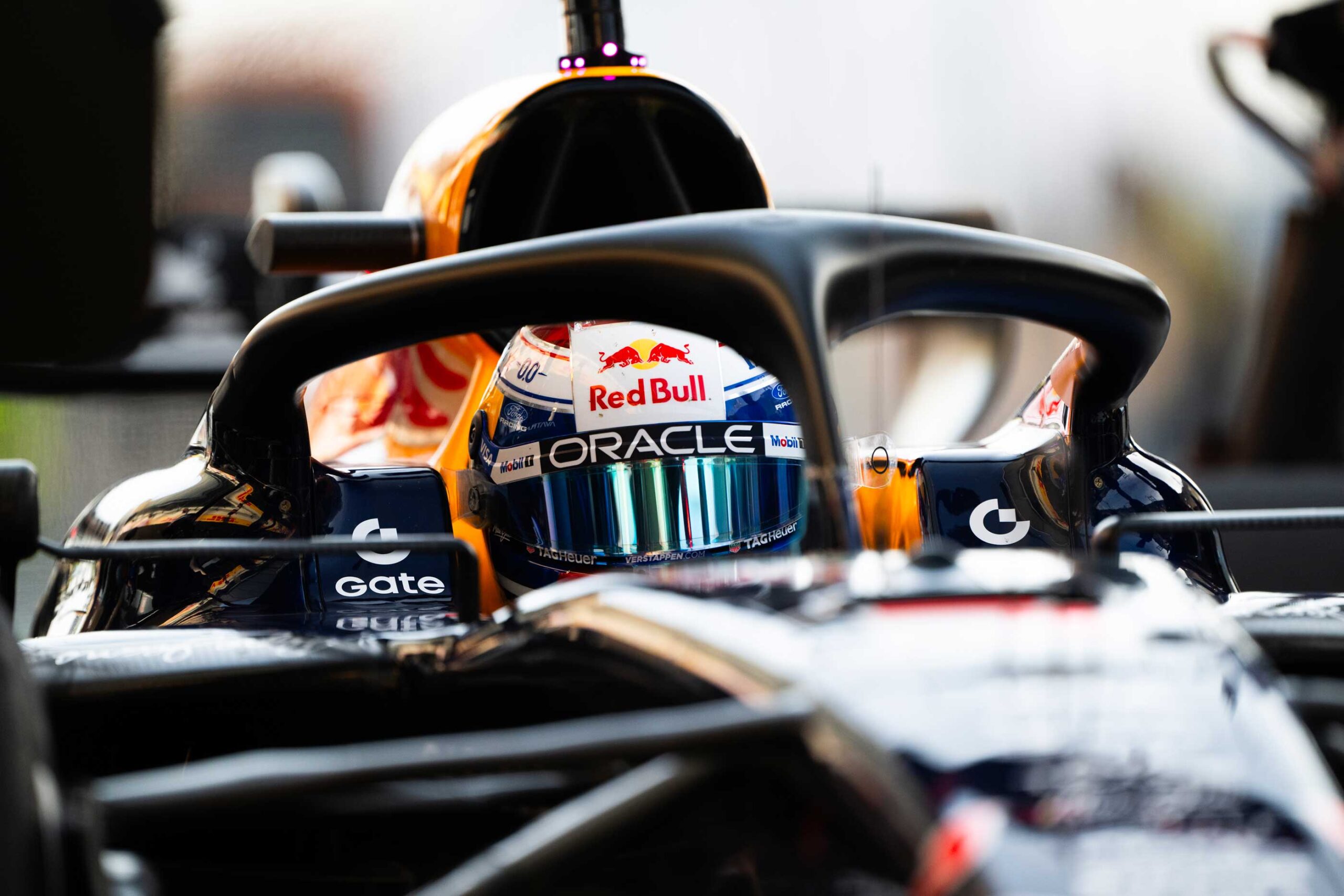
At title level, the contract conveys entrant-name integration. Oracle Red Bull Racing, Scuderia Ferrari HP and McLaren Mastercard Formula 1 Team are legal entry names, not slogans. Below that, the rights are livery position, branding on driver suits and helmets, garage and motorhome hospitality, and driver appearance rights, which are usually priced as a separate line item.
The last right on the list is the one most brands misread. Category exclusivity in a team deal is scoped only to that team. It stops a competitor buying the same team, not sponsoring the car in the next garage. That is the first difference between F1 team sponsor and official partner status at championship level, and the board should hear it before anyone signs.
The trade-off team sponsorship buys: bespoke activation and a single fanbase
A team is a smaller counterparty than Formula 1, with more room to negotiate. Activation can be built rather than bought off a rate card. For brands whose plan depends on doing something specific, that flexibility is the reason to choose the team side of the F1 team vs championship sponsorship question.
You also inherit a fanbase. Team loyalty in Formula 1 is real, and some of it can transfer to the team’s partners, though the effect varies by team and market.
The cost of that concentration needs stating honestly. You are buying roughly one eleventh of the grid’s attention, and you are tying your brand to one team’s season, good or bad.
What you buy as a Formula 1 championship sponsor: series-wide rights across every race
When you sponsor the F1 championship, the counterparty is Formula 1 itself. The inventory is the championship’s own: trackside signage, broadcast furniture and graphics, the official marks, the Paddock Club, and F1’s digital and social channels. The rights are standardized rather than bespoke, because Formula 1 sells the same tiers to many partners.
The four Formula 1 championship sponsorship tiers: global partner, official partner, regional partner and official provider
Formula 1 sells four core tiers, each defined by what it conveys rather than by its adjective. The question of Formula 1 official partner vs global partner status is mostly a question of footprint and exclusivity, as the table shows. Rosters change every few months; the live list is maintained on our page of Formula 1 sponsors, checked against Formula 1’s official roster in October 2026.
| Tier | What it conveys | Examples (October 2026 roster) |
| Global Partner | Category exclusivity at every race, full digital rights, premium hospitality | Aramco, AWS, DHL, Heineken, Lenovo, LVMH, MSC Cruises, Pirelli, Qatar Airways, Salesforce |
| Official Partner | Championship-wide category rights with a lighter footprint | American Express, PepsiCo, Santander, PwC, Paramount+ |
| Regional Partner | Rights scoped to a territory or to named events | T-Mobile (5G partner of the Las Vegas Grand Prix), Arcos Dorados (McDonald’s, Latin America and the Caribbean) |
| Official Provider | Supplier designation and B2B credibility rather than consumer reach | Tata Communications, Aggreko, Flexjet, Puma, Fever |
On Formula 1 official partner vs global partner, the practical rule is simple: a global partner owns its category everywhere, while an official partner holds championship rights with fewer touchpoints and lighter hospitality.
The rights only the championship can sell: broadcast-controlled virtual signage and market-by-market branding
This is what a championship sponsor gets that a team sponsor cannot. Formula 1 produces its own world feed, so it can guarantee on-screen visibility to every Formula 1 global partner and official partner, and change the branding viewers see by market, during the race. Jonny Haworth, F1’s director of commercial partnerships, has described virtual signage as the mechanism that opened up regional partnerships, McDonald’s in Latin America among them (BlackBook Motorsport, November 2025; Autosport, August 2026).
No team can offer that inventory, because no team controls the broadcast. For a US brand, it is decisive: US-only signage across a global calendar, at a fraction of a worldwide buy. In the US, that inventory now travels on Apple, which took over F1’s rights in 2026 on a five-year deal reported at around $140 million to $150 million a year. This is the second difference between F1 team sponsor and official partner rights: the championship sells the screen, the team sells the car.
F1 team sponsorship cost in 2026: title, principal and associate deal bands
This section is deliberately short: team pricing is covered in full in our F1 sponsorship cost guide. The F1 team sponsorship cost 2026 bands below are reported estimates from the specialist press, not disclosed contract values.
| Tier or deal | Reported annual value |
| Title (range) | $25M – $110M+ |
| Oracle / Red Bull Racing (renewed February 2026) | around $110M |
| HP / Ferrari; Mastercard / McLaren | around $100M; $90M – $100M |
| Principal or major | $5M – $25M |
| Associate | $2M – $5M |
Other reference points: Petronas at Mercedes is reported at $75 million to $80 million and Aramco at Aston Martin at around $75 million. Gucci, which replaces BWT as Alpine’s title partner from 2027, is estimated at $50 million to $60 million a season (The Race, May 2026). Cadillac’s naming slot was reportedly offered at $55 million to $70 million a year (Sports Business Journal, September 2025), with prospective partners pushing toward lower figures. Almost every team now requires a commitment of at least two seasons, and single-race team deals are no longer sold. That is the F1 team sponsorship cost 2026 picture in one paragraph.
Formula 1 championship sponsorship cost: what global and official partner slots sell for
Championship pricing is far less reported than team pricing. There is no rate card, and the figures that exist are scattered across a decade of trade reporting. What follows assembles the public record in one place, each figure with its source and year, so the F1 series-level sponsorship cost can be set against the team side.
F1 global partner cost: the $40M–$50M band and the LVMH outlier
How much does it cost to be a Formula 1 global partner? Typically in the region of $40 million to $50 million a year, according to SportsPro’s reporting in 2025. That band is the most reliable answer to the F1 global partner cost question; the named deals sit around it.
| Global partner | Reported annual value | Term | Source and year |
| LVMH | up to $150M a season (disputed) | Ten years from 2025 | SportsPro (2025) |
| Aramco | $42M – $51M | Ten years from 2020 | Motorsport Week (2020) |
| Heineken | around $50M | Extended 2023 | Secondary reporting |
| DHL | around $40M | Extended 2024 | BlackBook Motorsport (2025) |
| Salesforce | about $26M (£100M over five years) | From 2022, extended to 2026 | BlackBook Motorsport (2026) |
| Rolex (historical) | around $50M | Until 2024 | Secondary reporting |
The LVMH figure needs a caution. Early reports put it at around $150 million a season for a deal that covers several group brands, and later accounts put it lower; the parties have not disclosed it. The timekeeper change that came with it is covered in our piece on F1 watch sponsors.
The analytical takeaway matters more than any single row. The F1 global partner cost band sits below the top team title band, and the F1 series-level sponsorship cost at official level sits lower still. The championship is not automatically the more expensive property, which contradicts what most brands assume when they walk in.
F1 official partner and regional partner cost: the cheaper championship entry points
SportsPro’s 2025 reporting puts the F1 official partner cost at roughly half the global range, which implies around $20 million to $25 million a year. That is an analyst estimate, not a disclosed rate card. It still matters, because it places the F1 official partner cost below a principal deal at a top-three team: championship-level entry is cheaper than most brands expect.
Regional partner sits lower again and is scoped to territory. No public figure exists for the F1 regional partner cost, but the structure is the point: for a brand that only sells in the United States, a regional deal is the structurally correct product, and almost nobody asks for it. T-Mobile’s US and Las Vegas scope is the regional model. American Express is the documented escalation path: its regional partnership was upgraded in 2025, and it now sits among the official partners. Paying the F1 official partner cost after proving the model regionally is a sequence, not a compromise.
Contract length and escalators: why championship deals are priced differently to team deals
The hardest, most citable fact on this page comes from Liberty Media’s own filing. Its 10-K for the 2025 financial year states that Formula 1’s advertiser and sponsor contracts typically run three to five years, occasionally longer, with payments that often increase each year by a fixed amount, a fixed percentage, or in line with the US or European consumer price index.
That has two consequences for a CFO. Year-one price is not the price. And the total commitment has to be modeled across the term, not per season, before the Formula 1 championship sponsorship cost is compared with any team quote. Team deals also run multi-year, but their escalators are negotiated case by case rather than built into a standard structure.
F1 team vs championship sponsorship: where the risk actually sits
The two properties fail in different ways, and the failure mode should be priced before the deal is. A team deal concentrates risk in one car’s season; a championship deal spreads exposure but dilutes what the brand can claim as its own.
Team-side risk: results, ownership change and title sponsor turnover
A title sponsor’s name is attached to every result, good and bad. The exposure is contractual, not optional. Across the 2026 and 2027 cycle, BWT made way for Gucci at Alpine, MoneyGram for Toyota Gazoo Racing at Haas, Sauber became Audi with Revolut as title partner, and McLaren took a title partner for the first time since 2013. That is four of eleven entrants changing title billing in a single cycle.
Build performance and identity-change protections into the contract, and treat the exit as a negotiated term, not an afterthought.
Championship-side risk: undifferentiated presence and built-in escalators
Series-level presence is neutral, which also makes it harder to attribute. With more than 30 brands on the official roster, there is no single car, driver, or narrative to own, and recall competes against a crowded field. Measuring that return is covered in our F1 sponsorship ROI benchmarks.
Add the escalators that compound the Formula 1 championship sponsorship cost over a term, and calendar dependency: race count and territory mix shift from year to year, and inventory is priced against them. In 2026, the war in the Middle East cancelled the Saudi Arabian round and moved the Bahrain Grand Prix to Malaysia. Neutrality is an asset for an incumbent protecting its position, and a liability for a challenger buying salience.
Availability and category conflict: which F1 property you can actually buy right now
In the F1 team vs championship sponsorship decision, the binding constraint for most brands is not budget but whether the slot exists. A category held at the top of the championship ladder closes that route for years; a category held by one team leaves ten others open.
Who you negotiate with and why global partner slots rarely open
On the team side, there are eleven commercial directors, eleven rate cards, and inventory that refreshes every season. On the championship side, there is one counterparty: Formula 1’s commercial partnerships function, with agencies such as CAA Sports historically involved in global deals.
The scarcity mechanic is the substance here. Haworth has said Formula 1 is deliberately restrictive about the number of brands in its top tier, to protect the value of exclusivity (BlackBook Motorsport, November 2025). A Formula 1 global partner slot therefore opens only when a long contract lapses, and recent portfolio growth has come mostly from new specialized categories rather than from adding brands to the top tier (Autosport, August 2026).
The practical consequence: if your category is already taken by a Formula 1 global partner, the realistic championship route is official or regional, or a team deal. Team inventory, by contrast, is genuinely open; the Cadillac naming slot is the largest uncommitted asset on the grid.
Sponsoring both: the Aramco dual-level model
The F1 team vs championship sponsorship binary has a third option. Aramco is a Formula 1 global partner and also Aston Martin’s title partner, a structure set out in the Aramco partnership in detail. Pirelli supplies every car on the grid as sole tyre supplier while appearing on team partner rosters.
The mechanics are straightforward. Championship category exclusivity does not block a team deal in the same category, because the rights are sold by different entities against different inventory. The sensible sequence is to enter at one level, prove the model, then layer the second, with conflict clauses drafted in both contracts.
F1 team or championship decision matrix: matching objective and budget to the right property
The matrix resolves the F1 team vs championship sponsorship choice by objective first, then budget. Budget bands are directional and derived from the reported figures above, not from any rate card. Read the “what to avoid” column as carefully as the recommendation, and remember that the F1 global partner cost is only relevant if the slot exists.
| Primary objective | Budget band | Recommended property | Why | What to avoid |
| Brand fusion and maximum salience | $25M+ | Team title deal | Name integration and ownership of a single narrative | Title billing on a team you have not stress-tested for performance risk |
| Global category defense for an incumbent | $40M+ | Championship global partner | Neutrality plus category exclusivity at every race | Expecting attributable single-property recall |
| US-market-only growth | Under $10M | Regional partner or a team associate deal | Territory-scoped rights at territory-scoped cost | Global reach you cannot activate |
| B2B pipeline and client entertainment | $2M – $5M | Team associate with hospitality weighting | Paddock and garage access is the deliverable, not the logo | Paying for broadcast surfaces you will not measure |
| Category already taken at series level | Any | Team deal | The conflict rules allow it | Waiting for a global slot that may not open this decade |
| Enterprise technology integration | $25M+ | Team title or principal | The deal is an operational integration, not a media buy | Structuring it as pure logo inventory |
The championship is not the expensive option
The counterintuitive finding is the one to take into the room. Ask how much it costs to be a Formula 1 global partner, and the answer is typically less per year than title billing on a front-running team, so whether you back a team or sponsor the F1 championship, the real difference is what the money buys and how it fails. The decision rule for F1 team vs championship sponsorship follows from that: objective first, then availability, then price. RTR Sports Marketing is team-agnostic. Our commission is paid by the property, and we represent no team and no series, so a recommendation from us is not driven by inventory we need to move.