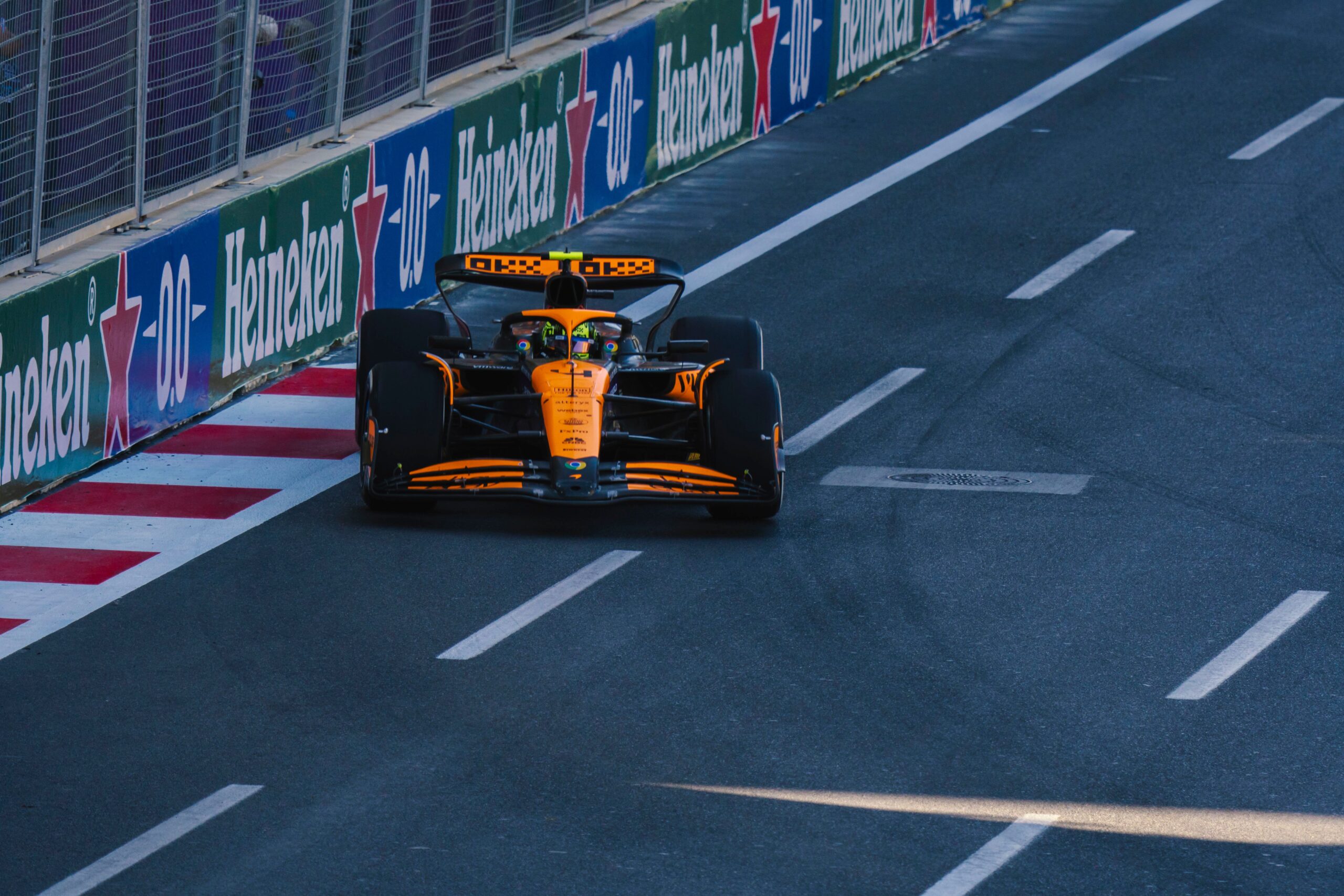


In August 2025, McLaren confirmed Mastercard as the naming partner of its Formula 1 team from 2026, in a deal reported at roughly $100 million a season, the richest commercial arrangement on the grid, and many multiples of what an associate sponsor pays to place a logo on the same car. That spread, from a few million to nine figures on one chassis, is the reason F1 sponsorship ROI cannot be answered with a single number. Return in Formula 1 is not a figure; it is a profile that changes materially across three spend bands: associate (1.5M–5M), primary or major (5M–25M), and title or principal (25M–110M+). This guide sets out what verified return a brand should realistically expect at each level before it issues an RFP or briefs its agency. This piece assumes you already know how to measure motorsport sponsorship ROI and what a deal costs, for the full fee ranges, see F1 sponsorship costs by tier. Every benchmark below is drawn from independent third-party data, Relo Metrics, the academic work of Jensen and Cobbs, SponsorPulse, and the 2025 Global F1 Fan Survey, not from our own estimates.
Key Takeaways
- Three spend bands, three different returns. Associate deals (1.5M–5M) rarely return positive on broadcast alone; primary deals (5M–25M) can deliver a directional 3–5x in sponsor media value with activation; title deals (25M–110M+) are measured in brand equity and enterprise value, not a media ratio.
- Only 10.1% of F1 sponsors achieved a positive broadcast-only return in the Jensen and Cobbs analysis of 2006–2010 seasons, the single most sobering figure in the category.
- Airwallex’s first year with McLaren produced a 58% increase in perceived brand trust and a 70% uplift in purchase consideration among people who linked the two brands, a named, primary-tier data point.
- Each championship point a sponsored team scores is worth an average $822,157 in additional sponsor media value, with race wins worth about $26 million each (Jensen and Cobbs).
- 73% of F1 sponsor media value is now social-driven, not broadcast, Relo Metrics measured over $41 million in sponsor media value at the 2025 Australian Grand Prix, most of it earned on social.
- Use the decision matrix lower down to match your objective and budget to the return profile that actually fits.
F1 Sponsorship ROI: The Three Spend Bands and What Each Delivers
The most common mistake we see brands make when they first model F1 sponsorship ROI is to treat the sport as a single asset with a single rate of return. It is not. A $2 million associate deal on a backmarker and a $90 million title partnership on a front-runner are not the same product bought in different sizes; they are different products that happen to share a paddock. The return each one generates comes from a different channel, is measured on a different basis, and answers a different marketing objective.
For that reason, we structure every F1 conversation around three bands. Associate sponsorship (1.5M–5M) buys brand association and access. Primary or major sponsorship (5M–25M) is the first tier where broadcast media value and measurable brand lift both become real. Title or principal sponsorship (25M–110M+) shifts the question away from media ratios entirely and toward brand equity and enterprise value. The table below is the map for the rest of this guide. The sponsor media value ratios in it are directional. Relo Metrics valuations vary by team, circuit, and season, and should be read as orientation, not as a quoted figure.
| Spend Band | Annual Rights Fee Range | Typical ROI Type | SMV Ratio (directional) | Primary Return Channel | Named 2026 Example |
| Associate | 1.5M–5M | Brand association + B2B access | Below 1x on broadcast alone | Social/digital activation + hospitality | First-time entrants, mid-market associate partners |
| Primary / Major | 5M–25M | Media value + brand lift | ~3–5x with activation | Broadcast SMV + social earned media | Airwallex (McLaren) |
| Title / Principal | 25M–110M+ | Brand equity + B2B integration | Not a simple media ratio | Equity compounding + enterprise value | Mastercard (McLaren, from 2026), HP (Ferrari), Oracle (Red Bull) |
Formula 1 Associate Sponsorship ROI (1.5M–5M): Brand Association and B2B Access
At the associate level, a brand buys secondary car and garage surfaces, official-partner IP and licensing rights, limited hospitality, and a place in the team’s communications, but not broadcast-dominant placement. Understanding that distinction is the whole of associate-tier Formula 1 sponsorship ROI. The prime real estate on the car, the sidepod and the rear wing, belongs to the primary and title partners; the associate gets the surfaces the camera finds less often. For the full breakdown of what each surface is worth, see our analysis of logo placement and media value.
This is where the hardest number in Formula 1 sponsorship return on investment applies most severely. In their study of the 2006–2010 seasons, Jensen and Cobbs found that only 10.1% of F1 sponsors achieved a positive return measured purely on televised exposure, that is, where the airtime value equalled or exceeded the fee paid. At $1.5 million on a team that rarely reaches the points, broadcast sponsor media value will not return rights-positive on its own. A logo without a programme behind it is, in the language we use with clients, an adhesive sticker: it occupies space and generates almost nothing. The associate tier is the least forgiving place in the sport to buy a badge and hope, and it is where Formula 1 sponsorship ROI most often disappoints the brands that skip activation.
So the return at this level has to come from elsewhere, and it does. The first channel is B2B: paddock and hospitality access is a credible environment in which to host enterprise prospects, and the official F1 partner badge carries real weight in a sales conversation. The second is brand lift through activation. IEG’s benchmark for a well-activated sponsorship is a 10–15% lift in unaided brand awareness, a figure to treat as directional, since it depends heavily on how hard the brand works the rights it has bought. The associate tier suits US mid-market brands entering F1 for the first time, B2B companies using the paddock as an enterprise-hospitality venue, and brands whose real return channel is partner credibility and IP usage rather than screen time. It rewards the buyer who understands that the fee is the entry ticket, not the campaign.
Why Social Media Drives ROI at the Associate Level More Than Broadcast Does
The single most useful shift in how sponsor media value in F1 is measured is the recognition that the broadcast is no longer where most of the value lives. Relo Metrics found that 73% of the sponsor media value generated across the opening days of the 2025 Australian Grand Prix was social-driven, not broadcast, part of over $41 million in sponsor media value at that single event. For an associate partner with low-frequency on-car surfaces, that finding is decisive: the return sits in digital and social activation, not in waiting for the camera. A brand that runs a year-round content programme, using co-branded content rights, driver posts and team social amplification, can generate social sponsor media value that exceeds the broadcast value of its physical placement. There is a non-obvious contract point buried here that brands routinely miss: social ROI at this tier depends on negotiating content and usage rights up front. If the right to co-create and distribute team and driver content is not written into the deal, the cheapest and highest-return channel available to an associate partner is closed before the season starts.
F1 Primary Sponsorship ROI (5M–25M): Where Broadcast Value and Brand Lift Both Become Measurable
The primary or major band is where F1 sponsorship ROI stops being an act of faith and starts being a measurable line on a marketing plan. This is the most data-rich tier, and the one where the classic F1 sponsorship ROI case, built on sponsor media value, actually holds. A mid-tier deal around $5 million typically returns the equivalent of $15–25 million in advertising value, a directional 3–5x, before activation is counted. We flag that ratio as directional because Relo Metrics valuations move with team, circuit and season, and the fee ranges themselves are set out in our page on F1 sponsorship cost rather than reproduced here.
Brand lift at this tier is where the strongest named evidence sits. Airwallex, which became an official partner of the McLaren F1 team in 2024, reported after its first season that visibility of the partnership drove a 58% increase in perceived brand trust and a 70% increase in the likelihood of considering Airwallex among people who associated the fintech with McLaren. That is a primary-tier case study with the two numbers a CMO actually cares about when modelling F1 sponsorship return on investment: trust and consideration. It aligns with the wider IEG benchmark of a 10–15% unaided-awareness lift for a well-activated deal, and with fan behaviour: the 2025 Global F1 Fan Survey found that one in three F1 fans are more likely to purchase from an F1 partner, rising to around 40% among Gen Z. SportQuake’s own research reports an 11% uplift in purchase consideration for sponsoring brands and that 81% of fans trust F1 sponsors, figures worth treating as directional, since they come from a single agency source.
Two variables decide whether a primary-tier deal reaches its potential. The first is the activation multiplier: the recognised industry benchmark is roughly $2 of activation for every $1 of rights fee, and without it the 3–5x sponsor media value ratio compresses materially, a well-bought deal starved of activation underperforms a smaller deal that is properly worked. The second is B2B pipeline value from premium hospitality, which at this tier becomes a genuine channel rather than a perk. Widely quoted figures put the cost of a qualified executive meeting generated through motorsport hospitality well below the cost of the equivalent meeting sourced at a trade show, but we have not been able to confirm the specific per-meeting costs often attributed to McKinsey across independent sources, and the honest benchmark data we could verify suggests hospitality’s edge is conversion quality, not a lower headline cost per meeting. What is defensible is the direction: an invitation-only paddock environment converts pre-qualified senior decision-makers at a materially higher rate than a badge scan on a trade-show floor.
Team Selection Within the 5M–25M Band: Why the Same Budget Delivers Different Returns
The same $10 million spent at a top-three team and at a midfield team does not buy the same Formula 1 sponsorship media value. Camera time follows competitive standing, cars fighting at the front are simply on screen more, so the broadcast component of the return diverges even when the fee is identical. But standing is not the only driver. Relo Metrics named Monaco the most valuable race for sponsors in the first half of 2025, for a reason that has nothing to do with which team wins: the circuit’s slow speed and wall-lined layout keep liveries on screen far longer than a fast, open track does. The lesson for a brand choosing where to spend inside this band is that value is placement quality plus camera frequency plus circuit character, not simply the badge of the winning team. We would treat the Monaco ranking as a 2025 data point and re-check the current Relo valuations before a deal is signed.
F1 Title and Principal Sponsorship ROI (25M–110M+): A Different Return Architecture
At the title and principal tier, F1 title sponsorship return on investment stops being a media-value ratio and becomes something structurally different. The fees, Mastercard’s McLaren naming deal at a reported $100 million a season, with HP’s Ferrari and Oracle’s Red Bull title arrangements also reported in the high tens of millions a year, are too large to justify on airtime alone. What justifies them is brand equity that compounds. Jensen and Cobbs valued the television exposure across 89 F1 broadcasts between 2006 and 2010 at nearly $19 billion, with that advertising value equivalency rising in step with team performance: $822,157 of additional sponsor media value per championship point and roughly $26 million per race win. Those figures are 2006–2010 data, and the authors’ later work, including their 2024 paper on the sponsorship performance cycle, confirms that the performance-to-exposure relationship holds in the modern era. For a title partner, the point is that Formula 1 sponsorship ROI at this level appreciates with results in a way a fixed media buy never can.
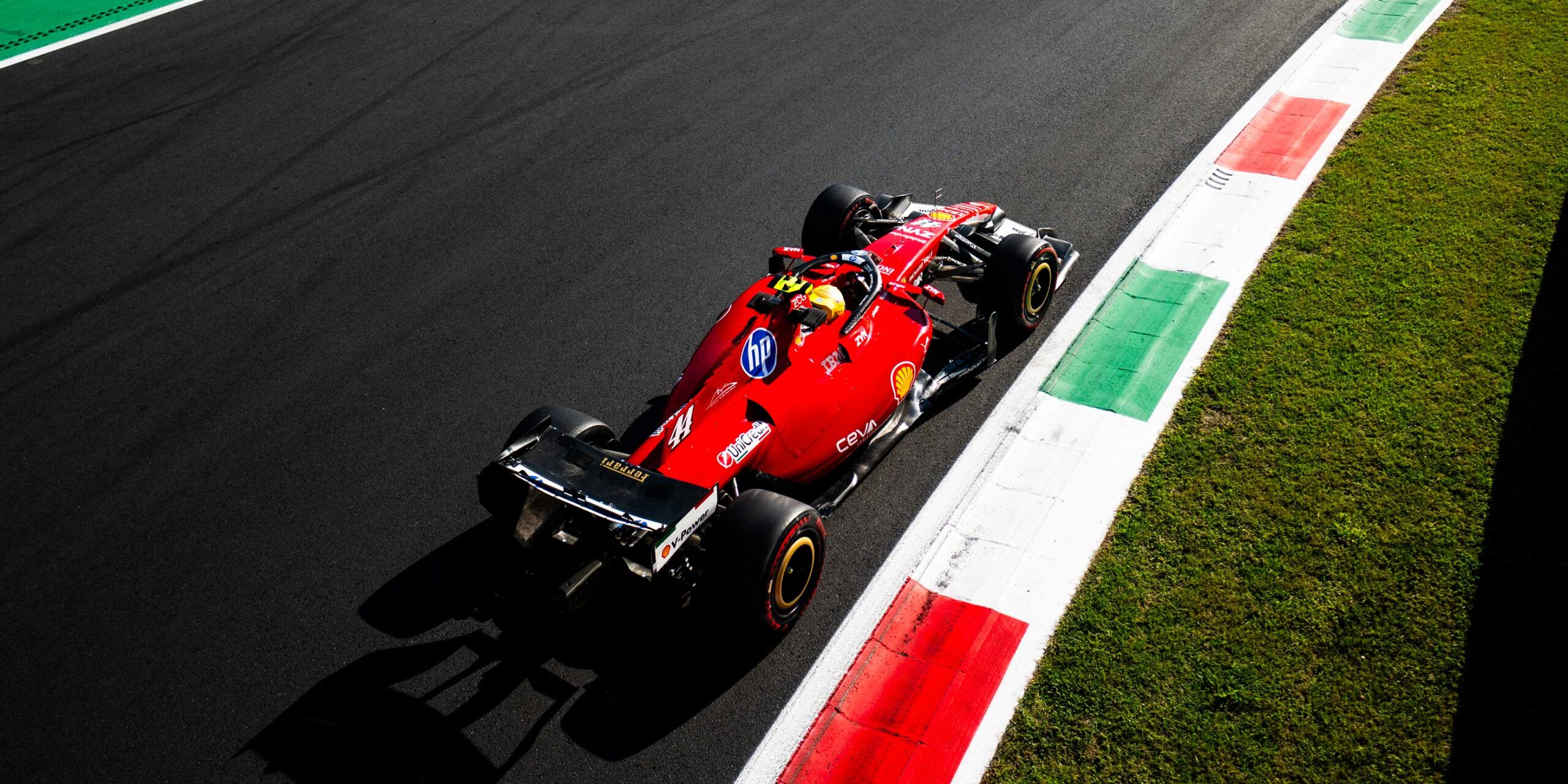
The second element is B2B operational integration, and it is the mechanism most CMOs underestimate. Oracle’s return from Red Bull Racing is not counted in logo impressions; it is counted in the enterprise sales value of running Oracle Cloud Infrastructure and Oracle AI inside the most data-intensive operation in motorsport. HP’s Ferrari partnership carries a dual return, consumer co-branding under the “Scuderia Ferrari HP” identity alongside a hardware and high-performance-computing proof point. This is the integration model at work, and it is available only at this tier.
Two further returns are unique to the top band. Fan loyalty compounds: the 2025 Global F1 Fan Survey shows F1 audiences are measurably more inclined to buy from brands associated with the sport, and that inclination strengthens with sustained association, an argument for the multi-year commitments that strong F1 sponsorship return on investment requires at this tier. There is also a category-exclusivity premium: locking a competitor out of an entire team portfolio commands a 20–40% premium on the base price, and that premium is itself a form of return, denying rivals the same platform. One caution belongs here. The evidence that sponsorship announcements lift the sponsor’s share price comes most robustly from Pruitt, Cornwell and Clark’s 2004 study of NASCAR, which recorded significant positive abnormal stock returns for sponsors of higher-ranked teams; its applicability to F1 is directional, not proven, and we present it as such.
Technical Partnership ROI Model: When the Sponsorship Is Also a Proof of Performance
The technical partnership deserves to be isolated from media-value ROI entirely, because its return is calculated on a different basis. When Oracle runs race-strategy simulations for Red Bull Racing, more than 200 billion across the 2025 season, at times a million Monte Carlo simulations a second, the sponsorship is simultaneously a live product demonstration. The return is the enterprise sales narrative: if the platform performs under the time pressure of a Grand Prix, it performs for the enterprise buyer watching. HP’s Ferrari deal works the same way, pairing consumer visibility with a B2B proof of high-performance computing. The academic evidence points in the same direction: Cobbs, Jensen and Tyler found that each incremental performance-based resource a sponsor contributes is associated with about four additional constructors’ championship points. In other words, the sponsor’s own technology can improve the team’s result, which then compounds the sponsor’s own sponsor media value, a self-reinforcing loop unavailable at the associate or primary tier, where the sponsor cannot influence the on-track outcome.
One Variable That Changes F1 Sponsorship ROI Across All Three Spend Bands: Activation Ratio
If there is a single lever that moves Formula 1 sponsorship ROI more than team, tier or circuit, it is the activation ratio, how much a brand spends turning the rights it has bought into audience engagement and commercial outcomes. The Jensen and Cobbs finding that only 10.1% of 2006–2010 F1 sponsors were broadcast-positive is, read correctly, a statement about activation as much as about airtime: the rights alone rarely pay for the F1 sponsorship return on investment a brand expects. Modern social value improves the picture, but the underlying principle is unchanged. This is about the ratio itself, not about the mechanics of activation, for the how, see sports sponsorship activation and our guide on how to measure motorsport sponsorship ROI.
The recognised industry benchmark is roughly $2 of activation for every $1 of rights fee; recent vendor analysis puts the range for high-performing sponsorships at 1.50–2.00 to $1, though most brands underspend that badly. SponsorPulse’s 2025 work adds a second discipline: brands with defined measurement frameworks report around 35% higher ROI than those relying on impressions alone, a vendor figure, but a directionally credible one. Translated into the three bands, the implication is concrete. At $1.5 million, the activation budget should sit near 2.25–3 million; at $5 million, near 7.5–10 million; at the title tier, activation is often embedded in the deal structure itself. The number that determines whether an F1 sponsorship returns is rarely the rights fee. It is the money, and the measurement, behind it.
F1 Sponsorship ROI Decision Matrix: Matching Your Objective and Budget to the Right Return Profile
The Formula 1 sponsorship ROI benchmarks above only become useful when they are mapped to an objective. A brand chasing global awareness and a brand chasing enterprise pipeline should not buy the same F1 asset, even at the same budget, and the most expensive mistakes we see come from a mismatch between the two. The matrix below pairs the four objectives brands most often bring us with the budget band, return channel, and realistic F1 sponsorship benchmarks that fit each. The ratios are directional where not independently confirmed; the named examples are real, current partnerships. Read across a row to see whether the objective you are briefing is realistic at the budget you have.
| Brand Objective | Budget Band | Primary ROI Channel | Realistic SMV Ratio | Brand Lift Benchmark | B2B ROI Available? | Named 2026 Example | Verdict |
| Global brand awareness | $25M+ | SMV + brand-equity compounding | Media-value positive with activation | 10–15% unaided uplift (IEG) | Yes | Oracle/Red Bull, HP/Ferrari | Best fit for global multinationals |
| Regional / US brand awareness | 5M–25M | SMV + social earned media | ~3–5x directional with activation | 10–15% uplift | Yes | Airwallex/McLaren | Best fit for scaling brands with US or global-regional targets |
| B2B enterprise pipeline | 5M–25M | Hospitality pipeline + brand credibility | Not broadcast-primary | Consideration uplift in target sector | Primary channel | Tech / SaaS / finance brands | Best fit when the enterprise sales cycle exceeds six months |
| Market entry / partner credibility | 1.5M–5M | IP rights + partner badge + B2B access | Social-primary, not broadcast-positive | Brand-association uplift | Limited | Associate deals, any team | Best fit for first-time F1 entrants or regional brands |
Independent measurement partners, no team sales target to hit – just your objective, benchmarked honestly.
Activation Determines Formula 1 Sponsorship ROI
The biggest misconception we correct, again and again, is the belief that F1 sponsorship ROI is a property of the sport, that buying into Formula 1 is itself the return. It is not. The 10.1% figure exists precisely because so many brands treated the rights fee as the campaign. The return is a profile, not a number, and it is set by four things a brand controls: the spend band it enters, the activation ratio it commits to, the team and placement it selects, and the measurement infrastructure it puts behind the deal. Associate deals return through IP and B2B access, not broadcast; primary deals turn 3–5x in media value into measurable brand lift when activated; title deals compound brand equity and, in the technical partnerships, turn the sponsorship into a proof of performance. None of that happens automatically. We work as an independent, team-agnostic agency, thirty years in tier-one motorsport since 1995, with measurement handled through independent partners such as Relo Metrics and Nielsen Sports, precisely so that the brand, the team and the activation are chosen against your objective rather than a team’s sales target. If you are pressure-testing whether F1 can return at your budget before you brief anyone, that is the conversation to have with our Formula 1 sponsorship agency team, and, if you want the comparison, the same logic applied to stock-car racing sits in our NASCAR sponsorship ROI benchmarks. The number is never the fee. It is what you build around it, and whether you can prove it.
For brands still mapping the wider field before committing a budget, our overview of the types of F1 sponsorship sets out how these bands sit alongside every other category of deal.
Tell us your spend band and objective, and we’ll benchmark the realistic outcome before you commit.