Three hundred million euros. That is the estimated total annual revenue collected by MotoGP teams in sponsorship rights, according to industry analyses over recent years. And yet, the vast majority of brand managers approaching this championship for the first time do not know where to begin. Not because the budget is lacking. But because the process is structurally different from any media space negotiation they have ever conducted.
This is the paradox of MotoGP sponsorship: a market worth hundreds of millions of euros, accessible to those who know how to navigate it, opaque to those who do not know the rules of the game.
What “sponsoring MotoGP” really means
Before understanding how to get in, it is necessary to understand what you are buying. MotoGP sponsorship is not a single thing — it is a family of options with profoundly different logics, costs and expectations.
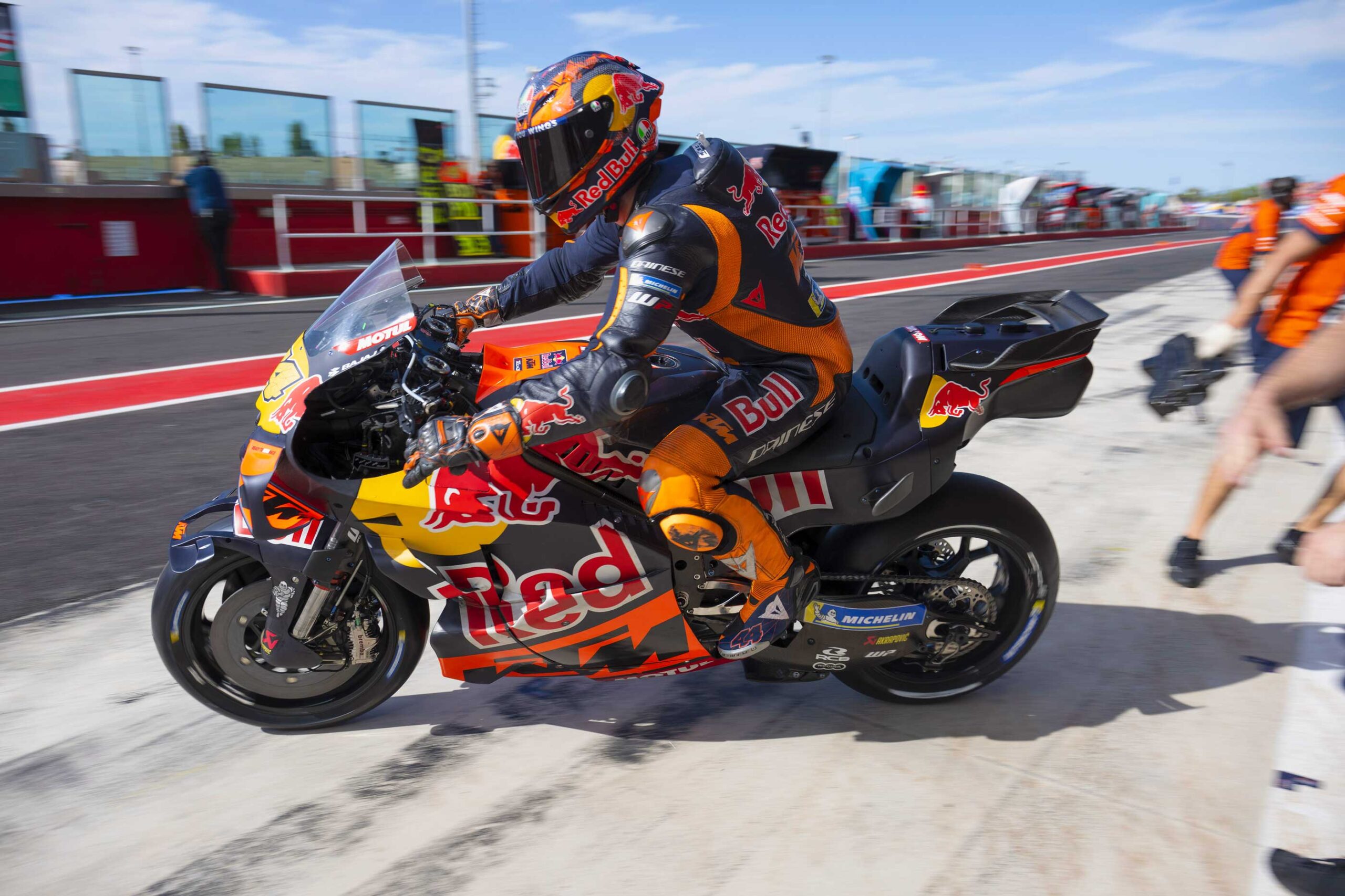
At the top is the title sponsor, or naming partner, of the team. A brand that buys the right to have its name officially associated with the team: Ducati Lenovo Team, Red Bull KTM Factory Racing, Monster Energy Yamaha. Estimated budget: between 15 and 40 million euros per year for top-tier teams, lower figures for satellite teams.
Below that is the associate sponsor, the level most frequently occupied by companies entering for the first time. Here, specific logo spaces are purchased — fairing, helmet, suit, motorcycle — with visibility proportional to the investment and the negotiated position. Typical range: between 500,000 and 5 million euros per year, depending on the team, the season and the placement.
Then there are technical partners: suppliers of technology, equipment or services that contribute to the team’s operations and receive visibility and usage rights in return. This may be structured as a cash contract, a barter arrangement, or a combination of both.
Three levels, three different commercial logics. The most common mistake made by those approaching the market for the first time is treating them as variants of the same thing.
The team landscape in 2024-2025
The MotoGP championship has eleven teams, with eleven organisational structures and eleven sponsor portfolios to understand before deciding where to invest.
Among the most significant developments in recent years are two teams that deserve separate attention. The VR46 Racing Team, founded and managed by Valentino Rossi, has become since 2022 one of the most interesting sponsorship assets in the paddock for a specific reason: the value of association with Rossi — still the most recognisable figure in the history of the World Motorcycle Championship — does not fade with his team’s on-track results. It is a brand in its own right. Companies seeking association with a cultural icon, not merely with a sports team, find here an opportunity that is rare in motorsport.
Gresini Racing, which regained independence in 2022 after years as an Aprilia satellite team, attracted global attention when Marc Márquez chose to accept a satellite Ducati with this team to reinvent himself after difficult years with Honda. During the 2024 season, that choice proved correct: Márquez won races, demonstrated that he remains the most complete rider in the championship, and brought with him a level of media attention disproportionate to the team’s size. The Gresini case demonstrated something relevant to anyone evaluating a sponsorship: the rider matters, but the project built around the rider matters more.
On the Ducati front, in 2025 the Borgo Panigale brand effectively manages five motorcycles on a grid of eleven teams. It is a technical dominance without precedent in the championship’s recent history. For a sponsoring brand, this means that choosing a Ducati satellite team today is not necessarily a second-tier choice: it means entering the orbit of the most successful structure of the moment.
The five mistakes almost everyone makes
In twenty years of working on sponsorship contracts in motorsport, I have seen the same mistakes repeated with an almost reassuring consistency. Here they are, in order of frequency.
First: contacting teams directly without preparation. Teams have commercial departments. They will reply. They will send you a media kit. Then they will ask for a figure that you will not know whether it is in line with the market, for an offer you will not know whether it is the best available. It is not their fault — their job is to offer the best for their own team. But you have no benchmark.
Second: evaluating the sponsorship solely on TV audience. MotoGP’s television audience — approximately 400 million cumulative viewers per season, broadcast in 205 countries — is an important number. But it is only one of the values of sponsorship. Brand safety, hospitality, licensing, PR, B2B activation, digital content: these often represent 60% of the real value for a brand that knows how to activate a sponsorship. Those who buy only “the TV aerials” are purchasing a fraction of the asset.
Third: choosing a team based on the previous year’s sporting results. Sponsorship contracts have an average duration of one or two years. Honda dominated for years, then collapsed. Ducati dominates today, but the championship has overturned constructor hierarchies multiple times in just a few years. Choosing last year’s champion team for next year’s contract is a rear-view mirror approach.
Fourth: underestimating timelines. A sponsorship contract is negotiated over months, not weeks. Those who arrive in November hoping to be on the starting grid in March are usually disappointed, or accept hastily negotiated conditions that do not add up. The paddock operates on long horizons. Timing is part of the negotiation.
Fifth: confusing visibility with activation. A logo on the fairing is the starting point, not the end point. The brands that achieve the best return from sponsorships are those that build an activation programme around the logo: content, hospitality, events, PR, digital campaigns. An empty sticker on a motorcycle — without a programme to bring it to life — is wasted money.
Why working with an agency changes the economic structure of the deal
The most common objection when discussing a sports sponsorship agency is: “It adds a cost.” It is an understandable objection, and completely wrong in its premise.
The economic model of an agency like RTR Sports Marketing does not involve a fee charged to the sponsoring brand in the initial phase. The agency is remunerated by the team that closes the contract, through a commercial commission. In plain terms: during the research, analysis and initial negotiation phase, you do not spend more by working with an agency than you would by working alone. But you gain access to information, relationships and market benchmarks that do not exist in the public domain.
When you arrive at the negotiating table knowing the real market ranges for each sponsorship level, knowing which team has available space and which is already committed, knowing what has been negotiated in recent seasons on comparable deals — your position is structurally different from that of someone who arrives cold.
Impartiality is the other element that counts. RTR works with multiple teams and multiple squads simultaneously. When we recommend team A over team B, it is not because team A pays more. It is because, based on the specific needs of the client — target markets, brand values, communication objectives, timing, budget — that is the most defensible choice. An agency that earns the same on any deal has no distorted incentives. A single team selling its own space does.
How the process works in practice
The standard pathway for a brand entering the world of MotoGP sponsorship for the first time consists of four phases.
The first is defining objectives and budget. Before opening any conversation with any team, it is necessary to answer three questions: what does this sponsorship need to do for your business (brand awareness? B2B activation? recruitment? international distribution?), in which markets does it need to work, and what order of magnitude of investment is realistic to sustain for at least two consecutive seasons. MotoGP sponsorship is not a sprint — it is a programme.
The second is mapping opportunities. In a championship with eleven teams, dozens of contracts expiring each year, and logo spaces that open or close during the off-season, understanding what is available and on what terms requires relationships and constant monitoring. This is the primary function of an agency in the first stage of the relationship.
The third is team due diligence. Not all teams offer the same level of commercial service, the same hospitality structure, the same organisation to manage a sponsoring partner. Sporting results are visible; the quality of the commercial organisation is not. Evaluating a team solely by its rider standings is like choosing a hotel by its star rating without reading the reviews.
The fourth is negotiation and activation. Once the right team has been identified, the contract is only the first step. The real value emerges in the months that follow, when the activation programme — hospitality at GPs, content, PR, events — is built and executed. Those who sign and then disappear from the paddock obtain a fraction of what they paid for.
What to expect in terms of costs in 2024-2025
Prices in the MotoGP paddock are rarely made public. What follows is based on direct experience from recent negotiations and should be read as a general orientation, not as a price list.
For an entry as associate sponsor on a satellite team with good television visibility, the realistic minimum range starts at approximately 300,000 euros per year. To enter a top-tier team with a visible logo position, the required budget is in the order of one million euros or above. Title sponsorship deals for the most interesting satellite teams — VR46, Gresini, Trackhouse — are reported, according to industry sources, in the order of 5-15 million euros per year. The top factory teams, such as Ducati Lenovo or Red Bull KTM, operate at significantly higher figures.
MotoGP is not the most expensive championship in motorsport — Formula 1 is in a different price bracket. But it is not the cheapest either. It is the championship that offers the best ratio between entry cost and global reach for Asian, European and Latin American markets, combined with a level of audience engagement that few other sports can replicate.
The first move is the most important
If you are evaluating MotoGP as an investment channel, the first move is not to send an email to a team. It is to understand precisely what you want to achieve, over what time horizon, and with what budget.
That preliminary clarity is what transforms an exploratory conversation with a team into a real negotiation. And that clarity is what we, as an agency, help brands build before anything else happens.
Sit back, relax. That’s our job.
FAQ
How much does it cost to sponsor a MotoGP team?
How do I contact a MotoGP team for a sponsorship?
What sponsorship levels are available in MotoGP?
Which MotoGP teams are most interesting for sponsorship in 2025?
Does it make sense to sponsor MotoGP if my brand is not in the motorsport sector?