The question that opens almost every first conversation between a company and the world of sports sponsorship is nearly always the same: where do we begin? It is not a trivial question. Sponsoring a sports team requires considerably more than a signed agreement and a logo on a jersey. It requires clarity of purpose, a methodical approach to selecting the right sporting partner, precise activation terms, and a timeline that can rarely be left to improvisation.
This guide builds that map, step by step.
What it actually means to sponsor a sports team
Before addressing the “how”, it is worth being precise about the “what”. Sponsoring a sports team means entering into a commercial partnership in which a brand transfers resources, typically money but sometimes products or services, to a sports team in exchange for visibility, access, and the right to associate its name or logo with that team in a competitive context.
There are, however, two quite different types of agreement that are frequently confused. The first is a pure visibility deal: the brand appears on the kit, the liveries, and the press releases. The second is an activation partnership: the brand uses the team as a platform to produce content, entertain clients, run commercial campaigns, and generate qualified leads. The distinction is not academic. A pure visibility agreement without an activation strategy produces media value, not commercial results. The two are not the same thing, and confusing them is the most common and costly mistake in early sponsorship experiences.
The most effective sports sponsorships are those where the chosen team, the invested budget, and the planned activations are coherent with one another and with the sponsor’s business objectives, not with the personal preferences of whoever signs the contract.
How to choose the right team: five questions to ask first
Not all sports teams are equal, and choosing the wrong partner is among the most expensive mistakes in early sponsorship experiences. These five questions help filter options in a structured way before entering any formal negotiation.
1. Does the team’s audience match the brand’s target?
The starting point is the overlap between who follows that team and who the brand wants to reach. Age, geography, interests, spending capacity: a sponsorship that reaches an irrelevant audience is wasteful regardless of the visibility it generates. The team’s audience data must be verified, not accepted at face value.
2. Is the team competitive, or at risk of dropping out?
Visibility depends on results. A team competing for the title generates radically different media exposure compared to one fighting against relegation. This does not mean sponsoring only winning teams, but that visibility expectations must be calibrated to the team’s standing in the rankings and its competitive schedule.
3. Does the team have the operational capacity to support the sponsor?
Do they produce content regularly? Do they have a dedicated partner relations team? Can they guarantee the brand’s presence in the required formats, to the required deadlines? Teams with fragile commercial structures may deliver the visibility rights but not the activations, which significantly reduces the real value of the agreement.
4. Are the team’s values consistent with the brand’s positioning?
A sports partnership activates a process of value transfer: the brand partially takes on the team’s image, and the team acquires the association with the brand. When values are misaligned, that transfer produces noise rather than coherent communication.
5. Can the agreement include a category exclusivity?
If the brand operates in a competitive sector, the presence of a direct competitor as a co-sponsor of the same team eliminates much of the positioning advantage. Before signing, it is essential to clarify whether the agreement includes a category exclusivity and what its exact boundaries are, by product sector and geography.
The operational steps: from research to signing the contract
Once a candidate team has been identified, the process follows a fairly standardised sequence. This is the pathway that underlies almost every well-constructed sports sponsorship.
- First contact and non-disclosure agreement. The dialogue often begins through an intermediary, a sports sponsorship agency or a direct representative of the team. Before exchanging commercially sensitive data, both parties typically sign a non-disclosure agreement.
- Sponsorship package presentation. The team presents audience data, available rights, visibility formats, and activation opportunities. This is the stage at which the alignment between what is offered and what the brand is looking for is assessed.
- Commercial proposal and negotiation. Terms are discussed: the rights fee, which rights are included and excluded, category exclusivity, activation obligations, and measurement metrics. The proposal is revised until both parties are aligned on every relevant point.
- Due diligence and internal approvals. In larger organisations, the agreement must pass through legal review, financial validation, and often board-level approval. Timelines vary considerably, but are rarely shorter than four to six weeks.
- Signing the contract. The agreement is finalised and signed by both parties, with all technical annexes attached: asset delivery schedule, activation calendar, measurement methodology.
- Activation plan and media plan. Before the launch, the sponsor defines how it will use the partnership: what content it will produce, which events it will use for corporate hospitality, and how the acquired rights will be integrated into its digital and offline communications.
- Launch and market announcement. The start of the sponsorship is announced through a coordinated PR campaign between brand and team, to maximise the impact of the first public moment.
The key elements to agree in the contract
The sponsorship contract is the document that defines the precise boundaries of the partnership. These elements, if left undefined, almost always generate conflict during operational phases.
- Level of access. Which areas are accessible to the sponsor? The garage only? The paddock? Hospitality areas? The athletes for interviews or client events? Direct access to the sportspeople is often the most valuable asset in the entire partnership, and the one over which negotiation is most careful.
- Visibility positions. Where the logo appears, in what format, with what hierarchy relative to other sponsors. Banners, kit, liveries, promotional vehicles: each position has a different exposure value and must be agreed in writing, with technical specifications included.
- Digital presence. Mentions on the team’s social channels, placement on the website, space in fan newsletters: these digital rights are often treated as secondary during negotiation, but can represent the most measurable communication channel in the entire partnership.
- Asset delivery and deadlines. In what formats the sponsor must deliver its graphic assets, and when. Sports teams operate on compressed schedules and cannot adapt to last-minute delivery delays.
- Exit and reduction clauses. What happens if the team withdraws from the competition, is relegated, or is involved in a scandal? What happens if the brand changes its marketing strategy mid-season? Exit clauses protect both parties from unforeseen events and should not be treated as a minor detail.
When to start: timing and seasonality in sports sponsorship
Sponsoring a sports team is not an operation that can be improvised. The most important championships operate on fixed calendars with defined contractual windows. As a general rule, negotiations for the following season begin six to twelve months before the start. Those who begin the dialogue too late often find that the best visibility packages, particularly those with category exclusivity, have already been allocated.
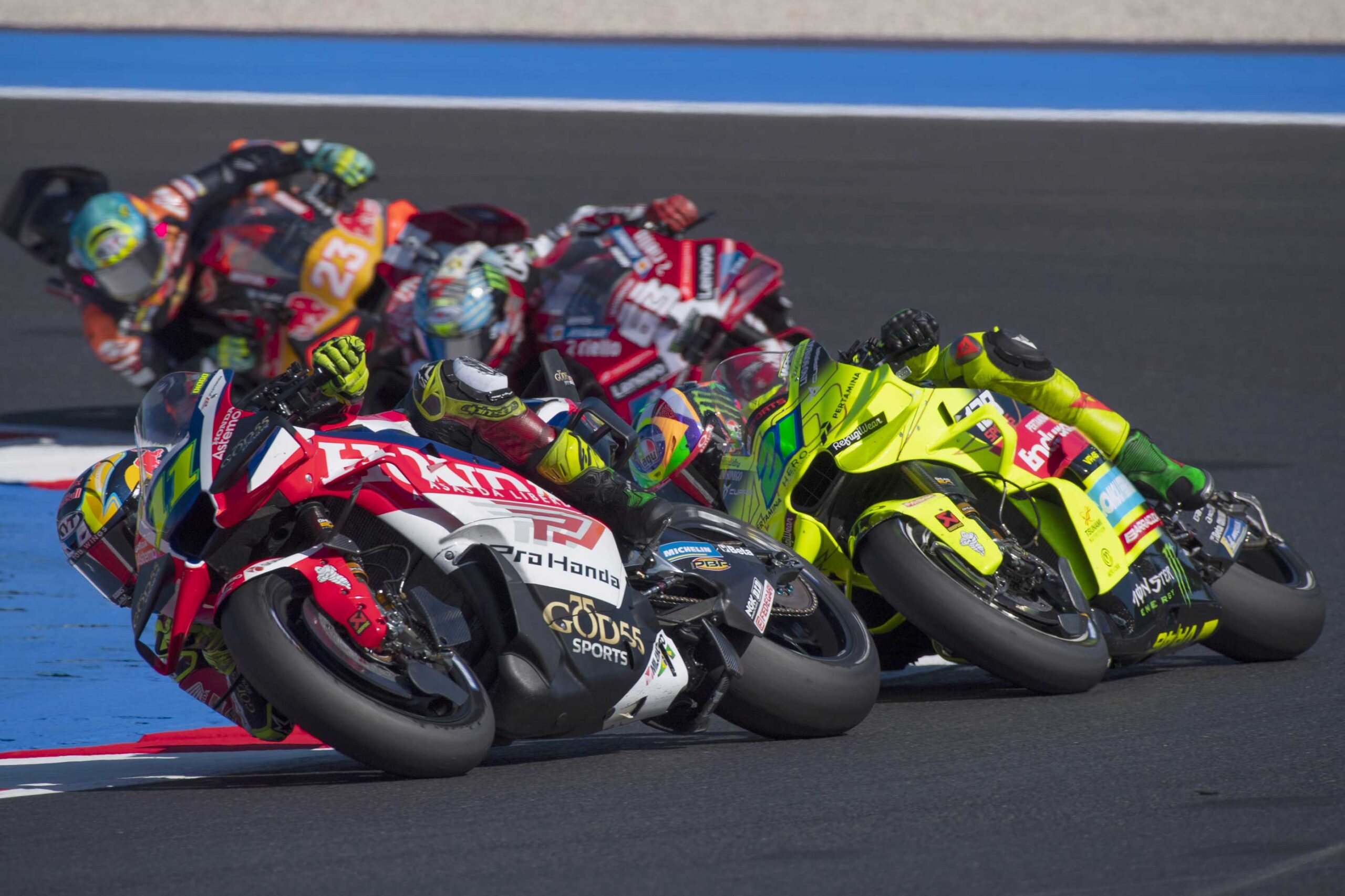
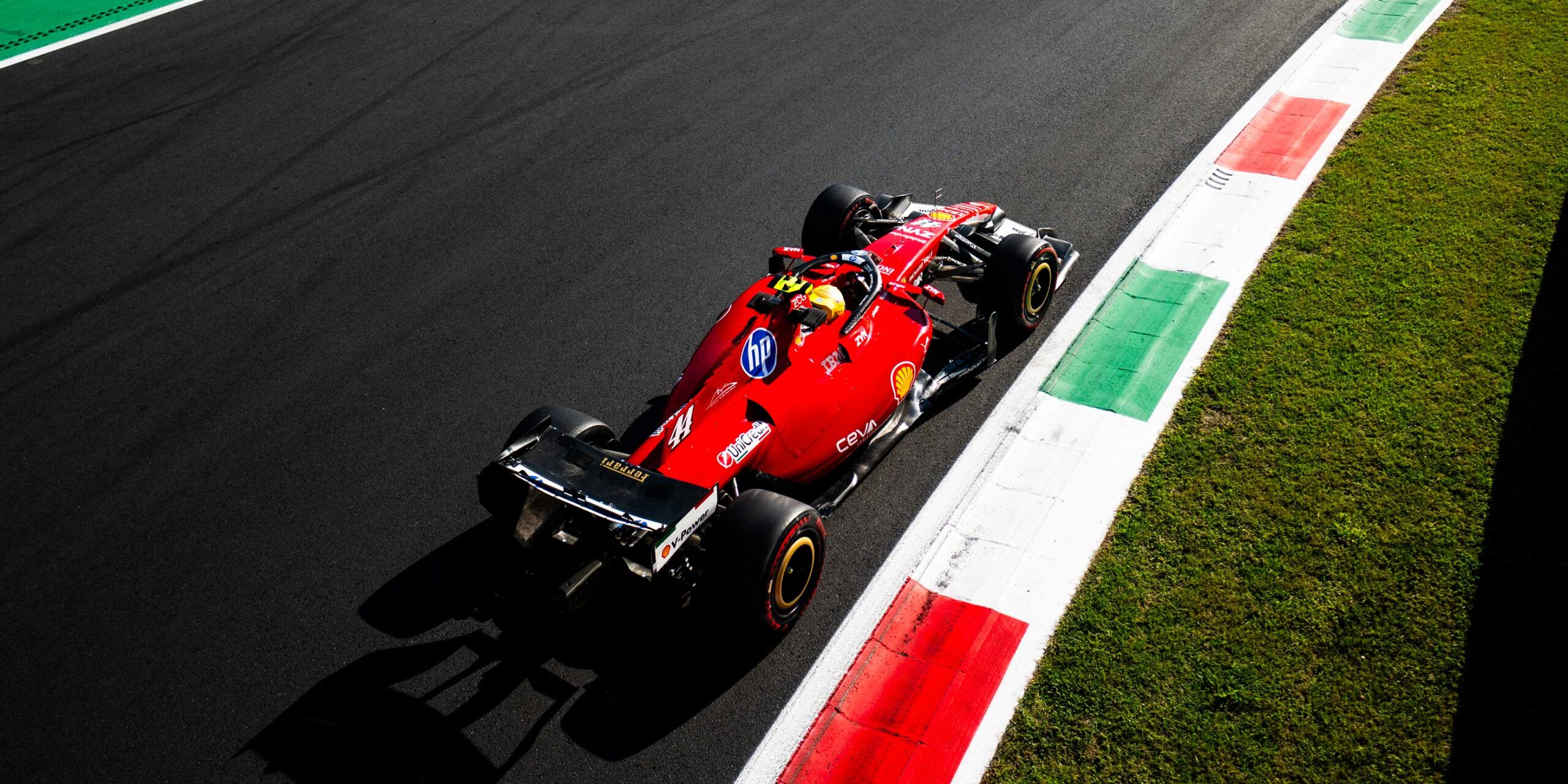
As an indicative reference: for motorsport championships that begin in March, including MotoGP and Formula 1, negotiations typically develop between the previous summer and autumn. For football, which restarts in August, the main contractual window opens between January and May. For every championship, the practical rule is to start the conversation at least six months before the season in which visibility is required.
There is also the question of the activation plan. Even after the contract is signed, the brand needs time to produce content, organise events, align the marketing team, and prepare external communications. A brand that signs in October and wants to be fully operational by March often has less time than it assumes. Planning must precede the signing, not follow it.
Who this works for, and who should look elsewhere
Sponsoring a sports team works best for brands that already have a clear objective, a defined activation strategy, and a time horizon of at least two or three seasons. A single season of sponsorship rarely produces measurable commercial results: the brand is not yet recognisable enough to the fanbase, the activation has not reached full operational efficiency, and internal decision makers have not had time to evaluate the partnership with real data.
It works best for:
- B2B companies seeking qualified access to decision makers through corporate hospitality events.
- Consumer brands looking to penetrate specific markets where the team has a consolidated and demographically relevant fanbase.
- Companies operating in sectors with strong value overlap with the chosen sport: performance, technology, nutrition, lifestyle.
It works less well for those seeking short-term results, for brands with a highly niche message that does not resonate with the team’s fanbase, and for companies that do not have the internal resources to manage activations professionally. In these cases, alternatives worth considering include an event sponsorship rather than a team deal, a partnership with an individual athlete, or a hosting agreement that provides access without the long-term visibility obligations.
One final note on the agency model. RTR Sports Marketing has worked as an intermediary between brands and sports teams for over thirty years, with a primary focus on motorsport sponsorship. The remuneration model places the consulting fee on the sports property, not on the brand: this structure keeps the advice independent, because the agency has no direct economic interest in recommending one team over another. Understanding how that independence is structured is worth doing before choosing who to work with.
Frequently asked questions about sponsoring a sports team
Frequently Asked Questions
How much does it cost to sponsor a sports team?
The cost varies considerably depending on the championship, the team’s profile, and the rights included in the package. As an indicative reference, fees range from a few tens of thousands of euros for agreements with regional or lower-tier teams to several million for leading teams in MotoGP or Formula 1. These figures should be treated as rough benchmarks: actual values are rarely public and depend significantly on what is included in the activation plan beyond pure visibility rights.
How is the return on a sports sponsorship measured?
Metrics fall into two categories that are frequently confused. Media value equivalency, the estimated value of the impressions generated as if they were paid advertising space, is useful for comparing packages. It is not, however, a measure of commercial return. The KPIs that actually matter depend on the brand’s objective: pipeline generated through corporate hospitality events, brand awareness growth in target markets, qualified leads obtained through athlete access, engagement metrics on co-branded digital channels.
Is it necessary to use an agency to sponsor a sports team?
It is not obligatory, but it significantly reduces the risk of errors in the early stages. An agency with experience in the championship of interest has access to non-public information on available packages, market pricing, and standard contractual terms. It can negotiate better conditions and identify value misalignments that a direct first contact would rarely surface. In the RTR model, the agency fee is paid by the sports property, not by the brand: this means the agency has no direct economic interest in recommending a specific team over another.
What is the minimum recommended duration for a sports sponsorship?
A single season rarely produces measurable commercial results. The minimum recommended duration to begin seeing concrete effects on the brand is two to three seasons. This applies both to recognition by the fanbase and to the maturity of the activation plan, which typically reaches full efficiency in the second year of the partnership.
What can be done to activate a sports sponsorship?
The most effective activations combine qualified access (corporate hospitality, paddock or backstage access, meetings with athletes), content production (video, photography, interviews, reportage co-produced with the team), and digital integration (co-branding on the team’s social channels, newsletter mentions, joint campaigns). The activation budget should be planned in proportion to the rights fee: a minimum ratio of 1:1 between activation budget and rights fee is often cited as the baseline; more mature partnerships reach 2:1 or more.