In modern motorsport, the media platform of a single Grand Prix reaches hundreds of millions of viewers around the world. Yet it is not necessary to purchase visibility across all the Grand Prix rounds of the season — nor across every market on the planet — to access that communication tool.
There is a form of sponsorship that most companies do not know well enough: territorial sponsorship. It is an established mechanism, used for decades in all major sports championships, that allows you to define precisely where and when your brand appears alongside the team.
How territorial sponsorship works
In championships such as MotoGP and Formula 1, teams structure their commercial portfolio across multiple levels of exclusivity. The best-known level is the worldwide exclusive by product category: one brand per sector, present across the entire calendar and in all markets. But beneath that level lies a more granular architecture, built on defined geographical perimeters.
With a territorial sponsorship, a company acquires the rights to use the team’s name, image and trademark in one or more specific countries. The agreement does not apply to the rest of the world: the team is free to enter into similar agreements with companies in the same sector operating in other markets. This is not an extraordinary concession: it is standard practice in the commercial system of major clubs and top-level championships.
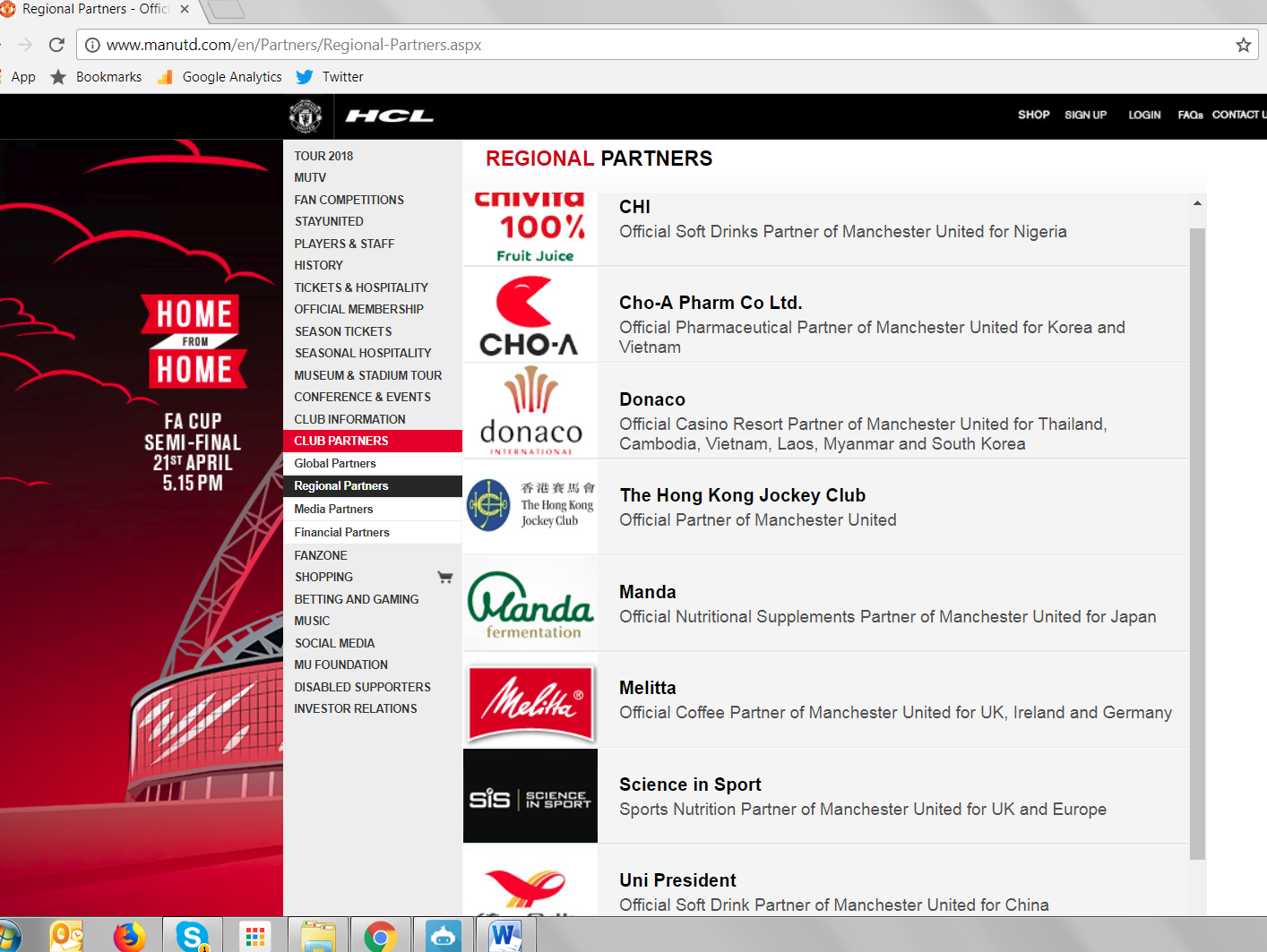
Manchester United, to give a documented example, publishes each season a list of regional partners comprising dozens of companies, each active in its own local market. The same scheme applies — with its own specific characteristics — in MotoGP and Formula 1.
The three dimensions of flexibility: category, territory, time
Territorial sponsorship comes in different variants, each with its own commercial logic.
The first and most common combines product category and territory. A company can be the sole one, in a given sector, to appear on a motorcycle or single-seater as a partner in Italy — while another company in the same sector signs an identical agreement for Germany or Brazil. The same global media window, but rights limited to their own reference market.
The second variant adds the temporal dimension: category plus territory plus limited duration. In this case, the usage rights are also defined in time — a single Grand Prix, a phase of the season, a launch campaign of a precise duration. This is the formula most used by cinema, video game and mass consumer brands for activations tied to a specific event.
The most extreme form of this variant is the title sponsorship for a single race: the team adopts for that weekend the colours and logo of the sponsor in the most prominent position on the motorcycle or single-seater. The sponsor achieves maximum possible visibility at the moment that matters most — usually the Grand Prix in their own domestic market.
The advantages for the sports team
This structure is not a concession to partners with more modest budgets. It is a mechanism that maximises revenue on product categories that would otherwise remain commercially blocked.
A sector such as insurance, consumer credit or retail energy has different operators in each market: often companies that do not overlap because they do not compete in the same geographies. A team that sells a worldwide exclusive on that category can sign only one agreement. A team that sells by territory can replicate that agreement in every market where the sector has an independent operator — significantly multiplying revenues.
The result is a more resilient commercial architecture and, in many cases, more profitable than the global exclusivity model.
When flexibility produces iconography
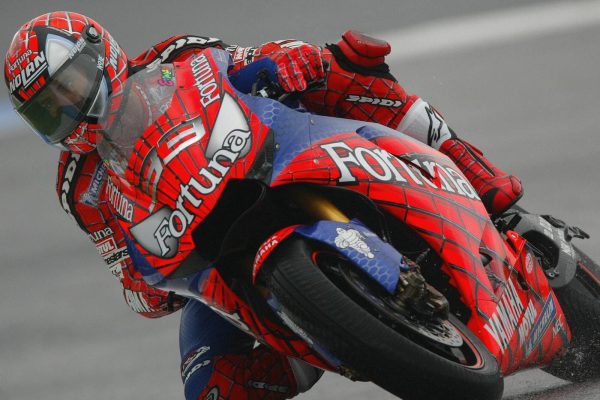
Some of the most memorable liveries in the recent history of motorsport were born from agreements of this type. Ducati with the Spider-Man livery for Marco Melandri, Jorge Lorenzo’s motorcycle transformed into a Call of Duty weapon, Lotus in Batman colours: all cases of sponsorship tied to a single event or a precise time window.

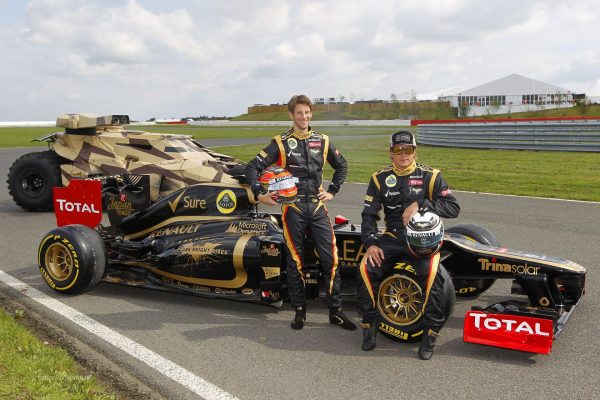
In all these cases, the brand obtained extraordinary visibility — the media coverage of a Grand Prix is global — paying for a single episode rather than an entire season. The ratio of investment to exposure is often difficult to replicate with other communication tools.
The most rational entry point for those starting out
If you are evaluating a first approach to sponsorship in motorsport, the territorial or time-limited formula is often the most rational choice. It allows you to concretely test the tool, measure the return on activations, and decide with real data whether to expand the agreement in subsequent seasons.
You do not need a global title sponsor budget to be present on a MotoGP bike at the Grand Prix of Misano or on an F1 single-seater at Monza. There are formulas built exactly for this: not as a shortcut, but as a deliberate commercial architecture.
If you want to understand which configuration is most suited to your specific situation, the starting point is always a conversation with those who know the commercial structure of the teams from the inside and can evaluate the right perimeter for your objective.
Frequently Asked Questions
Frequently Asked Questions
What is territorial sponsorship in motorsport?
Territorial sponsorship is an agreement in which a company acquires the rights to use the team’s name and image for one or more specific geographic markets, not worldwide. The team can enter into similar agreements with companies in the same sector operating in other geographies, which do not overlap territorially and are therefore not competitors.
Can you sponsor a MotoGP or F1 team for just one race?
Yes. Some teams accept partnerships for individual events, granting visual prominence on the motorcycle or single-seater only for that weekend. This is a formula used by cinema, video game and mass consumer brands for targeted activations in a single market or in conjunction with a product launch.
What advantages does territorial sponsorship offer the sponsoring company?
The company invests exactly where it needs — by territory and by period — with a more limited budget compared to a global exclusive. It still obtains the media visibility of an event with international coverage, but pays only for the rights in its market of interest, with a cost-to-exposure ratio that other channels struggle to replicate.
What advantages does the sports team gain from territorial sponsorship?
The team can sell packages to multiple companies in the same sector operating in different markets — and therefore not competing with each other — multiplying revenues from product categories that would otherwise be available to only one global client. It is a more resilient commercial architecture and often more profitable.
How is a territorial sponsorship agreement structured?
An agreement of this type defines three parameters: the product category (to avoid conflicts in the same territory), the geographic perimeter (country, group of countries, area) and the duration (one race, one quarter, an entire season). The combination of these three elements determines the commercial value of the package and the cost to the sponsor.