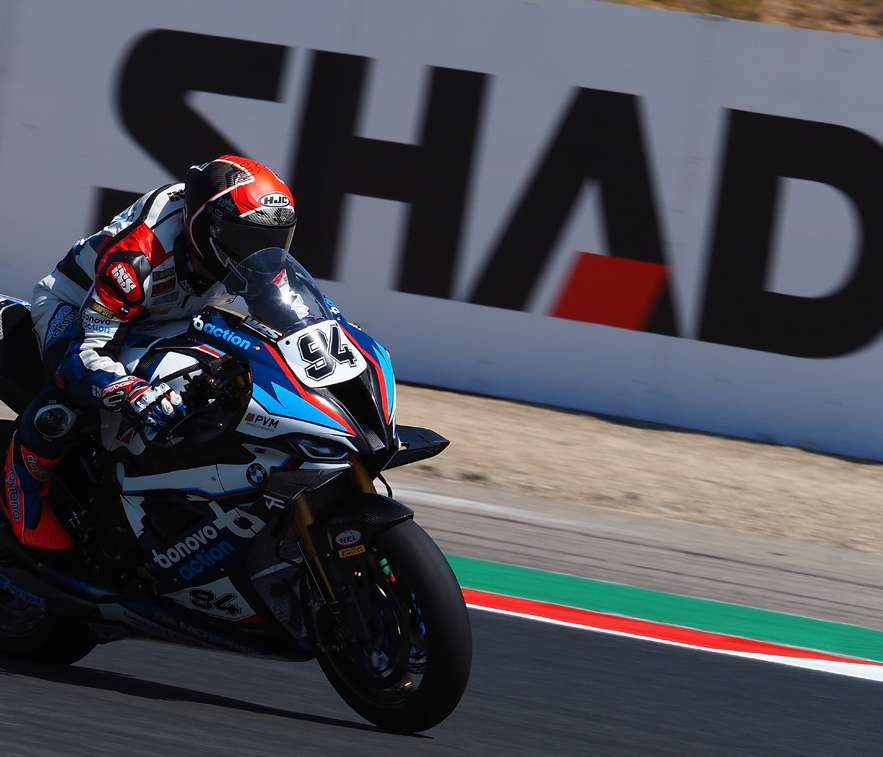
Cremona, 27 September 2026. Nicolò Bulega finishes second in Race 2 and becomes Superbike world champion with six races to spare, having won 26 of the first 30. The bike on which he dominated the season, a Ducati Panigale V4 R, is based on a model anyone can order from a dealer: Italian list price €43,990.
So here is the short answer to the question so many people ask. A road-going superbike homologated for the World Championship cannot cost more than €44,000, because the rules say so. A World Championship bike, on the other hand, has no list price: between conversion, spare parts, engines and people, running one for a season costs an independent team more than a million euros, and a factory team a great deal more.
The Superbike World Championship, WorldSBK, is the championship for production-derived motorcycles. And that is exactly what makes its costs so different from MotoGP’s.
It all starts with a bike you can buy at a dealer
To race in the World Championship, a motorcycle must first of all be a road bike. The FIM rules require the model to be sold normally to the public, with a maximum list price of €44,000 including tax, and built in minimum numbers: at least 125 units at the first inspection, 250 by the end of the year and 500 by the end of the following year, for the largest manufacturers. The cap was €40,000 until 2022 and was raised to account for inflation.
It is no coincidence that the Panigale V4 R costs €43,990, ten euros under the limit. And homologation is not free even for the manufacturer: according to Corse di Moto, Ducati pays the FIM €22,000 to homologate the model.

From road to track: where the money goes
The frame, the shape and the base engine remain those of the production bike, except for exemptions granted to struggling manufacturers, but almost everything else is transformed. Suspension, brakes, exhaust, electronics, internal engine components, gear ratios: this is where a €44,000 motorcycle becomes a World Championship machine.
To stop spending from spiralling, the rules set a maximum price for many key parts, from suspension to certain chassis and engine components, and require manufacturers to make them available to every team. Performance is then balanced with a rev limit that the federation can change during the season and with a concession system that helps those with weaker results. It is not a true spending cap like Formula 1’s budget cap, but the intention is similar.
What a season really costs
There is no official figure for a World Superbike: manufacturers do not sell it at a list price, they lend it to the teams. The estimates in circulation should therefore be read for what they are.
- The bikes. In 2013 Dorna, which had just taken over the championship, proposed capping the cost of the bikes at €250,000 per rider per season, including two machines and technical support. It is a useful order of magnitude, in line with the €250,000-300,000 figure that is often quoted.
- The team. Lorenzo Mauri, owner of the Motocorsa team, said in 2023 that he could no longer stay below one million euros a season with a single rider, even without his own hospitality unit: in 2021 he was spending around €800,000.
- The riders. According to specialist press estimates, never confirmed, a top factory rider earns between €500,000 and one million euros a season, and champions can earn more than a million.
Factory teams, with two riders, development, logistics and hospitality, naturally spend far more. How much, the manufacturers do not say.
Superbike and MotoGP: two different worlds
The difference from MotoGP lies entirely in the starting point. MotoGP is raced with prototypes built specifically for competition, which nobody can buy. Superbike is raced with bikes born for the road, and that changes the order of magnitude of the costs as well as the performance. If you want to see how far apart the two categories are on track, read our comparison of MotoGP and Superbike.
2026, the year of Bulega
The 2026 season will be remembered for one name. Bulega, on the Aruba.it team Ducati, stood on the podium in every race up to the title and, between October 2025 and July 2026, put together a streak of 25 consecutive wins, almost double the previous record of 13 held by Toprak Razgatlıoğlu. His teammate Iker Lecuona is second in the championship. The Estoril and Jerez rounds are still to come in October, as the 2026 WorldSBK calendar shows.
It was also a season of transition. Razgatlıoğlu, the 2025 champion, moved to MotoGP, and Bulega will do the same in 2027. 2026 is also Pirelli’s last year as sole tyre supplier, a role it has held since 2004: Michelin takes over from 2027. If you love the history of this championship, you will find names and numbers in our ranking of the best Superbike riders of all time.
Why all this matters to sponsors
For a company, Superbike has an advantage that MotoGP cannot offer: the bikes on track are close relatives of the ones sold in showrooms. Anyone watching a race sees the same bike they can buy, with the same shape and often the same colours. That is a very strong link for brands that speak to real motorcyclists, from components to riding gear.
Then there are the costs. With smaller team budgets, a sponsor’s arrival carries different weight: the same amount that buys a small space in MotoGP can be worth a far more visible presence in Superbike. We go into more detail on our WSBK sponsorship page.
Frequently asked questions: how much does a superbike cost?
How much does a superbike cost?
A road-going superbike homologated for the World Championship cannot exceed a list price of €44,000 including tax, under FIM rules. The Ducati Panigale V4 R, for example, costs €43,990 in Italy.
How much does a World Superbike cost?
It has no list price, because manufacturers lend the bikes to the teams. As an order of magnitude, in 2013 Dorna proposed a cost of €250,000 per rider per season, including two bikes and technical support. Staff, travel, tyres and spare parts come on top.
How much does a Superbike season cost a team?
For an independent team, more than one million euros a season according to the owner of the Motocorsa team (2023), with a single rider and no hospitality unit of its own. Factory teams spend much more, but do not disclose the figures.
What is WSBK?
WSBK, or WorldSBK, is the Superbike World Championship: the FIM world championship for production-derived motorcycles, models you can buy from a dealer that are converted for the track. It is different from MotoGP, where prototypes race.
Who won the 2026 Superbike World Championship?
Nicolò Bulega, on the Aruba.it team’s Ducati Panigale V4 R. He clinched the title on 27 September 2026 at Cremona, with six races to spare, after winning 26 of the first 30 races.
What tyres do Superbike bikes use?
From 2004 to 2026 Pirelli was the championship’s sole supplier. From 2027 the official supplier will be Michelin.