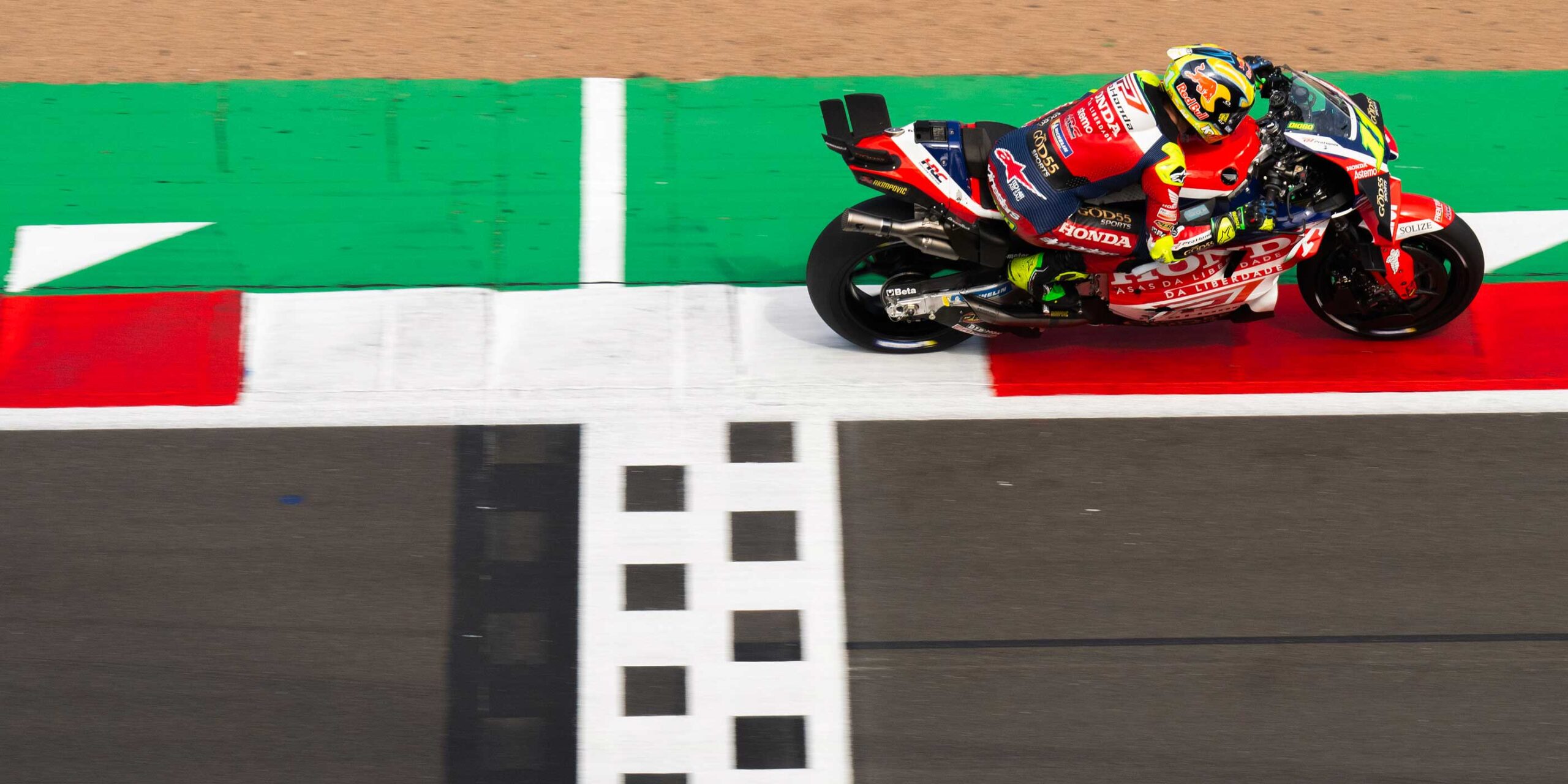
TheMotoGP holeshot device is a mechanical device that allows the height of the motorcycle to be adjusted from the ground, increasing its grip and performance at certain stages of the race.
MotoGP holeshot device: the birth
TheMotoGP holeshot device was born in 2019 when Ducati–in view of regulatory obligations that effectively prevent electronic development of prototypes–first mounted a mechanical device on its GP19 that affects the rear suspension, allowing it to reduce ground clearance and increase traction.
Ducati thinks of the holeshot initially as a useful device for starting races: lower and more compact, with less chance of wheelie, the motorcycle at the start is able to put all its power on the ground and sprint more effectively. The mechanism is manually operated by the rider on the grid, via a control near the handlebars. It is an almost immediate success: the lowerer, or holeshot, immediately gets a lot of buzz and is judged to comply with MotoGP regulations.
Holeshot success and subsequent evolutions
Right from the start, opinions on the stratagem introduced by Borgo Panigale were divided: those who saw the lowering device as yet another stroke of genius by an innovative brand and those who considered it an unnecessary and unnatural frill that increased risks and added nothing to the show. As the discussion proceeds other manufacturers are also adopting the same system and contributing to its evolution.
The natural development of the holeshot is to use it not only at the start but also in the stages of the race where acceleration is decisive and traction most important. Always manually operated by the rider, the holeshot device thus also makes its appearance on straights, where it is important to unleash the full power of the engine, and when exiting turns to prevent the bike from impinging upward.
At the end of 2022 always Ducati brings to the track another lowerer, this time connected to the front wheel. It is yet another innovation that Borgo Panigale brings to its prototype, after the many aerodynamic wings and the “spoon” in front of the rear wheel. There are many who complain about the evolution of the “Rossa”-judged too reckless-and this time the regulations prove the critics right. From 2023, the front lowerer, as well as any other device that acts on the height of the front wheel, or ride height device, is banned.
The holeshot device today: the June 2026 ban and the 2027 regulations
The regulatory picture is more layered than it looks, and it changed more recently than you might think. The 2023 ban applied only to the front device that operates during the race itself (the true ride-height device): holeshot lowerers, triggered just once on the grid for the start, remained expressly allowed on both the front and the rear.
That margin closed on 22 June 2026: the Grand Prix Commission banned the front holeshot device too, with immediate effect, starting from the Dutch GP at Assen (26-28 June 2026), following a series of first-corner crashes linked to these devices. The decision is part of a wider package of changes, which also includes wider grid spacing from the German GP — we cover this in detail in our in-depth look at holeshot, the grid and the manufacturers’ standings.
Still legal today, for now, are the rear lowerer used during the race and the rear holeshot device at the start — used by every team on the grid that, sooner or later, adopted the idea brought by Ducati. These devices, too, are destined to be short-lived: the new MotoGP regulations, which take effect in 2027 with the switch to 850cc prototypes (the full detail of the new 2027 rules), will expressly ban them, in an effort to contain costs, increase competitiveness and narrow the gap between prototypes and everyday bikes.