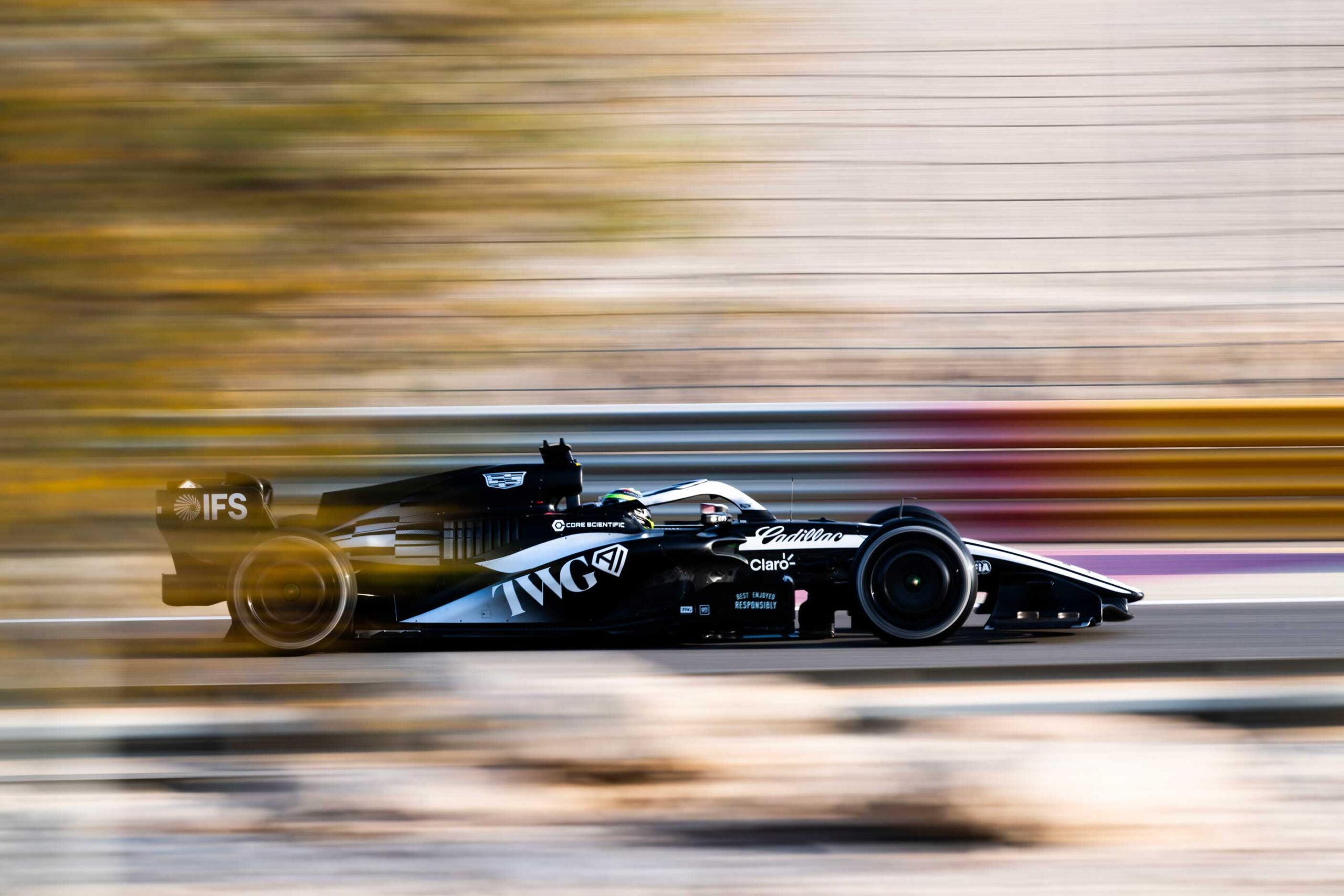
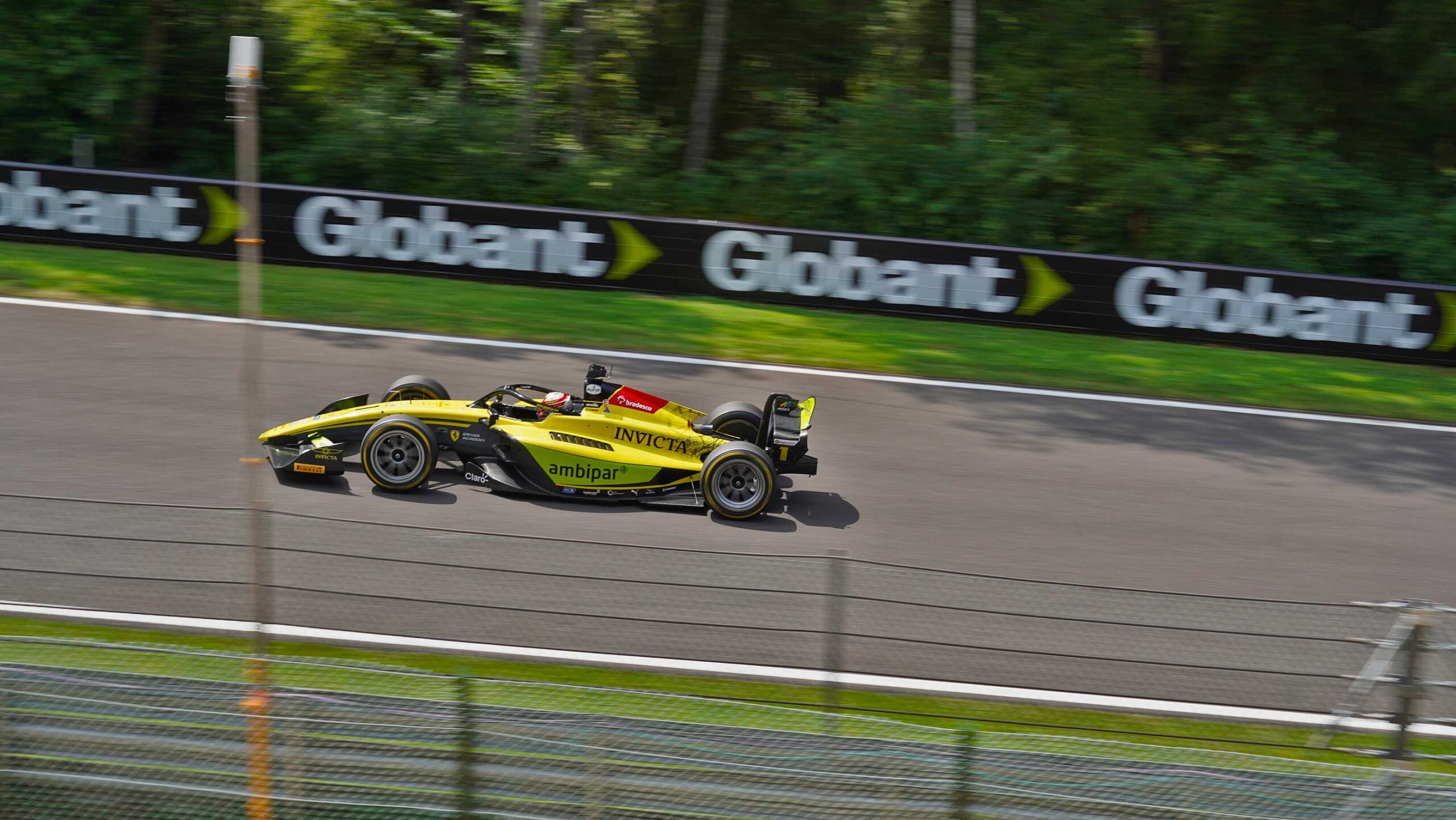
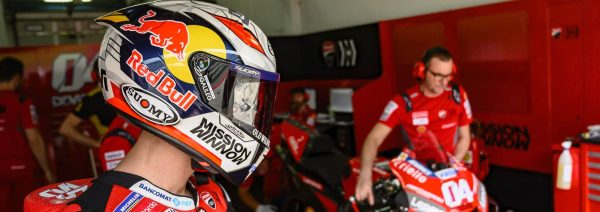
The smallest place to put a brand in motorsport is also one of the most watched. A helmet visor is only a few centimetres wide, but it is the only space that stays in frame when the camera searches for the rider’s or driver’s eyes. And it is there, more than on the side of the car, that a growing share of a sponsor’s visibility is now decided.
In motorsport the hunt for the viewer’s attention does not stop at the track, the cars or the bikes: it reaches the smallest and most tactical corners, such as the visors of drivers’ and riders’ helmets. Spaces that look negligible have turned out to be exceptional assets for sponsors, always looking for new ways to stand out among the many brands on bikes, race suits and pit walls, sometimes in a rather cluttered way.
Linked to the star
In recent years the weight of sponsors that choose to place their brand on the rider or driver has grown sharply. Every millimetre of the helmet, the race suit and, even more, the visor has become precious. Physical closeness to the champion makes this one of the first options to consider when setting up a sponsorship project with ambitious visibility goals and a limited budget.
After the race, in interviews and on the podium, these small but tactical spaces guarantee lasting visibility, because they are tied to a human being, who conveys emotions differently and more powerfully than a machine, however extraordinary a Formula 1 car or a MotoGP bike may be.
Visibility and privileged shots
The visor offers a privileged position: the logo stays visible every time the rider is filmed by the front camera, with tight shots that look for the protagonists’ eyes. Being there matters in an age when digital media are the main channel through which images of riders, drivers and teams travel.
On social media, consumed mostly on phones and therefore on small screens, tight shots dominate. And the audience is huge: at the end of 2025 Formula 1 counted 114.5 million followers on its channels, while MotoGP passed 60 million. For a sponsor the visor is not a detail, it is the part of the helmet that ends up in the vertical format. We cover this in our guide to motorsport sponsorship on social media.

Rider spaces and team spaces
Unlike the large spaces available on the machines and on team equipment, the visor is a space tied to the rider or driver. This distinction gives the sponsor an exclusive opportunity: to link not only to the team but also to the personal image and charisma of the person racing, with a stronger emotional impact on the audience.
In our experience the helmet is usually a space managed by the rider or driver and their management, within the limits set by the contract with the team and by category sponsors. That is one reason why a visor project is built with the rider first, even before the team. For Formula 1 we have explained the rules and value of this space in our article on the Formula 1 helmet and its sponsors.
Two examples: Unbraked and Galileo
Two projects from our portfolio show clearly how it works. In 2024 Unbraked, an online retailer of motorcycle spare parts, became a partner of Gresini Racing with its logo on Alex Márquez‘s visor for the whole season. In 2020 the ophthalmic lens brand Galileo backed Andrea Dovizioso as a personal sponsor, with its brand on the helmet of the rider from Forlimpopoli.
These partnerships did not just use the visibility of a front-row position: they generated stories consistent with the product, a spare part that riders need, a lens that helps you see better. In short, creativity and strategy turn a small physical space into a powerful marketing tool.
A little history: from 1968 to today’s helmets
In Formula 1, commercial advertising on cars only arrived at the start of 1968, when the FIA relaxed its rules after companies such as BP, Shell and Firestone withdrew their support. Until then cars raced in national colours: red for Italy, blue for France, green for the United Kingdom. Juan Manuel Fangio, Nino Farina and Jack Brabham won their titles in cars without commercial liveries.
The change was immediate. Colin Chapman’s Lotus dropped British racing green for the colours of Gold Leaf cigarettes, and from then on sponsored liveries became the norm, changing the look of the sport for ever.
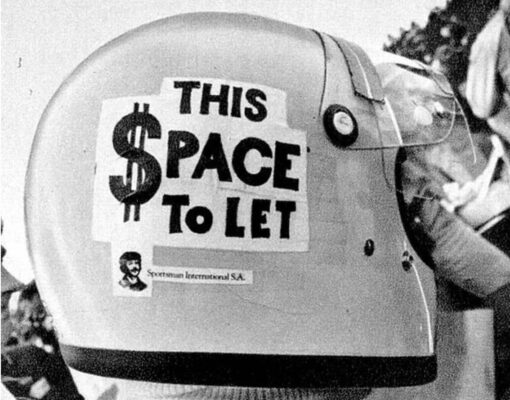
And this helmet? It tells a story that says a lot about those years. A famous vintage photo, attributed to Jochen Rindt‘s helmet, shows a sticker reading “This $pace to let”: an advert aimed at potential sponsors, stuck on the side of the helmet, back when the visor was not yet the most sought-after space. Rindt, born in Germany, raised in Graz and racing on an Austrian licence, is still the only Formula 1 world champion crowned after his death, in 1970, and his contracts were handled by his friend Bernie Ecclestone, the man who would later turn F1 into a global industry.
It is striking to think how much the business has changed since then. Back then you looked for someone willing to buy the space. Today the space on a champion’s helmet is negotiated season by season.
Why work with a sponsorship agency
The evolution of sponsorship strategies in motorsport shows how much it matters to have a specialised agency at the table. Those who know the paddock know where the available spaces are, which riders and drivers have room on their helmets, how to negotiate terms and duration and how to build an activation around such a small logo. In this context the role of a sports sponsorship agency is essential to move successfully between paddock and garage, in MotoGP as in Formula 1.
A small space with great value
The helmet visor is an advertising space of great value in motorsport, because it gives the sponsor direct, recognisable visibility tied to the face of the rider or driver. In a world where every detail counts, choosing this seemingly modest space can make a difference to a brand’s positioning, as long as you build a story around it. A few centimetres. A lot of attention. The rest is the story you put on it.
Frequently asked questions about a sponsor on the visor
Why does a sponsor choose the helmet visor?
Because it is the space most closely tied to the face of the rider or driver: it stays in frame when the camera zooms in on the eyes, during the race, in interviews and on the podium. It links the brand to the person and not only to the team, often with a smaller investment than space on the machines.
How visible is a logo on the visor?
Very visible, especially on social media, where tight shots seen on small screens dominate. At the end of 2025 Formula 1 counted 114.5 million followers on its channels and MotoGP more than 60 million: an audience that mostly sees the faces of the protagonists.
Who decides the sponsors on a rider's helmet?
In our experience the helmet is usually a space managed by the rider or driver and their management, within the limits set by the contract with the team and by category sponsors. That is why a visor project is built first of all with the rider.
When did sponsors arrive in Formula 1?
At the start of 1968, when the FIA allowed commercial advertising on cars after companies such as BP, Shell and Firestone withdrew their support. Lotus was the first major team to change livery, switching from British racing green to the colours of Gold Leaf cigarettes.
What is the This space to let helmet?
It is a famous vintage photo, attributed to Jochen Rindt’s helmet, with a sticker offering the space to sponsors. Rindt, the only Formula 1 world champion crowned after his death, in 1970, relied on his friend Bernie Ecclestone to handle his contracts.
What are examples of a sponsor on the visor?
In 2024 Unbraked, a retailer of motorcycle spare parts, was a partner of Gresini Racing with its logo on Alex Márquez’s visor for the whole season. In 2020 the lens brand Galileo was a personal sponsor of Andrea Dovizioso, with its brand on his helmet.