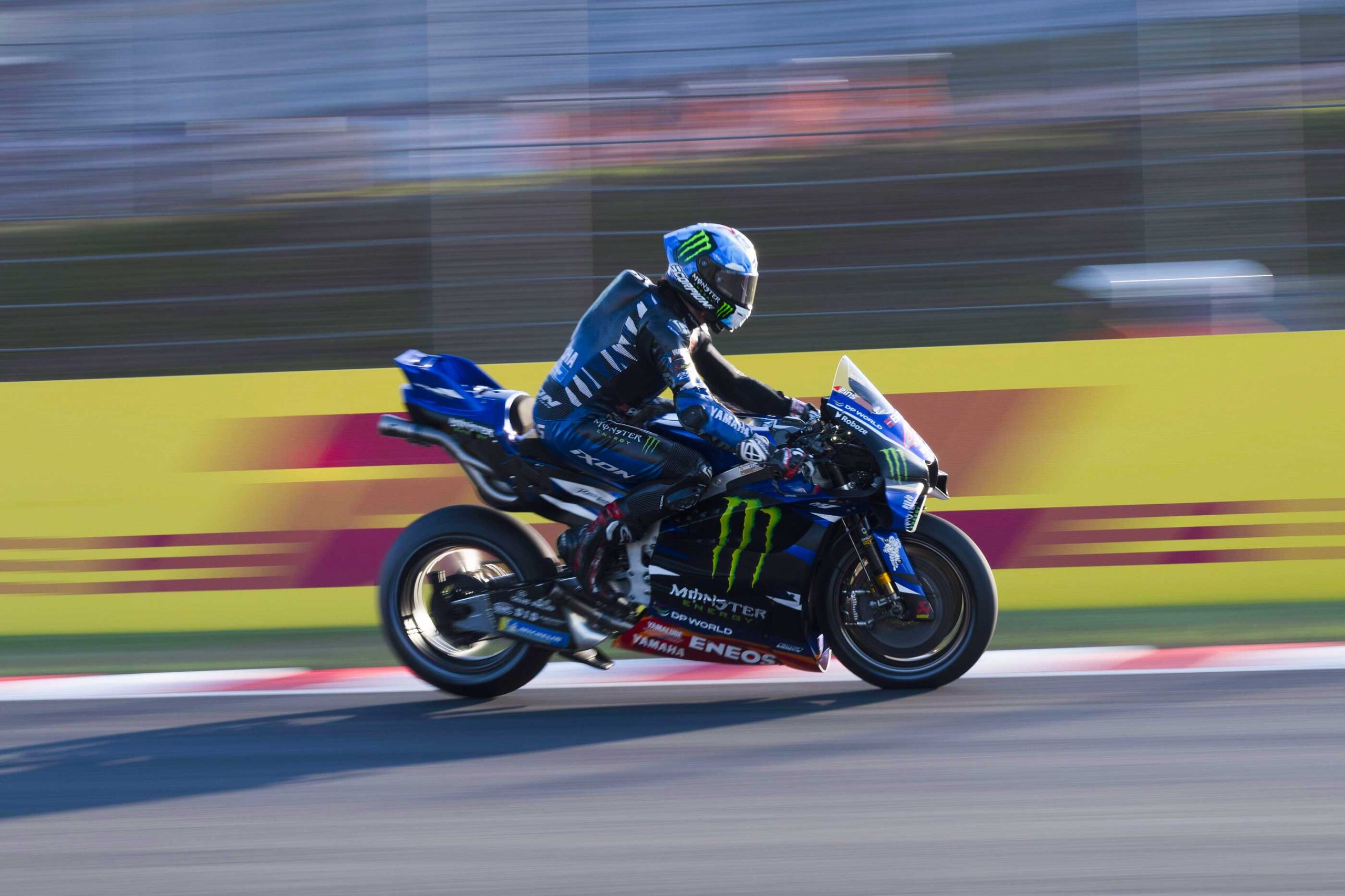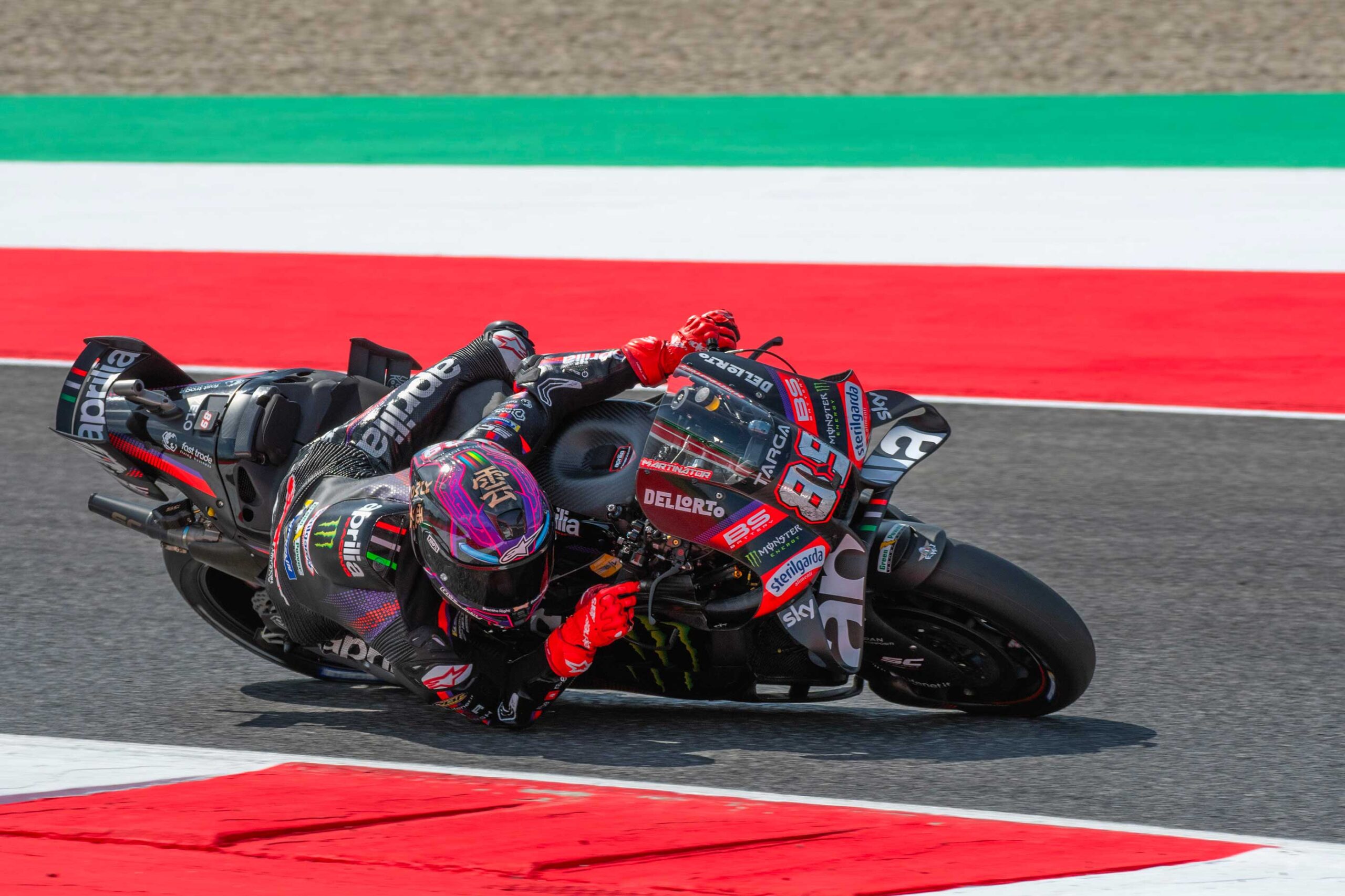


- Moto3 (entry tier) – Secondary deals from as little as €10k–€150k. A young, dedicated audience, and the chance to back a future champion cheaply.
- Moto2 (mid-budget tier) – Main deals in the low-to-mid six figures. A 22-race platform with real B2B access, without MotoGP-level prices.
- MotoGP (premier tier) – €75k to €15M. Maximum global reach and premium brand association.
- The right class follows your budget and objective, not prestige. Which MotoGP class should your brand sponsor? The budget ladder below matches each class to a budget band and a goal.
Most brands overpay for MotoGP because they treat the premier class as the only option. Pick the right class instead, and on the same weekend, circuits and broadcast cost a fraction. In three decades of placing brands across the MotoGP paddock, we have watched that single choice make or break a budget. Deciding which MotoGP class to sponsor is a budget-and-objective question, not a prestige one. This guide compares all three by what they cost and what they achieve, and ends in a decision matrix. The deeper case for going lower down the ladder, great among the small versus small among the great, lives in a companion piece. Here, the job is simpler: place each MotoGP class against a budget and a goal so the choice is obvious. MotoGP sponsorship spans a wider ladder than most buyers realise, and the gap between the top and bottom rungs is measured in orders of magnitude rather than percentages. A brand that walks in asking for MotoGP and walks out with a premier-class quote has often skipped the one question that matters most: what is the programme actually for?
The Three MotoGP Classes and How to Read the Budget Ladder
Which MotoGP class should my brand sponsor? The short answer: match the class to the money and the objective, because Moto3, Moto2, and MotoGP all run under one MotoGP Sports Entertainment Group championship, one calendar, and one broadcast, so a smaller class is not a smaller sport. In cost terms the ladder runs upwards from Moto3 through Moto2 to MotoGP. This piece scores each MotoGP class on two things: its entry-cost band and its value profile, which is reach for MotoGP, niche youth engagement for Moto3, and B2B access for Moto2. That operationalises the real strategic question, whether it is better to be great among the small or small among the great, a question the Moto2-versus-Moto3 companion answers in full. The debate over whether Moto2 or Moto3 is better for sponsorship turns entirely on budget and objective, not on which class is intrinsically superior. A useful way to read the ladder: cost falls far faster than exposure does as you step down it. The same broadcast cameras, circuits and race-weekend footfall serve all three classes. So the audience it reaches is not proportionally smaller than its price. That is the structural reason a feeder class can outperform the premier class on return for the right objective. Below, each MotoGP class in turn, then the matrix that ties budget to class.
MotoGP: The Premier Class for Maximum Reach
MotoGP is the premier tier, and its entry cost runs from roughly €75k for a modest associate position to €15M for a factory-team title presence, depending on level and team (the full MotoGP sponsorship cost breakdown sits in the cost guide). What the money buys is the full global MotoGP broadcast, carried across more than 200 countries to a global fanbase the championship promoter puts at 632 million (December 2025 data), and the premium association that comes with the fastest, most-watched motorcycle racing on earth. The best-fit objective is mass awareness, premium brand-building, and global reach: a brand that needs to be seen by the largest possible motorsport audience belongs here. This is the class where a logo on the fairing is worth the most in raw media terms, because the premier class carries the headline sessions, the qualifying drama, and the sprint-and-Sunday coverage that pulls the largest numbers across the weekend. For a brand whose metric is impressions and whose market is global, nothing lower on the ladder replaces it. Two caveats matter. First, the 2027 850cc regulation reset reshapes competitiveness and pricing across the grid, so the premier-class landscape a brand buys into is mid-transition rather than settled; the deal length and reset implications are covered separately and worth reading before signing a multi-year premier deal. Second, MotoGP is the wrong class for a budget-constrained or narrowly-targeted brand, which will pay premium prices for reach it does not need. Those brands are better served further down the ladder. For the brands it does fit, the MotoGP sponsorship agency route and the premier hospitality of the MotoGP VIP Village are where a programme takes shape. The premier class answers the reach question; it rarely answers the budget one.
Moto2: The Mid-Budget Class for Real B2B Access
Moto2 is the middle tier. Its costs sit above Moto3 and well below MotoGP, on the same 22-race platform and the same broadcast, which is what makes it the value rung of the paddock. The Moto2 sponsorship cost lands in the low-to-mid six figures for a main position, a fraction of premier-class money for access to the identical race weekends. The best-fit objective is a brand that wants genuine MotoGP paddock pass-level hospitality and B2B access, plus a transition-class talent narrative, without paying MotoGP prices. The talent story is real and recent: Moto2 is the class riders pass through on the way to the top. Pedro Acosta and Ai Ogura – both profiled in RTR’s guide to the best MotoGP rider rankings for 2026 – won the Moto2 title in 2023 and 2024 respectively before graduating to MotoGP, where Acosta already runs at the sharp end of the premier class. That is exactly the arc a Moto2 sponsor gets to associate with. Moto2 is the wrong class for a brand needing either the absolute lowest entry point, which is Moto3, or premier-class global reach, which is MotoGP. For everyone in between, particularly brands whose return sits in hospitality and client relationships rather than raw impressions, Moto2 is the efficient answer. Whether Moto2 or Moto3 is better for sponsorship comes down to how early, and how cheaply, a brand wants to enter. Moto2 sits at the point on the ladder where the talent is close enough to the top to be a lower-risk bet than Moto3, yet the entry cost is still a fraction of premier-class money. For a B2B-led brand, the maths are straightforward: the Moto2 sponsorship cost for a full programme is often less than bare visibility would cost in MotoGP, and it buys the same paddock to host clients in. That access-per-euro is the class’s defining advantage.
Moto3: The Cheapest Class to Sponsor and the Future-Champion Play
Moto3 is the lowest-cost door onto the MotoGP grid. The Moto3 sponsorship cost starts as low as €10k for a small secondary placement, runs roughly €50k–€150k for meaningful bike, suit and communications visibility, and €200k–€500k for a main sponsorship, a fraction of MotoGP money on the same calendar and broadcast. The audience is young, dedicated, and built for long-term growth, which makes Moto3 more than merely cheap. The best-fit objective is budget market-entry, youth positioning, and backing a rising rider cheaply before they climb the classes. That is the appreciation angle: a modest Moto3 deal can become a front-row story if the rider makes it to Moto2 and then MotoGP, and the brand carries the narrative of having believed early. Moto3 is the wrong class for a brand needing mass global reach now, which should read the premier-class section above. Because it costs so little relative to the rest of the ladder, Moto3 also lets a brand test motorsport before scaling, one of the reasons it works as an entry point into motorsport sponsorship generally. The full case for the future-champion play sits in the Moto3 guide linked above. It is worth being clear-eyed about the trade: the low Moto3 sponsorship cost buys the least raw reach of the three classes, so a brand chasing scale this season will be disappointed. What it buys instead is optionality, a cheap position with genuine upside if the rider or the relationship grows, and a youth-audience alignment that the premier class, with its broader and older following, cannot match as precisely.
Great among the small, or small among the great?
The single question that decides which MotoGP class to sponsor for most brands is whether they would rather be a leading name in a feeder class or a minor one in the premier class. The same budget that buys a title position in Moto3, with the rider’s leathers, the bike’s fairing and the team’s communications all carrying the brand, buys only a small secondary sticker in MotoGP. Being the headline sponsor of a rising Moto3 team gives a brand ownership of a story; being a minor associate in MotoGP gives it a fraction of a bigger stage. Neither is wrong, but they are different products, and the mistake is to buy the second while wanting the first. This is where the way motorsport sponsorship works rewards clarity of objective over reflexive reach-chasing. A brand that knows it wants B2B relationships, or a youth-audience story, or a talent bet, will almost always get more from being great among the small. A brand that genuinely needs global mass awareness, and can activate it, is the one for whom small among the great still makes sense.
Comparing the three classes side by side
The table below sets the three MotoGP classes against each other on the dimensions that decide the fit. Figures are directional and vary by team, exposure, and activation.
| Class | Relative cost | Audience / reach | Rider profile | Best-fit brand |
|---|---|---|---|---|
| MotoGP | €75k–€15M | Full global broadcast, 200+ countries | Established premier-class stars | Mass reach, premium global brands |
| Moto2 | Low-to-mid six figures | Same weekends and broadcast | Transition talent en route to MotoGP | Mid-budget, B2B and hospitality |
| Moto3 | €10k–€500k | Same platform, younger skew | Youngest riders, future champions | Entry budget, youth, talent bet |
Which MotoGP Class Fits Your Brand Budget and Objective?
The class follows budget and objective together, and because the same weekend delivers all three, a smaller class is never a smaller sport. The matrix below pairs budget bands with the recommended MotoGP class.
| Budget band | Recommended class | Audience/value profile | Best-fit objective |
|---|---|---|---|
| Sub-€150k | Moto3 | Young, dedicated, growth | Youth positioning, future-champion bet |
| Low six figures | Moto2 | Same paddock, B2B access | Hospitality, prospecting, relationships |
| €75k–€15M | MotoGP | Mass global reach | Awareness, premium association |
A brand weighing a programme in any class can pressure-test the number against a sponsorship calculator before committing, and read whether the objective is right for its brand at all. The point of the matrix is not to rank the classes but to remove the default assumption that premier-class MotoGP is the only door. Read left to right, it answers the buyer’s real question in one line: a sub-€150k budget aimed at a young audience or a talent bet points to Moto3; a low-six-figure budget built around client entertainment and paddock access points to Moto2; a budget that can carry premier-class reach, and activate it, points to MotoGP. The same three-day weekend, the same circuits and the same broadcast sit behind all three rows, which is the whole argument for letting budget and objective, not badge, drive the choice. A brand that starts from what it wants to achieve, and what it can spend to achieve it, rarely ends up in the wrong class; a brand that starts from the MotoGP name often does.
Common mistakes brands make when choosing a MotoGP class
Four errors recur when brands pick a MotoGP class, and all four trace back to the same root: choosing on prestige or assumption rather than on the budget-and-objective fit the matrix above makes explicit. 1. Overpaying for the premier class when a feeder class fits the objective. A brand whose goal is B2B or youth positioning does not need premier-class reach and pays heavily for the mismatch. 2. Dismissing Moto3 and Moto2 audience value. The lower classes share the same weekends and broadcast as the premier class; treating them as minor misreads what the budget actually buys. 3. Chasing prestige over fit. Prestige is an expensive substitute for a class that matches the objective, and the badge does not deliver the return. 4. Ignoring activation budget. In every class, the rights fee is only the entry ticket; without activation behind it, the return does not follow.
Match the Class to the Budget, Not the Badge
The brands that overspend in MotoGP are almost always the ones that assumed the premier class was the only option, when Moto3 or Moto2 would have matched the objective for far less. Choosing which MotoGP class to sponsor is a question of fit, not prestige. RTR Sports Marketing works brand-side and independently, with access across all three classes, which is why it can route a budget to the right MotoGP class rather than defaulting to the most expensive one. If you want that decision made against your budget and objective, a conversation about the options is the natural next step.
Frequently Asked Questions
Which MotoGP class should my brand sponsor?
Match the class to your budget and objective. A sub-€150k budget aimed at a young audience or a talent bet points to Moto3; a low-six-figure budget built around B2B hospitality and paddock access points to Moto2; a budget that can carry – and activate – global mass awareness points to MotoGP. All three classes share the same 22 race weekends, circuits and broadcast.
How much does it cost to sponsor Moto3?
Moto3 sponsorship starts from around €10,000 for a small secondary placement, runs roughly €50,000–€150,000 for meaningful bike, suit and communications visibility, and €200,000–€500,000 for a main sponsorship – the lowest-cost entry onto the MotoGP grid.
How much does Moto2 sponsorship cost?
A main Moto2 sponsorship typically sits in the low-to-mid six figures per season – a fraction of premier-class money for the same 22-race calendar, the same circuits, and genuine paddock-level hospitality for B2B programmes.
How much does MotoGP sponsorship cost?
Premier-class MotoGP sponsorship runs from roughly €75,000 for a modest associate position to €15 million for a factory-team title presence, depending on team and exposure level.
Is Moto2 or Moto3 better for sponsorship?
It depends on the objective. Moto3 offers the cheapest entry, a younger audience and the future-champion story; Moto2 costs more but buys a lower-risk talent narrative and real B2B access on the same race weekends. Neither is better in absolute terms – the budget and the goal decide.