The question a company asks most often when it first approaches motorsport is about price. The right question comes first: where do you start? A sponsorship programme does not begin with a price list, but with five decisions taken in the right order. Getting the order wrong almost always means spending money well in the wrong place.
Updated September 2026.
Motorsport today offers more options than ever: Formula 1, MotoGP, Formula E, endurance racing with the WEC and the 24 Hours of Le Mans, NASCAR, Superbike, and even more experimental series such as Extreme H, which in 2025 took over from the all-electric Extreme E with hydrogen-powered cars. More options mean more chances of finding the right one, but also more ways of choosing badly. This guide sets out the five decisions that, in our experience, determine the success of a first programme.
In short:
- Start from the company’s objectives and markets, not from the championship people like best.
- Championship, team, rider or driver, or a single event are four different products, with different costs and returns.
- The budget has two lines: rights and activation. Those who only plan the first usually stop after year one.
1. Which championship: geography before passion
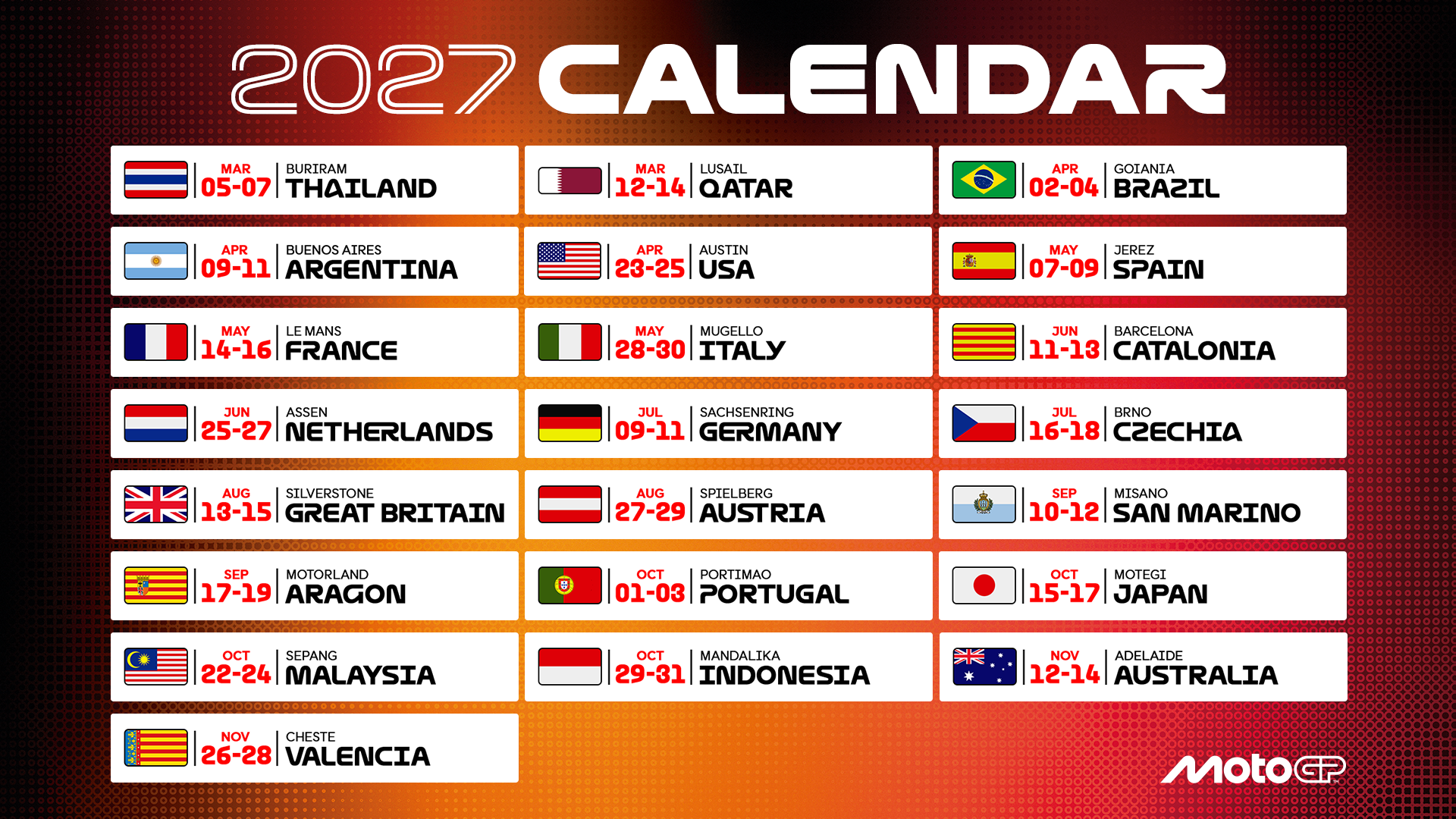
All motorsport championships share a similar core of values: technology, speed, precision, innovation, teamwork. The real differences lie elsewhere, and the first is geographical. Motorsport is a travelling show, and knowing which countries a company wants to grow in narrows the field considerably. MotoGP is very strong in Mediterranean Europe, South-East Asia and Latin America, and in 2026 it has 22 Grands Prix in 18 countries. Formula 1 has the largest and most global audience, and the highest costs. Formula E races in the centre of major cities and speaks to companies with sustainability goals. Endurance racing, with the 24 Hours of Le Mans as its flagship event, is the natural home of brands that want to demonstrate reliability.
The question to ask is not which championship the company likes most. It is which championship reaches the customers we care about, in the markets where we sell or want to sell.
2. B2B or B2C: who the sponsorship needs to speak to
The second decision concerns the audience. A consumer brand looks for visibility, content, point-of-sale activations and opportunities to meet the public at the circuit. A company that sells to other businesses looks for relationships instead: paddock hospitality for clients and prospects, image rights for use in sales presentations, access to the team’s partner network, whose members are often potential customers themselves. Two programmes with the same logo on the same fairing can have completely different objectives, tools and measures of success. Clarifying this at the outset avoids buying rights that will never be used.
3. Championship, team, rider or event
These are four different products. The championship offers broad visibility and stability, because it does not depend on anyone’s results. The team offers the most complete package, with visibility on the machines, hospitality and technical rights. The rider or driver offers a face, which is extremely useful in consumer goods, but carries the risk of injury, loss of form and changes of team. A single event, a Grand Prix or an endurance race, is the most contained way to gain a first experience.
Not all teams are the same, and not only because of results. A manufacturer’s factory team has different costs and visibility from a satellite or independent team, and smaller teams are often more flexible in building a tailor-made package. We have explored the options in MotoGP in our guide to rider, team, Grand Prix or championship, and for Formula 1 in our ranking of the best drivers of 2026 seen through a sponsor’s eyes.
4. The budget: rights and activation
Two numbers govern the cost of a sponsorship, and confusing them is a common and costly mistake. The first is the value of the rights, that is, what is paid to the team, the championship or the rider. The second is the activation budget, that is, what it takes to turn those rights into results: hospitality, campaigns, content, events, promotions. The second is not included in the first, and a programme that neglects it ends up as a logo without an engine. Figures vary enormously by championship and package, and any published number should be treated with caution. For a first order of magnitude in MotoGP there is our sponsorship calculator.
5. Duration and measurement
The last decision concerns time and the criteria for success. An association between a brand and a sport is built over several seasons, rarely in just one, and multi-year contracts also make it possible to negotiate better terms. In the same way, objectives must be set before signing: awareness, business contacts, sales in a market, employee engagement. Each objective requires different measurement tools, and none can be reconstructed once the season is over. To avoid the most common missteps we have gathered the mistakes to avoid in a sponsorship, and for measurement a guide to how ROI is really calculated.
Who the time is right for, and who should wait
The time is right for a company with clear marketing objectives, well-defined markets and a willingness to commit for at least two seasons. It is better to wait, or to start with a hospitality experience at a single event, for those who do not yet have an activation budget or need immediate commercial results. Starting small, with one Grand Prix and a well-built hospitality programme, is often the most sensible way to find out whether motorsport works for your brand before committing on a larger scale.
How to move forward
The first step is to write down objectives, markets, audience and an indicative budget: on that basis, half the options can already be ruled out. The second is to talk to people who know the paddock. It is worth understanding, in this respect, how our work is structured: in most cases RTR Sports’ commission is paid by the team or the property, not by the brand. It is this separation that allows us to recommend the right championship, even when it is the least expensive one. The starting point for MotoGP is our sponsorship guide.
Sources: MotoGP, the 2026 calendar; FIA, Extreme H World Cup 2025; MotoGP, the numbers of the 2025 season; IEG, Activation Ratios Are Dead.
Frequently asked questions about starting a motorsport sponsorship
Where do you start with a motorsport sponsorship?
With the company’s marketing objectives and markets. Before choosing the championship you need to know which customers you want to reach, in which countries, and whether the goal is visibility with the general public or relationships with other businesses.
Which championship should you choose for a first sponsorship?
It depends on markets and budget. MotoGP is strong in Mediterranean Europe, South-East Asia and Latin America, Formula 1 has the most global audience and the highest costs, Formula E speaks to companies with sustainability goals, and endurance racing suits brands that want to demonstrate reliability.
Is it better to sponsor a team, a rider or an event?
They are different products. The team offers the most complete package, with visibility, hospitality and technical rights; the rider or driver offers a face, useful in consumer goods but tied to their performance; a single event is the most contained way to gain a first experience.
How much budget do you need on top of the rights fee?
You need an activation budget, which is not included in the contract and covers hospitality, campaigns, content and events. The industry’s old fixed rules have been superseded: today the budget is built on objectives, but without a dedicated figure the sponsorship is reduced to a logo.
How long should a first sponsorship programme last?
Ideally at least two seasons. The association between brand and sport takes time, and multi-year contracts make it possible to negotiate better terms. Those who cannot commit for that long can start with a single event and a hospitality programme.