


Annual spending on sponsorships
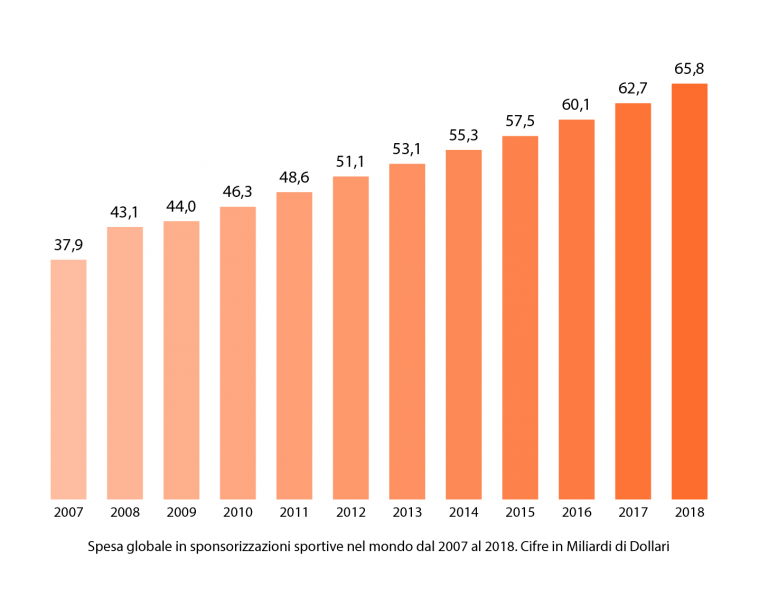
Global sports sponsorship spending continues to grow: total worldwide spending in this field rose to $65.8 billion in 2018. This is confirmed by data provided by Forbes (and summarised by the Statista portal): the sector is in constant growth despite the economic challenges that everyone is aware of. The growth rate has risen to 52.7% compared with figures from a decade earlier — in 2008, for example, sponsorship spending stood at $43.1 billion.
While data on growth over the past decade is interesting, industry professionals will find it even more valuable to observe the persistence of this growth at a rate of around 5 percentage points per year. This figure testifies to the good health of the sector and the efficiency of sports marketing as a tool.
Sponsorships and geography: which region spends the most on sponsorships?
Despite its global growth, the world of sports sponsorship is led primarily by North America. For every single dollar spent on sponsorships worldwide, around 37 cents come from the US and Canadian market, where the United States plays a leading role. In 2018, the North American continent spent $24.2 billion on sponsorships — $10 billion more than Europe’s annual spending, which came in second place in this special ranking, as the graph below shows.
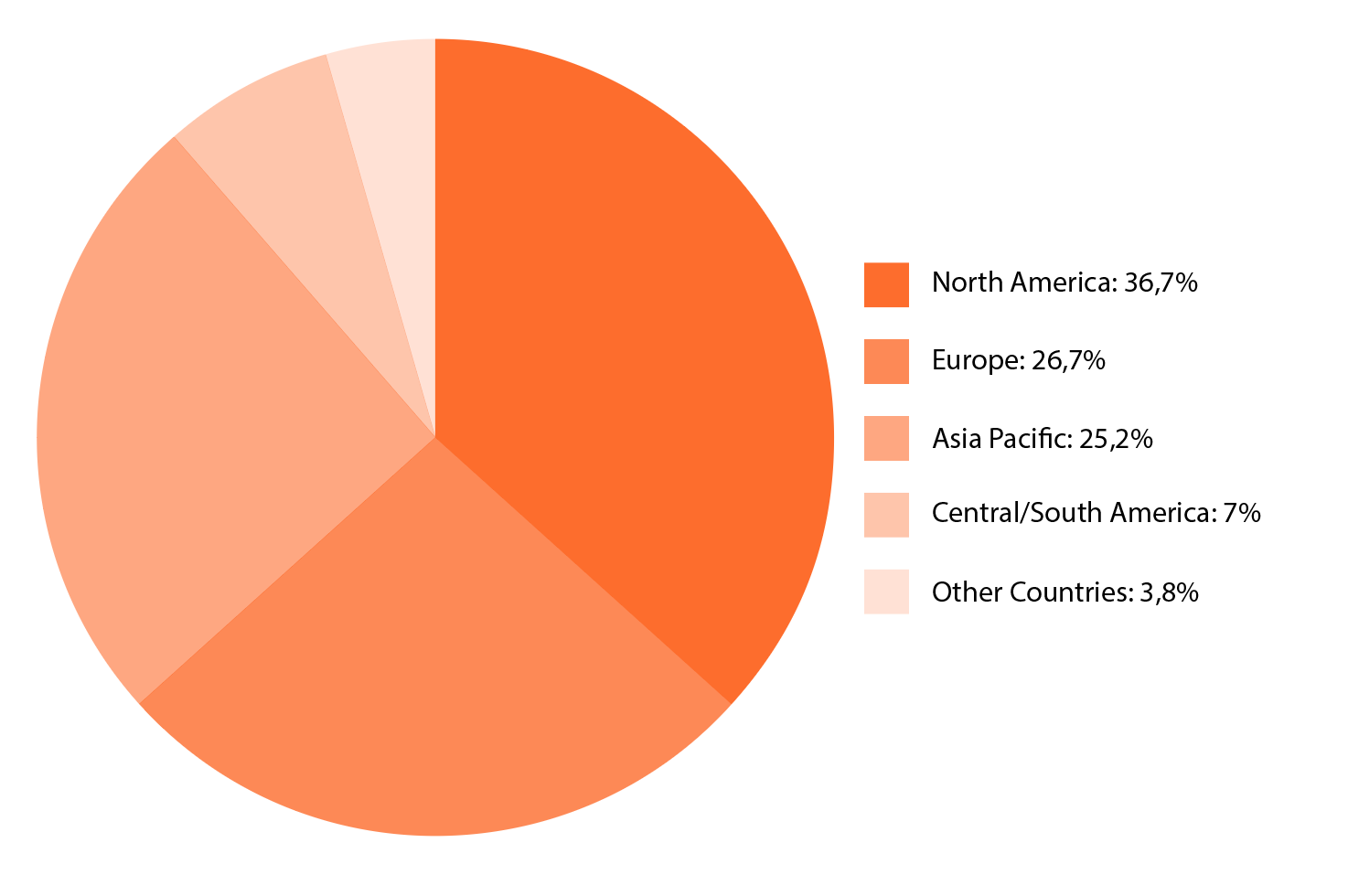
At this point it is legitimate to ask the reason for this geographical distribution, which appears somewhat unbalanced, especially when considering per capita spending on sponsorships and the fact that Europe has almost 165 million more inhabitants than North America, while the Asian population is even larger. An answer to this question will be given in the next section.
American sponsorships: why do the United States and Canada spend the most?
As is evident, when it comes to sponsorships in the United States and Canada, the Stars and Stripes dominate. First, it is not wrong to say that one of the main reasons for American supremacy lies in the fact that sports marketing is a discipline deeply rooted in the United States. Although the phenomenon of sponsorships did not originate in the USA, it is undeniable that Americans are the fathers of sports marketing and that colleges and some important thinkers in the sector have made a valuable contribution to its development.
Another significant aspect worth considering is the internal competition between disciplines, which is quite fierce in the United States and weaker in Europe, a continent dominated almost exclusively by football/soccer. In the United States, MLB, NBA, NFL and NHL were forced to make their own way and progress both in terms of communication and marketing before they could win audiences that had four almost equivalent choices. At a time when soccer and its leagues were still dormant within the borders of the Old Continent, Americans were quick to implement operations to strengthen each individual national league. The NBA, NFL and MLB are today far ahead of any European competition, with the sole exception of the Premier League and the Champions League, which have made giant strides in recent years.
The third reason to consider is the fact that North America has managed to create sports “brands” of great value, especially when it comes to championships, events and sports series. If you look at the ranking of the most valuable sports event brands in the world — events with the highest value as independent brands (regardless of the competing teams) — the situation is crystal clear.
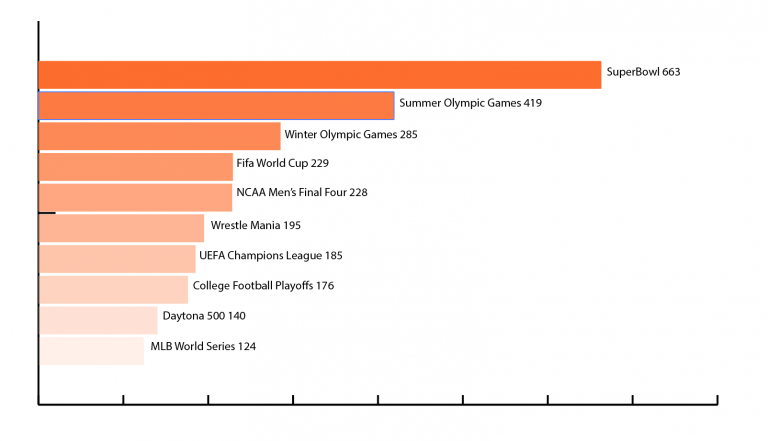
A quick look at the graph above (source: Forbes) immediately clarifies the “value” of some of the most important sporting events globally. In brand terms, the Super Bowl — the final game of the National Football League — is worth roughly as much as the FIFA World Cup and the Olympic Games combined. Strangely, the Champions League — the most important continental tournament — must yield to the NCAA Championship Final Four or WrestleMania.
Let us clarify one thing: brand value has nothing to do with the number of viewers gathered or the revenue generated by one event or another. It is not a measure of a competition’s reputation, its success or its heritage. On the contrary, it is simply an indicator of the cost of the “Super Bowl brand” and, as such, of the turnover it can generate: it is a measure of the potential that an event can have in marketing terms.
Looking ahead: sponsorships in e-sports
One of the most interesting future scenarios for sports marketing professionals is e-games, in particular professional video game championships and leagues. Without doubt, e-sports are radically changing the prospects for sports marketing. The internet has allowed hundreds of millions of players to compete without the need for physical proximity; the number of video game titles has skyrocketed and so has access to the necessary gaming technologies. At the same time, the video game industry has emerged from the shadow of a simple pastime for youngsters and has rapidly transformed itself into the richest and most powerful voice in global entertainment, eclipsing cinema, music and television in terms of turnover and business volume.
The sponsorship sector was quick to ride the wave of something that is more than just a trend. First hardware and accessories manufacturers, then energy drinks and clothing: the growth of sports sponsorships in e-sports is experiencing an incredible escalation.
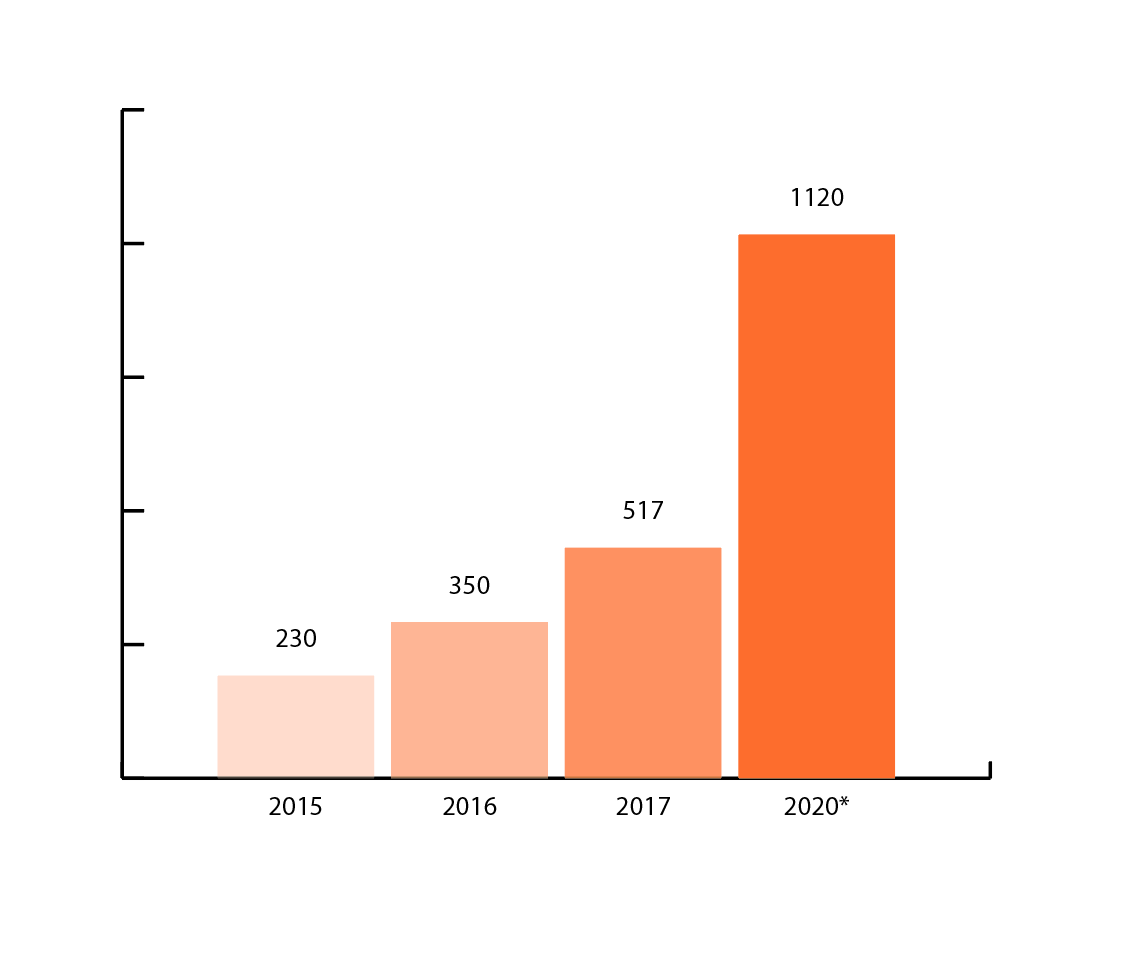
From around $230 million invested a few years ago, spending more than doubled to well over half a billion. The most impressive aspect is future estimates from experts who predict sustained growth in the e-sports market in the coming years. This is an interesting profile that outlines a digitalised yet fascinating future.
E-sports are, of course, a step up from conventional disciplines, but it is worth noting that the foundations and effectiveness of sponsorships do not change — a premise that opens a new avenue for those involved in sponsorships and sports marketing.
Internationalisation: the key to success in sports marketing
When looking at the future horizons of this discipline, it is impossible not to mention the key role of internationalisation in the modern sports and sports sponsorship scenario. The explosion of the media rights market, the near-total availability of content and the supra-geographical expansion of sports content requires all sports professionals to adopt “think global” logic, as demonstrated by the multitude of sponsorships beyond national and continental borders concluded by some of the main sports properties.
The ability to speak to fans and supporters — but also to consumers and users — in every nation, language and culture is not simply a must for sport, but is the true challenge of the present. Championships that by their very nature travel and stop in different countries around the world, such as MotoGP and the main motorcycle series, hold an important card to play for themselves and for sponsoring companies. They are true on-the-road marketing platforms, capable of reaching a huge audience through television broadcasts, but especially through the involvement of people at circuits and fan zones around the world.
Discover more about sports sponsorship activation and how RTR Sports Marketing can help you structure your strategy.
Frequently asked questions about the growth of sports sponsorships
Frequently Asked Questions
What is the global spending on sports sponsorships?
According to Forbes/Statista data, global sports sponsorship spending reached $65.8 billion in 2018, with a growth rate of 52.7% compared to 2008. The sector maintained sustained growth of around 5 percentage points per year, demonstrating the structural strength of sports marketing as a commercial tool.
Which geographic area spends the most on sports sponsorships?
North America is the leading region in the world of sports sponsorship: around 37% of global spending comes from the US and Canadian market. In 2018, the North American continent spent $24.2 billion, around $10 billion more than Europe, which came second. The main reasons are the historical roots of sports marketing in the USA and fierce competition among American professional leagues.
Why do the United States spend so much on sports sponsorships?
American primacy in sports sponsorships is explained by three main factors: sports marketing is a discipline historically rooted in the USA; fierce internal competition between MLB, NBA, NFL and NHL pushed each league to develop sophisticated marketing models; North America has built sports brands of very high independent value, as demonstrated by the Super Bowl’s worth as a brand.
How are e-sports sponsorships growing?
E-sports sponsorships have grown explosively: from around $230 million a few years ago to well over half a billion. The sector attracts hardware and accessories manufacturers first, then energy drinks, clothing and consumer brands. The underlying mechanics of sponsorships remain identical to traditional ones, which opens concrete opportunities for sports marketing professionals.
What is the role of internationalisation in sports sponsorships?
Internationalisation is one of the most significant trends in modern sports marketing. Sports properties that travel to different countries — such as MotoGP, Formula 1 or the Champions League — are global marketing platforms capable of reaching enormous audiences through television, digital platforms and direct engagement at circuits and fan zones. For sponsoring companies, this means multi-market visibility and the ability to build brand equity in multiple countries with a single agreement.


