

In March 2022 Formula 1 had just launched a brand-new set of rules, with ground-effect cars designed to overtake more, and the first two races had delivered a great show and record ratings in the United States. At the time we wrote this article to read that change through the eyes of marketing: how do you manage the life cycle of a sports product without betraying those who already love it? Today we are republishing it as it was, followed by a review, because in 2026 Formula 1 made the same bet again, on an even bigger scale.
Updated September 2026.
In short, the review goes like this. The 2022 bet paid off above all at the circuits and in the United States: spectators rose from 2.69 million in 2021, still limited by health restrictions, to 6.7 million in 2025, an all-time record, while the global TV audience only started growing again in the following years, reaching 1.83 billion in 2025. In 2026 came a new reset, with half-electric engines, sustainable fuel, active aerodynamics, the arrival of Audi and Ford, Honda’s move to Aston Martin and Cadillac as the eleventh team: a change that divides fans but that, so far, is bringing even more people to the track.
The March 2022 text
The change in Formula 1 regulations, with new cars and new tyres first and foremost, has led to two spectacular races and record ratings. It was a risk that paid off, but it was also necessary if motor racing’s premier series wanted to remain current and relevant for fans and sponsors.
Sports marketing: communicating inside and outside your own arena
As industry professionals know well, every sports property has to direct its communication and promotion efforts in two equal and opposite directions.
On the one hand, the property, whether it is a club, a stadium, a league or a federation, has to direct its actions within its natural area of influence, to talk to its audience, interact with its stakeholders and, in general, give continuity to an existing relationship founded on shared goals.
On the other hand, the same property fights a daily battle against other objects, bodies, organisations and external entities that operate in areas different from and distant to its natural vertical. It is a fight for attention, for interest, for relevance and, last but not least, for screen time. This is all the more true and relevant the bigger and more globally interesting the property is.
In essence, and to give an example that clears the field, a big football club does not only have to focus on its fans and investors, but at the same time has to fight for the attention of new consumers against other forms of entertainment, from video games to music, from cinema to social media.
This twofold direction of marketing and communication, inward and outward at the same time, is the key to a virtuous balance that leads to success, but it is also extremely hard to find.
Forgetting to communicate inwards means losing your hard core of supporters and drifting away from your historic MVP (Mission, Vision, Purpose). Conversely, stopping communicating outwards means closing yourself into a niche that no longer attracts new audiences and that, in the medium and long term, leads to the extinction of the product.
Theory aside, this is precisely where the great difficulty of every change lies: how do you stay relevant for your audience and become attractive to those who do not follow you yet? How do you move towards modernity without betraying your heritage? And finally, how do you find the new without throwing away the old?
On reflection, it is a dilemma that runs across the whole world of marketing, forever balanced between present and future: this is exactly what Product Life-Cycle Management deals with, namely the strategic planning of processes and actions to manage and guide the life cycle of a product or service.
Formula 1: changing to stay the same
As mentioned at the start, managing a product’s life cycle matters all the more the bigger and more global the property. In an absolutely transversal, planetary and multiply connected market, not only does the “too big to fail” idea that was believed true until about ten years ago no longer apply, but paradoxically it is the most structured organisations that are asked to make the greatest efforts to adapt. This reasoning obviously applies to sports marketing too.
In this context, Formula 1 belongs to the elite of leagues, series and championships that attract most of the world’s attention. Together with the Premier League, the NBA, the NFL, the Champions League and MotoGP, motor racing’s premier series rightfully stands as one of the most extraordinary entertainers on the planet. In 2021 alone, the circus accumulated a cumulative TV audience of 1.55 billion, 445 million unique viewers and 2.69 million people in the grandstands, despite health restrictions, over 22 races in just over eight months (source: Formula 1). Staggering numbers that, as always, carry the double face of success and responsibility.
It is in the light of what has been written so far, and with the ghost of a not-so-simple recent past clearly visible in the rear-view mirror, that we should interpret the great change that the pinnacle of motorsport decided to undertake on several fronts some time ago and that is only now showing its true colours. A change that, for simplicity’s sake, we can divide into four points:
- regulatory;
- media production and distribution;
- geographic;
- demographic and cultural.
A changing Formula 1: the regulations
The regulatory change, expressed at full strength by this season’s new Rule Book, is certainly the most visible of all the changes of skin of the world’s most famous four-wheeled sport. Cars returning to ground effect, simplified aerodynamics to allow more exciting overtaking, cooler tyre blankets and so on are in fact negligible details of a grand design that can be summed up in one simple sentence: Formula 1 needs entertaining races, with lots of overtaking and big twists.
So why do we call them “negligible” details? What is clear is that the sport’s governing body is trying to banish the ghost of complexity in order to lower the barriers to entry for new viewers. A new user, and this is indeed a marketing problem, cannot struggle to access the product because, if not sufficiently motivated, they will get bored and go elsewhere. A sport in which you need a degree in thermodynamics and a notebook to follow the race is not a sport, it is a maths problem. Formula 1 knows this well. But it also knows that creating competitiveness, a topic this blog has already discussed in the past, is difficult, especially when so much technology is involved.
Hence a change in the regulations that, while keeping the complexity and details so beloved by enthusiasts (communication within your own arena), offers a simple, intuitive and accessible product to those approaching it for the first time (communication outside your own arena).
Clearly, satisfying both audiences is the conditio sine qua non for the toy to work and for these different layers of viewing. The new user will be happy to see the overtakes and counter-overtakes between Verstappen and Leclerc, while the most passionate fans can ponder the less effective undercuts now that tyres leave the garage at 70 degrees rather than 100.
A changing Formula 1: media production and distribution
Drive to Survive, the hugely popular series now in its fourth season, has been a real masterstroke by the circus’s marketing departments. The show not only offers a juicier, more gossipy angle, able to intrigue an audience that is not necessarily sport-oriented, but has the double advantage of reaching new audience niches and extending the experience and recall for brands, sponsors and manufacturers.
DTS is one of the many small and large changes Liberty Media has brought on the product placement and product promotion front. A new logo, a new font, new graphics, new title sequences and new direction add to a non-exhaustive list of touches to a sport that has changed its face in just a few years.
Here we need to be clear about the holistic role of high-quality integrated communication. Obviously, a new logo on its own brings nothing to the cause. It is also true, however, that a brand image that speaks a modern, up-to-date language is important to keep pace with visual habits that change ever more frequently (it is no coincidence that the Premier League also renewed its logo and colour palette a few years ago, both of them beautiful).
A changing Formula 1: geography
Borders, physical and otherwise, are a dominant theme for all the world’s top sports properties. Moving from saturated markets to expanding ones is a necessity for sponsors, for stakeholders and for finding new slices of audience. This concept is as intuitive as it is extremely hard to put into practice, for reasons of logistics, time and economics (the National Football League knows this well, having experimented for years with bringing a team to London and landing the oval ball in the old continent).
Liberty, FOM and the FIA have a puzzle on the table with several pieces to put together, which do not necessarily fit. On the one hand there is Europe’s cultural and legacy hegemony over the Formula 1 product, which was born in England, Italy and central Europe, where most of its teams are based. On the other there is the need to shift the centre of gravity towards areas with more room for manoeuvre and more money, notably the Middle East. Thirdly, there is the awareness that a truly global product cannot fail to have traction, following and interests in the United States. Finally, there are fewer than forty weeks available in the year (once breaks are taken into account), and moving freight and equipment takes time and organisation.
The 22-race calendar, with the introduction of tracks such as Saudi Arabia (2021) and Miami (2022) alongside a solid group of historic circuits, goes exactly in this direction.
Following the earlier reasoning on the two directions of communication, it is clear that the circus cannot get rid of tracks that represent the beating heart of the sport, such as the Belgian jewel of Spa or the lightning-fast Monza circuit, unless it wants to commit hara-kiri. But it is equally clear that the economic fortunes of the pinnacle of motorsport cannot rest on a central Europe that is increasingly stagnant in monetary terms, and must find new energy in livelier, booming markets such as the Middle East. The calendar cannot be extended forever, even though some are already calling for 30 races, but the expansion of the map and the return of great classics like Imola are certainly excellent news for sponsors and investors.
A changing Formula 1: demographics and culture
This is perhaps the most difficult, intangible and delicate aspect of our reasoning. For the same reasons, it is perhaps also the most important. While it is easy to identify changes in the regulations or appreciate a longer calendar, it is hard to account for a change that is as cultural as it is demographic. The two, as is easy to understand, go hand in hand.
As an international marketing platform, a hugely popular sport and the spearhead of the entire automotive industry, Formula 1 needs to present itself to the world with a first-class ethical, cultural and image record. The great space dedicated in recent years to Black Lives Matter, the attention to social issues of inclusion and diversity and its highly international outlook are clear proof of this. That it is not just about sport goes without saying. Like any great entertainer of the modern age, the premier single-seater series must also embrace the role of great educator. Like it or not, agree or not, this is what modernity demands of large corporations and high-profile players. This is especially true in motorsport, traditionally a discipline associated with locker-room machismo, which today is trying, as NASCAR struggles to do, to shake off the dust of the provincial garage.
Added to this, powerfully, is the theme of new generations. Hyperconnected, with formidable but fleeting attention, used to multimedia and multiple screens, and deeply tied to an aesthetic, that of video games and digital, which has been largely revolutionised. Pushing hard on social media, trying to speed up production, building characters around the protagonists that resemble the heroes (or villains) of a TV series, and giving everything a video-game sheen are some of the cards in the deck Formula 1 is playing.
Verstappen’s Red Bull stopping at the end of the race on a stunning, interactive illuminated platform, while a 4K drone films the Arabian night, lit by phosphorescent neon, fireworks and dreamlike landscapes, is yet more proof of this leap, which is as generational as it is a statement of intent. This is not just sport, but the greatest show in the world.
The future to come
So far this season, Formula 1 has delivered what it promised. Thrilling races with cars finally able to overtake and fight at every corner, dreamlike settings on visually extraordinary tracks, widespread competitiveness and numerous twists brought by a regulation change to which not everyone, especially among the most illustrious names, has been able to adapt.
It is unrealistic to think that the level of spectacle offered so far will stay the same for the next 20 rounds. It is useful instead to appreciate that this is not a random exploit but the result of a sensible direction and a very clear strategy, which can reassure sponsors, insiders, stakeholders and protagonists. A long-term strategy whose main aim is to secure the circus’s future among the world’s top sports and entertainment platforms, fighting in the two directions mentioned at the beginning of this article with the same, renewed effectiveness.
Four years on: the review
Rereading an analysis some time later helps you understand what you saw correctly and what you did not. Here is how it went, point by point.
The 2022 bet paid off, but not where expected
The record ratings of the first two races of 2022 were above all American: on ESPN the Bahrain Grand Prix drew 1.35 million viewers and the Saudi Arabian Grand Prix an average of 1.45 million, the highest figure since 1995. Globally, however, 2022 ended with a TV audience of 1.54 billion, virtually the same as 2021. The real growth came elsewhere: at the circuits, with 5.7 million spectators already in 2022, 6.5 million in 2024 and 6.7 million in 2025, an all-time record with 19 sold-out races, and then on television, where the cumulative audience rose to 1.83 billion in 2025, with an average of 76.1 million viewers per Grand Prix, the highest since 2020. In the same year Formula 1 counted 827 million fans worldwide, up 12%.
Media and the United States: the direction was right
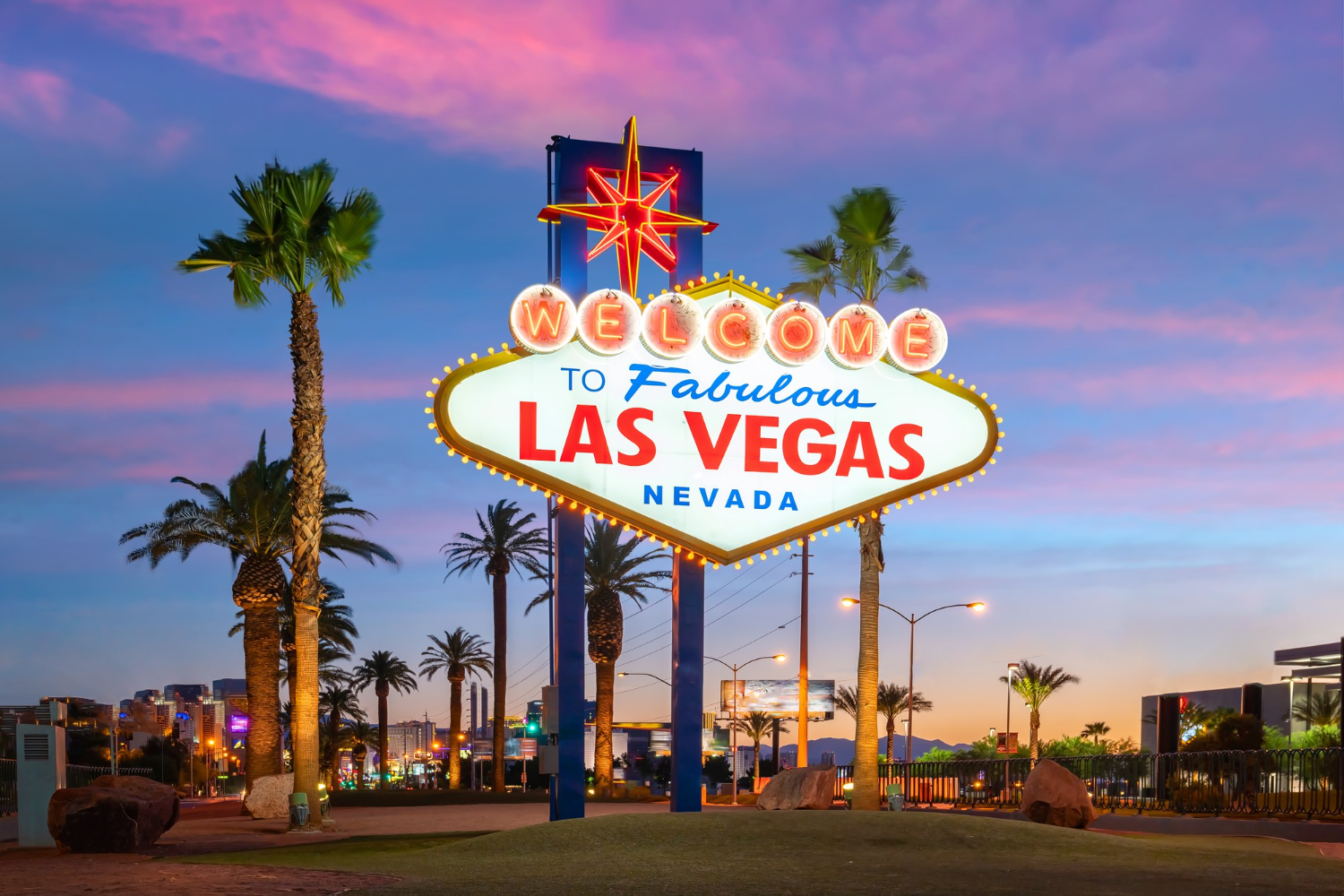
The intuition about media production and distribution proved to be the most far-sighted. In the United States, ESPN closed its last Formula 1 season, in 2025, with an average of 1.3 million viewers per race, an all-time record, and from 2026 the American rights moved exclusively to Apple for five years. Meanwhile, the Formula 1 story left sports television and reached the cinema: “F1”, the film starring Brad Pitt, grossed more than 634 million dollars worldwide. And the geography kept shifting, with Las Vegas on the calendar since 2023, although 2026 showed its fragility: in March the situation in the Middle East forced Formula 1 to cancel the Bahrain and Saudi Arabian Grands Prix.
2026: a new product life cycle
In 2026 Formula 1 made the 2022 bet again, but on a bigger scale. The new technical regulations raise the electrical component of the power unit from 120 to 350 kW, against 400 kW for the combustion engine, for a split close to 50/50, with fully sustainable fuel. The cars are shorter, narrower and 30 kg lighter, with a minimum weight of 768 kg, and use active aerodynamics: the wings open on the straights and close in the corners, while Overtake Mode, which gives extra energy to a driver within one second of the car ahead, has replaced DRS. We also covered this in our article on why the battery has disappeared from the screen.
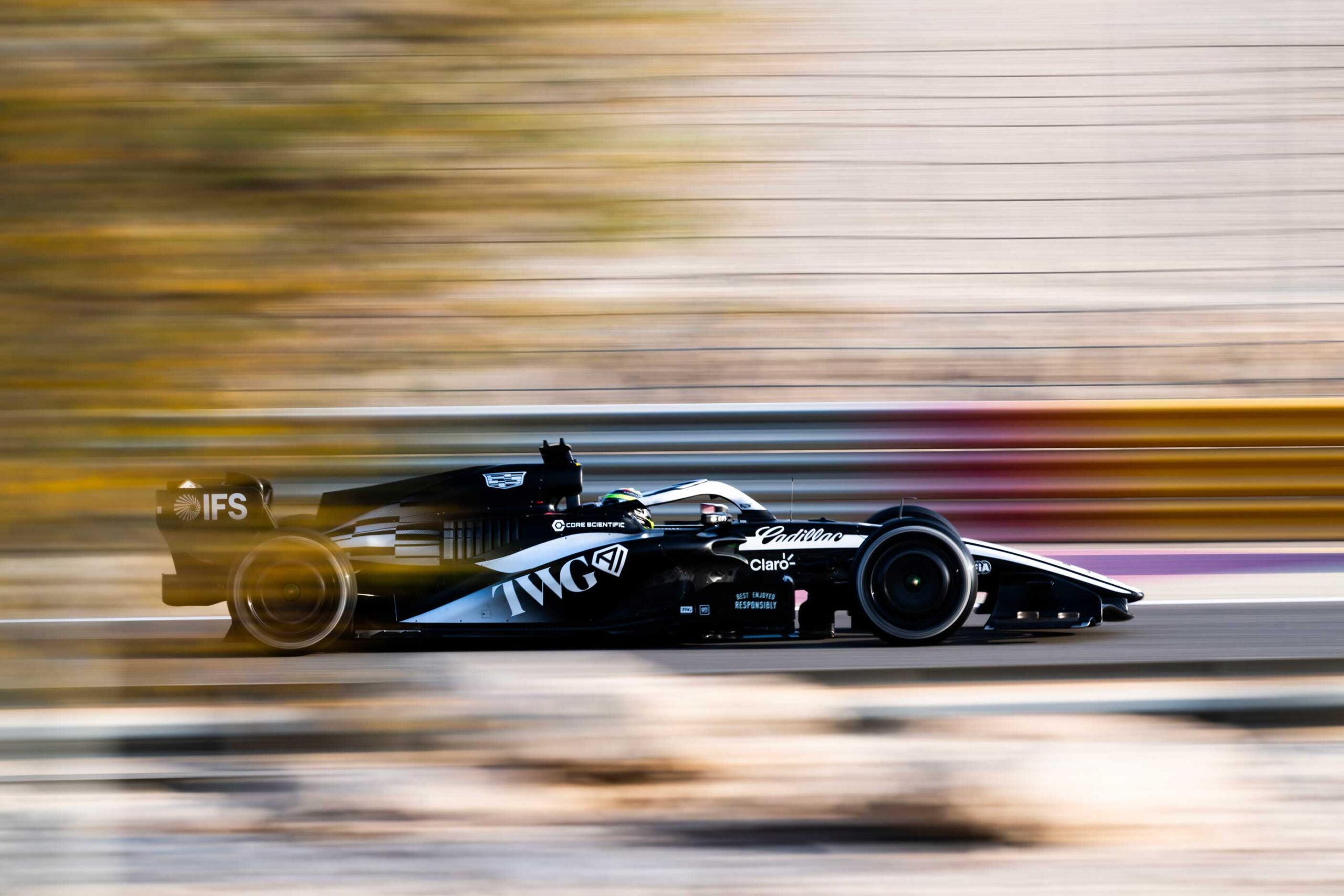
The regulations have attracted new manufacturers and new investment, which is exactly what a product reset should do: Audi took over Sauber, Ford is the technical partner of Red Bull Powertrains, Honda became Aston Martin’s works engine supplier and Cadillac joined as the eleventh team. On the sporting side, after the Spanish Grand Prix on 13 September, Kimi Antonelli leads the championship with Mercedes.
The two directions of communication, once again
2026 fully confirmed the 2022 reasoning about the two directions. Inwards, among enthusiasts, the new rules have divided opinion: criticism focused above all on qualifying and energy management, so much so that on 20 April all stakeholders agreed on adjustments, effective from Miami. Outwards, however, the product works: in the first three races the TV audience in the main markets grew by 23% in Australia, 30% in China and 20% in Japan, and after eleven Grands Prix there were around 3.7 million spectators at the circuits compared with 3.4 million in the same period of 2025, with every race sold out and more than 830 million fans.
What it taught us
Product Life-Cycle Management applied to sport works if you accept upsetting someone for a while. In 2022 Formula 1 changed its cars to make races easier to follow for newcomers; in 2026 it changed them again to stay relevant for manufacturers, for sponsors and for a world looking towards electrification. In both cases the purists protested and the audience grew. For a company considering a sponsorship, the lesson is clear: a property that can renew itself without losing its identity is a platform that retains its value over time. If you want to understand how to make the most of it, start with our page on Formula 1 sponsorship and our article on the series’ first spin-off, Max vs 100, which tells the story of the circus’s new content strategy.
Sources: Formula 1, the 2021 season figures; ESPN, 2022 Bahrain GP ratings; ESPN, 2022 Saudi Arabian GP ratings; AutoRacing1, F1 audience in 2022; BlackBook Motorsport, F1’s 2024 numbers; Formula 1, the 2025 season in numbers; Broadcast, F1’s 2025 TV audience; ESPN, the 2025 viewership record; Apple, F1 rights in the United States; Box Office Mojo, “F1” box office; FIA, the 2026 regulations; Formula 1, guide to the 2026 regulations; Formula 1, the April 2026 adjustments; BlackBook Motorsport, audiences of the first 2026 races; Formula 1, the 2026 season at mid-year; RacingNews365, standings after the 2026 Spanish GP; Sky Sports, cancellation of the Bahrain and Saudi Arabian GPs.
Frequently asked questions about Product Life Management and Formula 1
What is Product Life-Cycle Management?
It is the strategic management of the life cycle of a product or service: the set of processes and decisions through which a company renews it over time to stay relevant, without losing the audience that already appreciates it.
Why did Formula 1 change its regulations in 2022?
To make races closer and easier to follow for newcomers: the ground-effect cars were designed to run closer together and overtake more, while keeping the technical complexity that enthusiasts love.
Did the 2022 regulation change work?
Yes, above all at the circuits and in the United States: spectators rose from 2.69 million in 2021 to 6.7 million in 2025, an all-time record, and ESPN ratings in the US grew to an average of 1.3 million in 2025. The global TV audience started growing again later, reaching 1.83 billion in 2025.
What changes with the 2026 regulations?
The power units have a 350 kW electrical component, close to 50% of total power, and use fully sustainable fuel. The cars are lighter and more compact, use active aerodynamics and Overtake Mode replaces DRS. Audi, Ford with Red Bull, Honda with Aston Martin and Cadillac as the eleventh team have arrived.
What can Formula 1 teach companies that invest in sponsorship?
That a property able to renew itself without losing its identity retains its value over time. Formula 1 changed its product twice in four years and in both cases the audience grew, making the platform more attractive to sponsors.