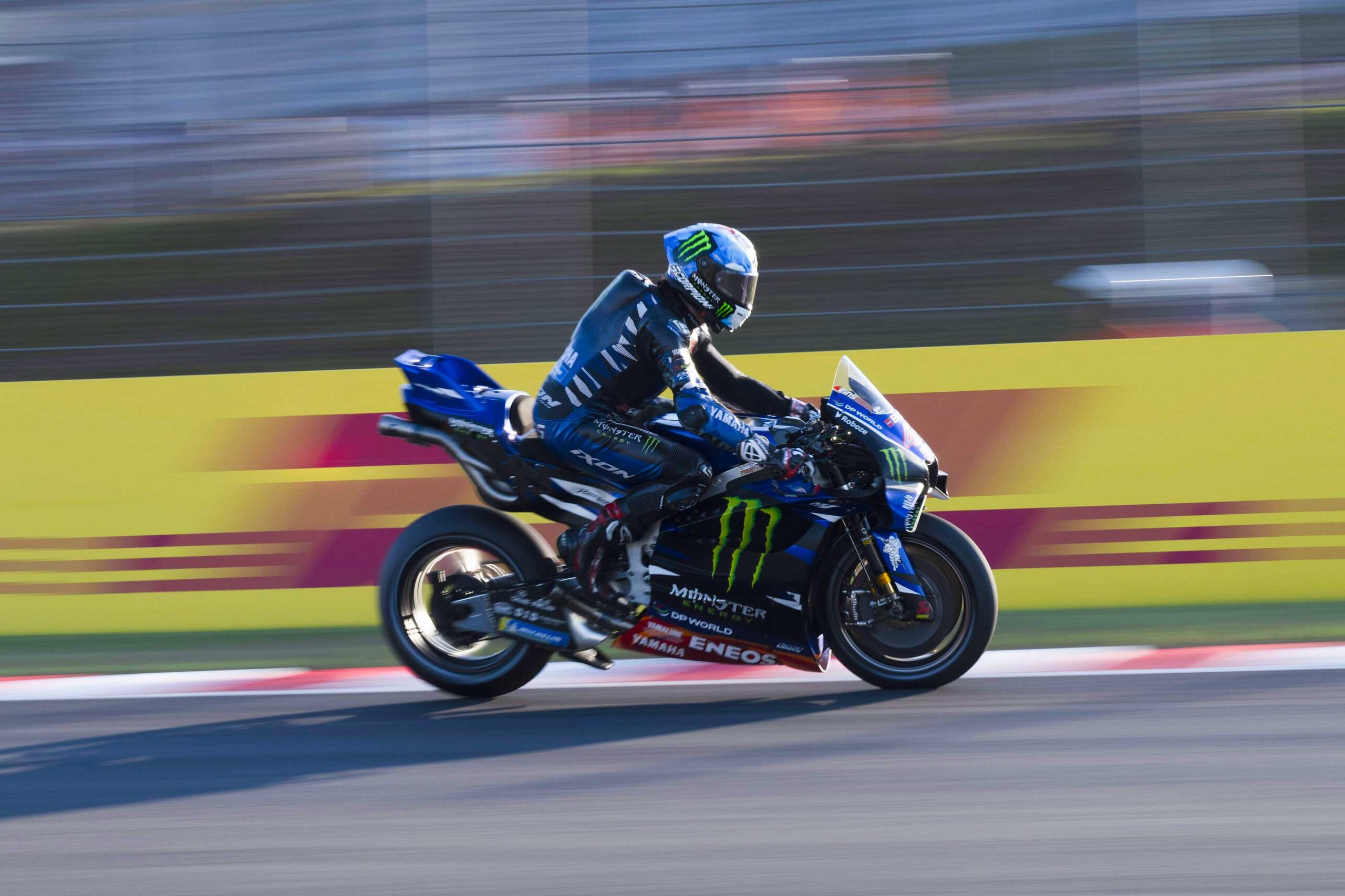
Motegi, October 2018. On the grid for the Japanese Grand Prix, Jack Miller’s Ducati is hiding something nobody notices: he will reveal it himself more than a year later. It is the first MotoGP holeshot device known to have been used in a race, and within a few years it would change the way the whole championship starts.
The MotoGP holeshot device is a mechanical system that lowers the bike by compressing and locking the suspension. Lower and more compact, the bike wheelies less, puts more power down and launches better: that is why it was born as a tool for the start, and why it then evolved into a system used on corner exit as well, the ride height device.
How the holeshot device works
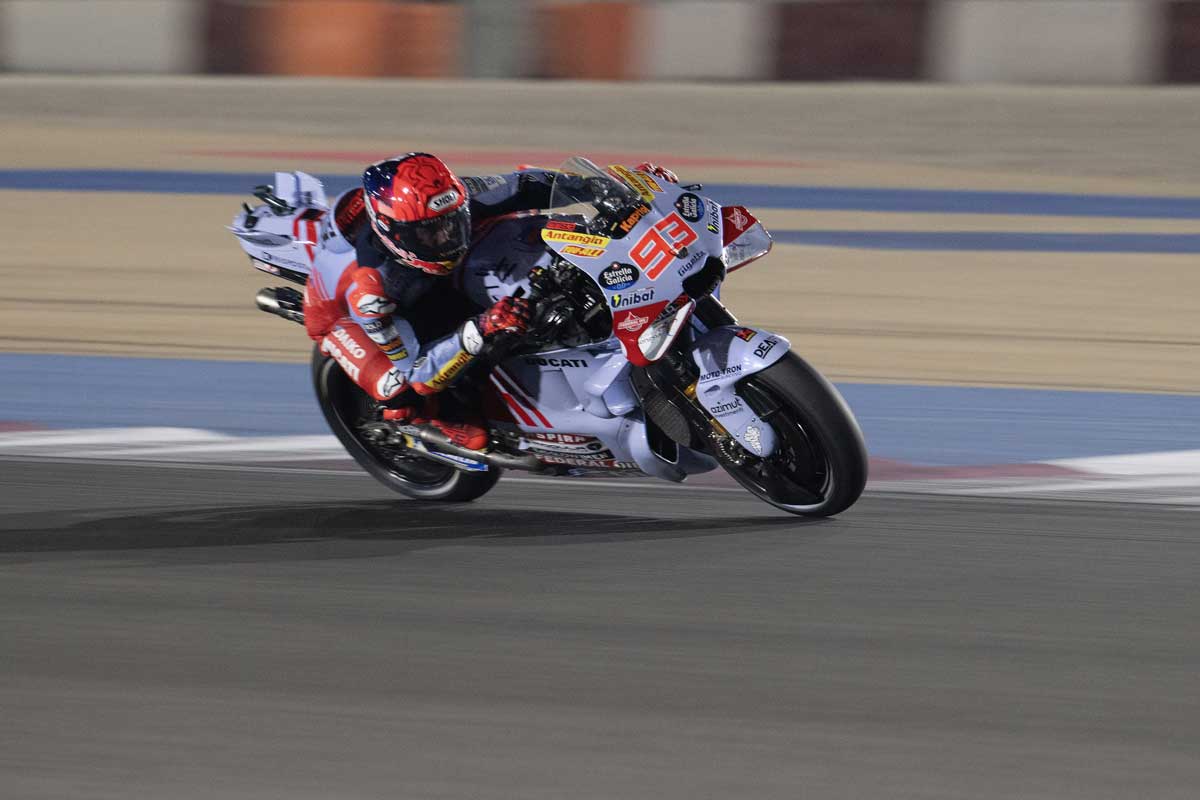
The principle is simple; getting it right is much less so. A MotoGP bike pulling away from a standstill tends to lift its front wheel: every centimetre of wheelie is power that never reaches the tarmac. Lowering the rear lowers the centre of gravity, the bike stays glued to the ground and the rider can open the throttle earlier and further.
In the start version, the rider primes the device on the grid with a manual control, on the 2019 Ducatis a lever on the top triple clamp, and the bike stays lowered for the whole launch, until the first braking point, when the suspension unloads and the lock releases. In the race version, the system also works on corner exit and on the straights, where traction decides the lap. These devices are operated mechanically or hydraulically, because the rules ban electronically adjustable suspension and, since 2016, have imposed the same ECU and software on everyone.
From Borgo Panigale to the whole grid
After Motegi, Ducati went a step further. From the Thai Grand Prix in October 2019 Miller used a version that also lowered the rear during the lap, and at the Qatar test in February 2020 the cameras caught it on corner exit. The other manufacturers followed: from the summer of 2021, when Suzuki joined in, all six were racing with a rear ride height device, and in 2022, according to Alex Rins, only Suzuki and Yamaha still had to activate it by hand on corner exit.
Opinions were divided from the start. Some saw the device as yet another stroke of genius from a manufacturer that had already brought aerodynamic wings and, in 2019, the “spoon” under the swingarm, protested by Honda, Suzuki, Aprilia and KTM and then declared legal by the Court of Appeal. Others saw it as an expensive frill that increased the risks and added nothing to the show.
At the Sepang and Mandalika tests in February 2022 Ducati also brought a device that compressed the front on corner exit. This time the rules sided with the critics: on 18 March 2022 the Grand Prix Commission banned, from 2023, any device that adjusts the front ride height while the bike is moving. Devices that act only once, at the start, remained allowed, in other words front holeshot devices.
The 2026 Assen ban and the 2027 rules
That loophole closed in June 2026. After the start incidents in Barcelona and at Balaton Park, to which the specialist press linked the decision, on 22 June the Grand Prix Commission announced a ban on the front holeshot device, in force from the Dutch Grand Prix at Assen. The same statement confirmed the new grid: from the German Grand Prix, in all classes, the forward stagger between one rider and the next in the same row went from three to four metres, and the distance between one row and the next from nine to twelve. We cover it in detail in our analysis of the holeshot, the grid and the manufacturers’ line-up.
For the rest of the 2026 season, the rear ride height device in the race and the rear holeshot device at the start remain legal. Their days are numbered, though: under the new 2027 MotoGP regulations, which cut engines from 1000 to 850 cc, all ride height and holeshot devices will be banned, to contain costs, make starts safer and give more weight to the rider.
Show or laboratory?
Behind a lever on the triple clamp lies a question the paddock has been carrying for years. Is MotoGP a championship that must above all put on a show, or the most extreme arena of technological competition between manufacturers? Riders are divided too: some would like a more genuine, less engineered fight, others defend the pure idea of the prototype.
With 2027, the rules have chosen the first path, at least as far as ride height devices are concerned. It remains to be seen whether the designers’ talent, with one door closed, will find a window as it always has.
MotoGP holeshot device: frequently asked questions
What is the MotoGP holeshot device?
It is a mechanical system that lowers the bike by compressing and locking the suspension. By lowering the centre of gravity it reduces wheelies and lets the bike put more power down, at the start and, in the race version, on corner exit.
What is the difference between a holeshot device and a ride height device?
The holeshot device works only once, at the start: the rider primes it on the grid and the bike stays lowered until the first braking point. The ride height device lowers the bike during the lap too, on corner exit and on the straights, where traction makes the difference.
Who invented the holeshot device in MotoGP?
Ducati introduced it first. The first start device known to have been used in a race was fitted to Jack Miller’s bike at the 2018 Japanese Grand Prix; from the 2019 Thai Grand Prix Ducati used a version that also works during the lap, later adopted by all the other manufacturers.
Is the holeshot device still legal in 2026?
Only at the rear. The front ride height device in the race has been banned since 2023, and the ban on the front holeshot device, announced on 22 June 2026, has been in force since the Dutch Grand Prix at Assen. Rear devices remain allowed until the end of the 2026 season.
What changes in 2027?
Under the new MotoGP regulations, which cut engine capacity from 1000 to 850 cc, all ride height and holeshot devices will be banned, at the front and at the rear.
Why has MotoGP banned these devices?
The full ban from 2027, decided in 2024, aims to contain costs, make starts safer and give more weight to the rider’s talent. The first-corner incidents in Barcelona and at Balaton Park in 2026 brought forward the ban on the front holeshot device.